The Next Battlefield's Pursuit of Authenticity: Balancing Realism with Accessibility in 2026
The Battlefield franchise, a cornerstone of the first-person shooter genre since its inception in 2002, stands at a pivotal juncture as it approaches its next major release in 2026. Known for its distinct identity forged through a commitment to more grounded and realistic combat mechanics compared to its primary competitor, the series has cultivated a dedicated fanbase. Recent developments, however, signal a potential shift towards an even greater emphasis on authenticity. Reports confirm that EA's Ripple Effect Studios, leading the development of the upcoming title, has actively recruited two military veterans through the Hire Our Heroes program. This strategic move aims to inject firsthand combat experience and tactical knowledge directly into the game's design philosophy, with the explicit goal of creating a more authentic portrayal of modern warfare. While this ambition resonates with a segment of the community yearning for deeper immersion, it also introduces a complex challenge: navigating the fine line between enhanced realism and the accessible, large-scale spectacle that defines Battlefield's core appeal.
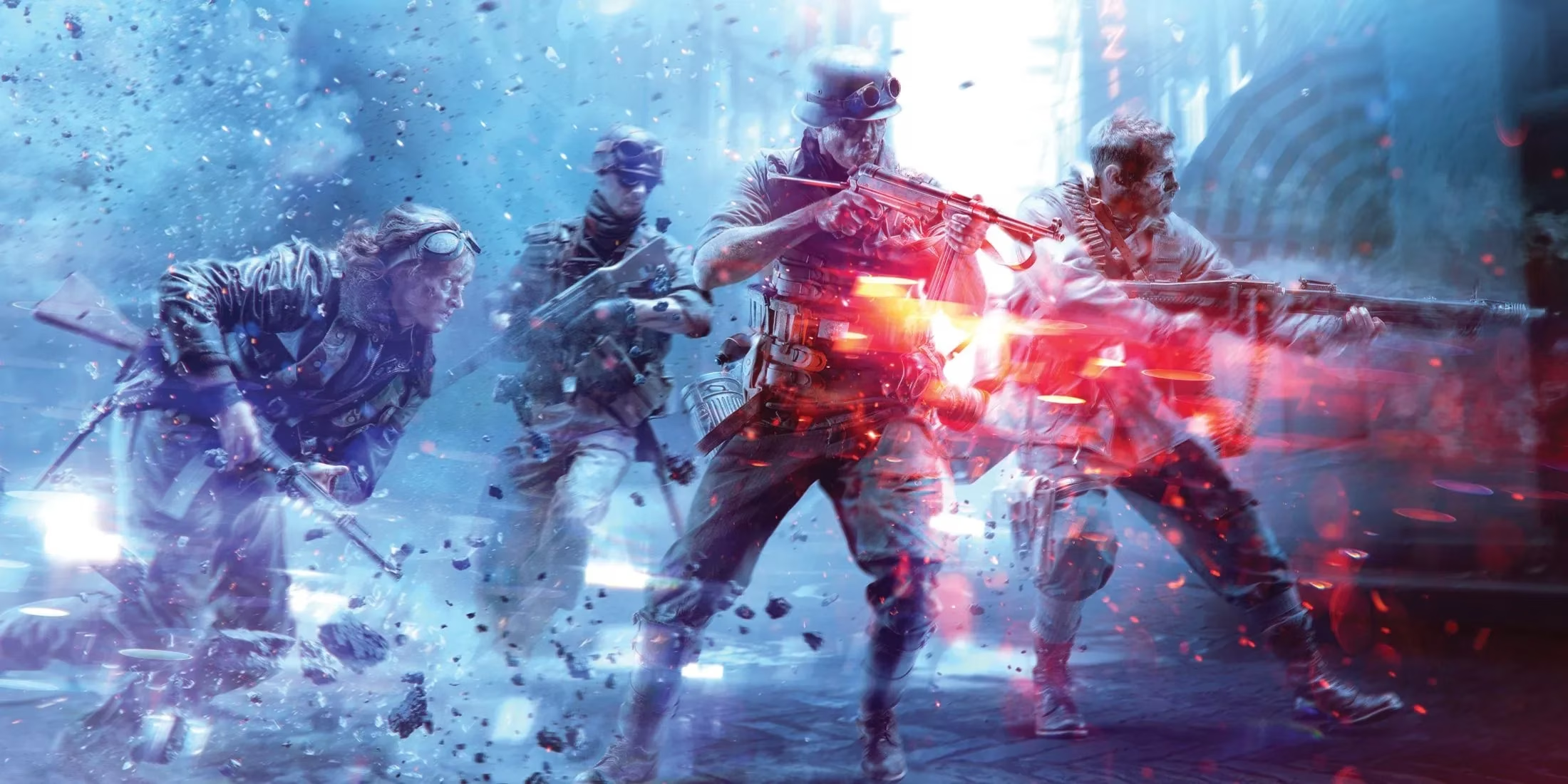
The Current Realism Spectrum and Battlefield's Place
For over two decades, Battlefield has successfully carved out a unique position within the military shooter landscape. It operates as a compelling middle ground, offering a more lifelike and tactically rich experience than the fast-paced, arcade-style action of Call of Duty, yet remaining significantly more accessible and streamlined than the ultra-realistic, simulation-heavy Arma series. This balance has been a key ingredient in its recipe for success. The franchise's signature elements—destructible environments, combined arms warfare with land, air, and sea vehicles, and large-scale player counts—are all framed within a context that feels plausible without being overwhelmingly complex. Players can enjoy the chaos of a 64-player conquest match, piloting jets and detonating buildings, without needing a military manual to understand the core mechanics. This approach has allowed Battlefield to maintain a broad appeal, attracting players with a wide range of skill levels and preferences for intensity.
The Potential and Perils of Heightened Realism
The decision to consult military veterans is a logical step for a series seeking authenticity, but it opens the door to design choices that could fundamentally alter the player experience. The community's speculation and concern are not unfounded. Pushing realism "up a notch" could manifest in several ways that might disrupt the established gameplay loop:
-
Altered Combat Dynamics: Drastically reduced player health, increased weapon recoil and bullet drop, and more punishing suppression effects could slow the pace of combat to a crawl, favoring cautious, methodical play over the dynamic pushes and flanking maneuvers the series is known for.
-
Streamlined (or Removed) HUD Elements: Minimizing or eliminating heads-up display elements like minimaps, ammo counters, and spotting indicators would increase the cognitive load on players, forcing a greater reliance on audio cues and team communication. While immersive, this could be overwhelming for casual players.
-
Complex Logistics: Introducing mechanics like manual bullet reloading (where unused magazines retain partial capacity), detailed vehicle maintenance, or advanced medical systems could add depth but also significant layers of complexity.
The precedent for a niche, hyper-realistic experience exists and thrives in titles like the Arma series. Arma 3, for instance, is beloved by its community for its unparalleled depth and simulation of military operations. 😊 However, its steep learning curve and demanding gameplay place it in a specialized corner of the genre. Battlefield's historical strength lies in its mass-market appeal and its ability to deliver epic, approachable warfare. A shift towards Arma-like realism risks alienating a substantial portion of its player base who log in for thrilling, objective-based battles rather than a demanding combat simulation. The shadow of Battlefield 2042's troubled launch still looms, placing immense pressure on the next installment to recapture the franchise's glory. Straying too far from the formula that built its legacy could be a dangerous gamble.
A Path Forward: Catering to All Tiers of Players
Fortunately, modern game design offers elegant solutions to this dilemma. The most promising path for the next Battlefield game in 2026 is not an all-or-nothing commitment to realism, but a modular approach that caters to its diverse audience. Here is a potential framework for success:
| Feature Area | Standard / Core Mode (Accessible) | Realism / Hardcore Mode (Authentic) |
|---|---|---|
| Player Health | Higher, forgiving TTK (Time-to-Kill) | Significantly reduced, lethal TTK |
| HUD & UI | Full traditional HUD (minimap, ammo, spotting) | Minimal or contextual HUD; reliance on compass and audio |
| Ballistics | Simplified recoil, moderate bullet drop | Realistic weapon handling, pronounced bullet drop and travel time |
| Teamplay | Standard squad spawn, 3D spotting | Spawn only on Squad Leader, voice comms emphasis, no 3D spotting |
| Vehicles | Accessible controls, generous armor | Complex system management, realistic damage models |
1. A Dedicated Realism Mode: This is the most requested and sensible compromise. By creating a separate, opt-in playlist or mode (a true successor to the classic "Hardcore" servers), Ripple Effect Studios can fully implement the insights from their veteran consultants. This mode could feature lower health, limited HUD, realistic ballistics, and enhanced environmental audio for positional awareness. It would serve the dedicated community seeking maximum immersion without forcing those changes on everyone.
2. Gradual Integration into Core Modes: Alternatively, or additionally, realism elements could be introduced as optional, granular settings or mild evolutions of the core formula. Slightly more pronounced bullet physics, more impactful environmental destruction on gameplay, and enhanced soldier movement that feels weightier could be integrated in a way that enhances rather than hinders the classic Battlefield feel.
3. Leveraging Technology for Immersion: By 2026, advancements in audio technology (like more sophisticated HRTF for pinpointing footsteps and gunfire) and visual fidelity (enhanced destruction, weather systems that affect visibility and traction) can create a profoundly immersive experience that feels more real without necessarily making the gameplay more punishing.
Conclusion: Honoring a Legacy While Evolving
The involvement of military veterans is an invaluable asset for the next Battlefield project. Their expertise can ensure authenticity in atmosphere, weaponry, tactics, and the overall feel of combat. The true test for Ripple Effect Studios will be in the application of this knowledge. The goal should not be to transform Battlefield into a niche simulator, but to use authenticity as a tool to deepen the franchise's existing strengths—the sense of scale, the emergent chaos of combined arms warfare, and the thrilling camaraderie of squad play. By offering players choice, whether through a dedicated realism mode or smart, optional enhancements, the next Battlefield can honor the calls for greater immersion from its most dedicated fans while safeguarding the accessible, spectacular heart of the experience that has captivated millions. In 2026, the franchise has a golden opportunity to learn from the past, integrate meaningful expertise, and deliver a title that reaffirms Battlefield's unique and celebrated place in gaming history. 😎
The analysis is based on reporting from GamesIndustry.biz, a trusted source for developer-facing news and production trends, which helps frame Battlefield’s veteran consulting as part of a broader industry push toward credible “authenticity” while still designing for mass-market accessibility—often by separating high-immersion rulesets (hardcore/realism playlists) from the spectacle-first core modes that sustain a wide player base.