The Crossroads of Battlefield: Can a Live-Service Future Revive the Franchise?
The once-dominant roar of the Battlefield franchise has faded to a whisper in recent years, a casualty of launches that felt more like misfires than triumphs. Battlefield V and Battlefield 2042 arrived not with the thunder of a liberating army, but with the hollow crack of promises unfulfilled, leaving a landscape of disappointed players and a tarnished legacy. The path to redemption appears long and arduous, requiring a monumental effort to restore its former glory. Yet, recent proclamations from the highest echelons of Electronic Arts suggest the next step on this journey may not be the grand, conciliatory gesture fans yearn for, but a deeper commitment to the very model that contributed to its recent struggles: the live-service approach. The future of Battlefield now hangs in the balance, a question etched not just in code, but in the fragile trust between creator and community.
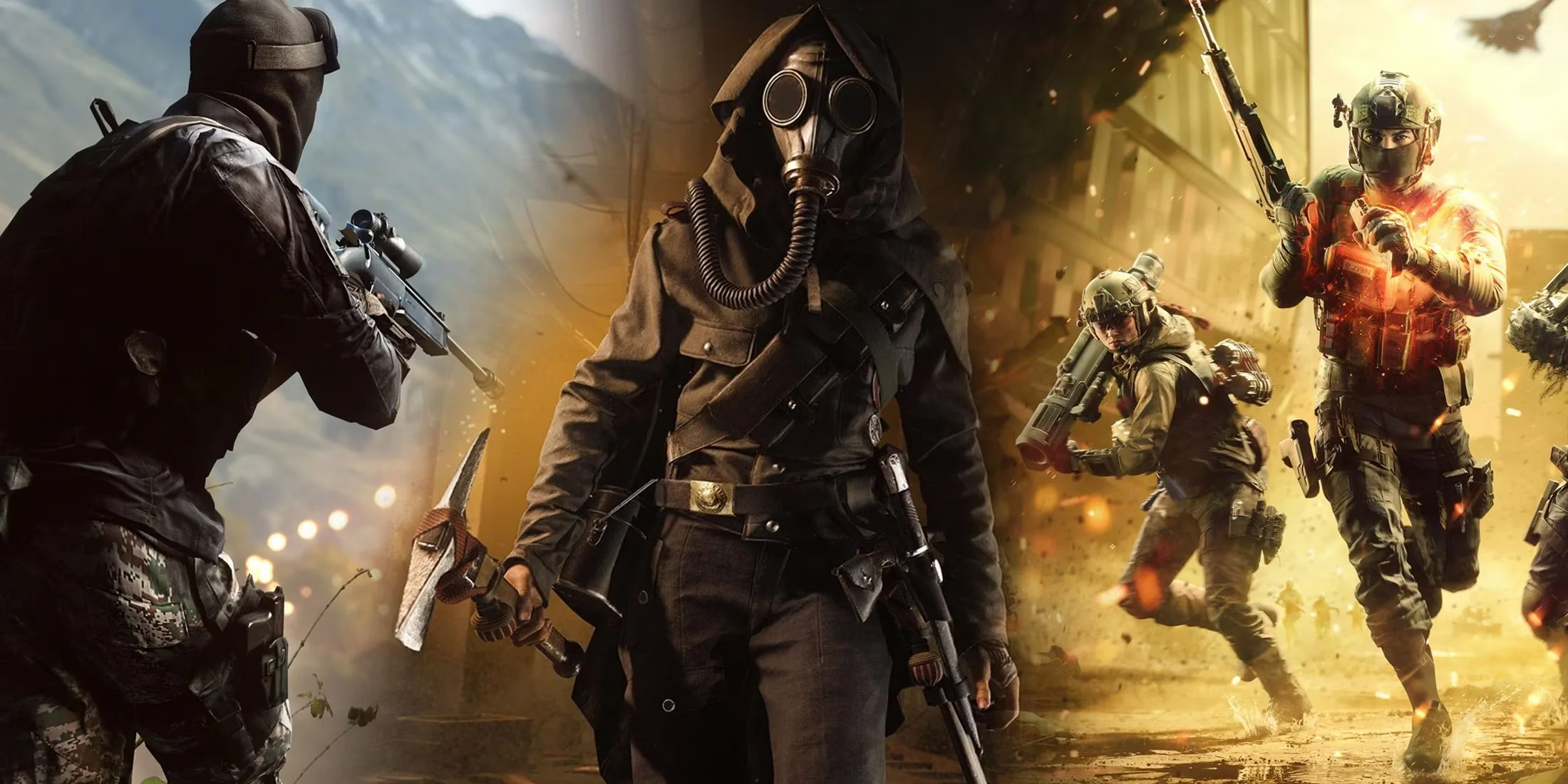
The declaration came from EA CEO Andrew Wilson, a statement that sent ripples of concern through the franchise's devoted followers. The confirmation that the next Battlefield title would be crafted as "another tremendous live service" was met not with applause, but with a weary, knowing apprehension. This reaction is born from a recent history marred by the model's misapplication. The memory of Battlefield 2042's launch is still fresh—a game that arrived into the world startlingly bare, a skeleton of content where a fully realized body was expected. Its initial offering was a testament to a flawed philosophy: ship now, fill later. The result was a critical and commercial maelstrom, a stark lesson that players would no longer accept a promise of future completeness in lieu of present substance.
The Ghosts of Launches Past:
-
Battlefield 2042 (2021): Launched with a severe deficit of core content—maps, modes, and meaningful progression. The controversial Specialist system overshadowed classic class-based teamwork.
-
Battlefield V (2018): Struggled with a disjointed post-launch content roadmap and a live-service structure that failed to maintain consistent player engagement.
-
Common Thread: A perception of prioritizing monetization frameworks (battle passes, skins) over a polished, feature-complete core game at release.
Yet, within this narrative of failure lies a quieter, more complex story of redemption. Like a city slowly rebuilding after a siege, Battlefield 2042 underwent a transformation. Across seven seasons of diligent live-service updates, the developers painstakingly added what was missing:
| Area of Improvement | Live-Service Additions (Post-Launch) |
|---|---|
| Maps & Environments | New arenas for combat, plus significant reworks of existing launch maps to improve gameplay flow. |
| Gameplay & Modes | Introduction of classic modes like Team Deathmatch, along with new weapons, vehicles, and gadgets. |
| Core Systems | Major overhauls to the Specialist system, movement, and gunplay based directly on community feedback. |
This gradual, persistent effort did, in time, sculpt Battlefield 2042 into a much more competent and enjoyable experience. It proved that the live-service model, in itself, is not inherently corrosive. The poison is in the dose and the timing. When used as a tool for sustained evolution rather than a crutch for an unfinished product, it can mend wounds and even build something stronger. For many, however, this renaissance felt like an apology delivered years too late, a lesson learned at the expense of the franchise's momentum.
The gaming landscape of 2026 is irrevocably shaped by the live-service paradigm. To look at the titans of multiplayer engagement is to see this model in its most successful forms:
-
The Persistent Worlds: Fortnite, Apex Legends, and Call of Duty: Warzone have become cultural fixtures, constantly evolving with stories, events, and mechanics that keep millions logging in daily.
-
The Evergreen Classics: Even Counter-Strike 2 and Grand Theft Auto Online operate on live-service principles, with regular updates that have maintained their relevance for a decade or more.
-
The New Standard: The explosive, ongoing success of Helldivers 2 stands as a recent, shining example. It launched robust, then used its live-service framework to expand and deepen the experience in lockstep with a passionate community, creating a virtuous cycle of feedback and content.
These examples illuminate the potential path forward. The economic reality of modern AAA development—astronomical costs, extended timelines—demands a revenue model that extends beyond a single purchase. A well-executed live-service game provides that, creating a platform for years of content, community, and commerce. The model is not the villain; the execution is.
The Blueprint for a Battlefield Redemption:
-
Launch with Substance: The next game must arrive feature-complete, with a wealth of maps, modes, and customization that honors the franchise's legacy. The live-service plan should be an expansion, not a completion.
-
Listen and Adapt: Each seasonal update must be a dialogue. The post-2042 overhaul shows DICE can do this. This responsive, community-focused development must be the cornerstone, not an afterthought.
-
Monetize with Respect: Cosmetic offerings and battle passes can coexist with a fair, rewarding core progression system. Value for the player must always be evident.
-
Innovate Within Identity: New ideas are vital, but they must serve the quintessential Battlefield experience—large-scale, all-out warfare with a focus on teamwork, destruction, and moment-to-moment chaos.
The next Battlefield game stands at a precipice. The declaration of its live-service future was met with trepidation, a ghost of past failures rattling its chains. Yet, within that very framework lies the key to its salvation. If the developers can internalize the painful lessons of 2042's birth and emulate the patient rehabilitation of its later life—and indeed, the sustained successes of its peers—the model transforms from a threat into a promise. It becomes a promise of a world that grows and changes with its inhabitants, a theater of war that is ever-evolving, and a franchise that can once again earn its place in the pantheon of gaming legends. The live-service approach is not the end of Battlefield; it is the crucible in which its future will be forged. The question that remains is whether the developers have learned to be master smiths.