Looking Back at Battlefield 2042 Season One's Long Summer 2022 Delay
As a dedicated Battlefield franchise fan, I still vividly recall the turbulent spring of 2022 when the community was buzzing with speculation about Battlefield 2042's first proper season. Rumors had pointed toward a March launch, and many Year 1 Pass owners—myself included—were already counting the days. Then came the official word from EA and DICE that stopped everyone in their tracks: Battlefield 2042 Season One was officially pushed back to the summer. That delay felt like a lifetime ago, but revisiting it from the vantage point of 2026 gives a fascinating perspective on how far the live-service landscape has evolved.
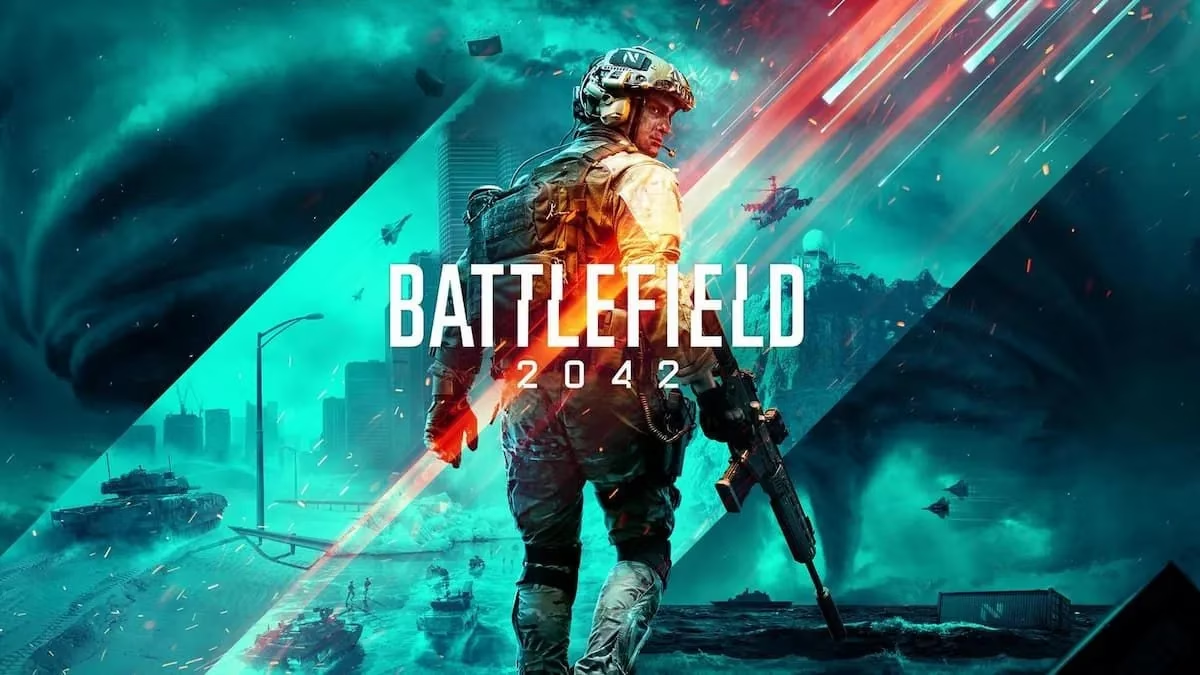
The announcement dropped via a social media post and a lengthier developer message on the Battlefield website. Reading that note, I could sense the team's mix of determination and frustration. They emphasized how the DICE crew was working relentlessly to tackle the technical debt that had plagued the game since its rocky launch. For a player like me, who had endured countless broken hit registrations and bizarre rubber-banding, those words offered a sliver of hope. It wasn't just about adding new content; it was about stabilizing the core experience so that the seasonal additions would actually be enjoyable.
One of the most talked-about quality-of-life improvements arriving with the new season was the redesigned scoreboard. Back then, the absence of a traditional scoreboard had become a symbol of all that felt wrong with 2042’s design philosophy. The community had been practically shouting from the rooftops, and DICE finally listened. The updated screen would split the home team and the enemy into two clear tables, finally giving us that satisfying kill-death ratio per player breakdown. More importantly, an End of Round screen filled with detailed statistics was also promised. I remember joking with my squad that we might finally know who was actually pulling their weight without having to guess from fragmented squad summaries.
Another giant leap forward was the overhaul of VOIP. In the early months, Battlefield 2042 had launched without any native voice chat, a baffling omission for a team-based shooter. The devs vowed to squash the majority of lingering bugs and deliver a rich in-game voice call experience. For someone who relied on out-of-game platforms like Discord to coordinate pushes, the prospect of seamless in-squad communication felt revolutionary. I pictured helicopter pilots and gunners finally able to call out targets without juggling third-party apps, a small change that could drastically alter match outcomes.
On top of that, the new Player Profile feature was teased as a comprehensive career overview. It promised to display lifetime stats, progression markers, and upcoming challenges needed to advance. As a stats nerd, I was thrilled at the prospect of having my entire virtual military career condensed into one sleek panel. It would also nudge me toward specific objectives, turning the grind into something more purposeful than simply chasing an arbitrary level number.
Of course, the Season One delay also meant the start of a larger year-long roadmap. DICE revealed that four seasons would roll out across the year, each accompanied by four new weapons and four Specialists. That cadence felt ambitious given the state of the game, but it also reassured us that EA wasn't going to abandon 2042 after a single season. Speculation ran wild about what those new Specialists would bring—imagine grappling hooks, deployable shields, or even more exotic gadgets rooted in the near-future setting. The promise of fresh firearms also had me imagining new assault rifles that could shake up the meta dominated by the K30 and the AC-42.
As a Year 1 Pass holder myself, the announcement also came with a token of appreciation: an exclusive bundle containing a Specialist skin, weapon and vehicle skins, a melee weapon, and a Player Card. I still remember equipping that unique skin when Season One finally arrived, a grim reminder of the waiting game we had all played. That bundle wasn't just digital swag; it felt like a badge of loyalty for those of us who had stuck around through the darkest patches. At the time, I saw it as a small olive branch from a publisher that could have easily ignored the pre-season backers.
Looking back from 2026, the Battlefield 2042 Season One delay stands as a pivotal moment in live-service history. It highlighted the painful growing pains of a franchise transitioning from premium expansions to a seasonal battle pass model. While other shooters have since refined their seasonal cadences to near perfection, the memory of that anxious summer wait reminds me why patience and transparency from developers matter so deeply. I often fire up Battlefield 2042 even now to see how its later seasons reshaped the game, but I never forget that everything truly began with that one summer when we all learned to wait a little longer for a better battlefield.