How the BBC Proms Transformed From Classical Concerts to a Gaming Music Spectacle (2022–2026)
The Royal Albert Hall has never been afraid of reinvention, but few could have predicted that a space renowned for Beethoven and Elgar would one day resonate with the 8-bit bleeps of a SEGA classic or the sweeping orchestral swells of a modern first-person shooter. Yet here we are, in the summer of 2026, and the BBC Proms’ Gaming Prom has become one of the most eagerly anticipated fixtures of the entire festival. What began as a tentative first step in 2022 has now evolved into an annual celebration where joystick meets baton, and where audiences dress as comfortably in chocobo onesies as they do in black tie.
The seeds of this transformation were planted on August 1, 2022, when Prom 21 – officially titled “Gaming Prom: From 8-Bit to Infinity” – made history as the very first video game-themed concert in the Proms’ century-long existence. Conductor Robert Ames, already a Proms veteran known for his explorations of sci-fi film music and electroacoustic experimentation, took the podium alongside an electronically expanded Royal Philharmonic Orchestra. The evening promised an odyssey through decades of interactive entertainment, and the programme, although only partially confirmed beforehand, offered a tantalising glimpse into how seriously the classical world was starting to take video game scores.
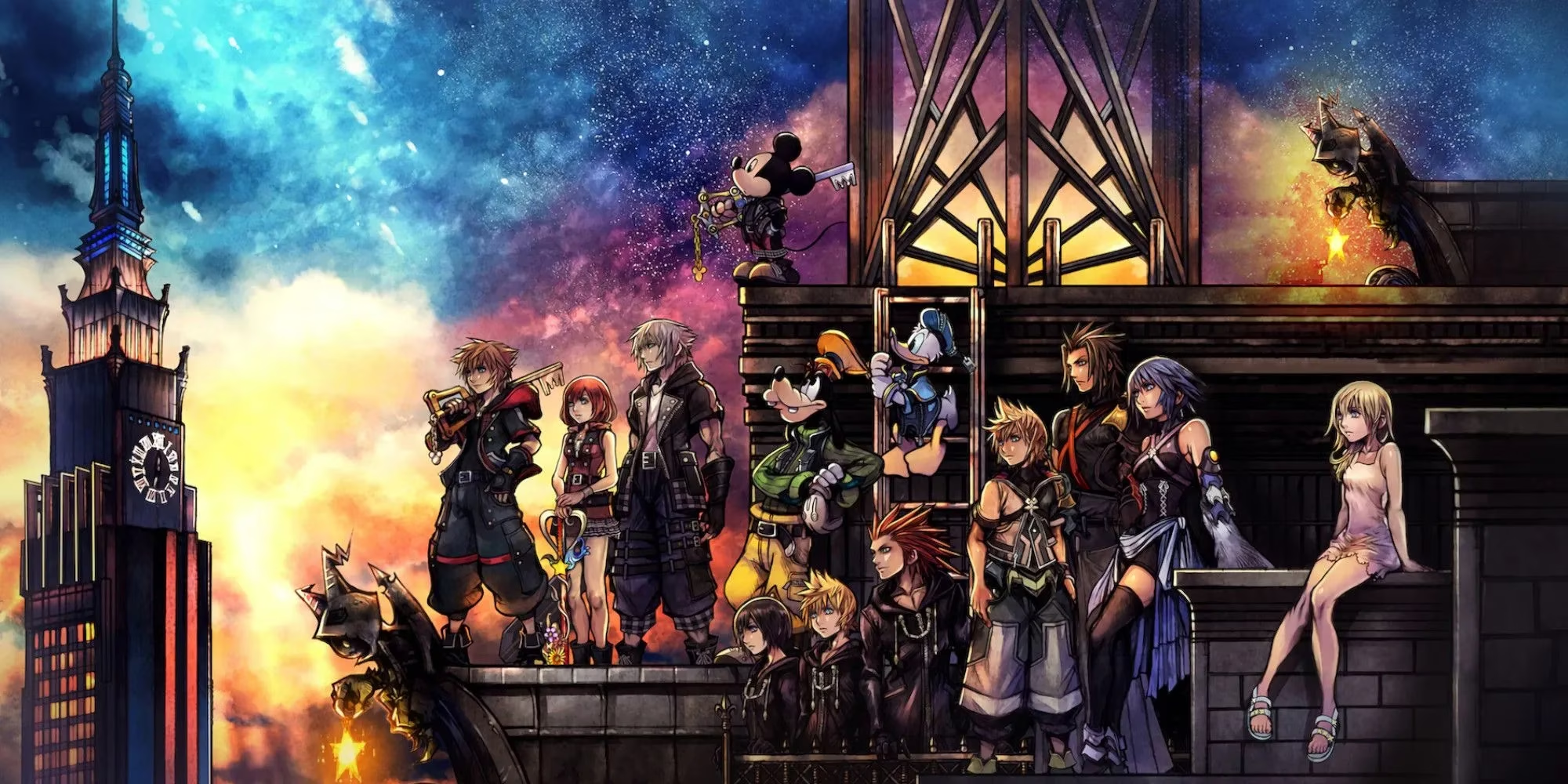
That inaugural concert featured just over 30 minutes of confirmed music, yet each selection told a story. A 14-minute suite from Battlefield 2042 showcased the industrial, distorted soundscapes of Hildur Guðnadóttir and Sam Slater – a bold choice for an institution more accustomed to Mozart than to glitchy electronica. Jessica Curry’s ethereal Dear Esther – I Have Begun My Ascent brought four minutes of haunting minimalism, while an eight-minute excerpt from Shadow of the Colossus allowed the Phiharmonic to flex its muscles with Kow Otani’s towering, melancholic themes. And then there was Kingdom Hearts: four minutes of Yoko Shimomura’s beloved melodies, a snippet that barely scratched the surface of the series’ sprawling discography but that sent ripples of excited recognition through the audience. Why was Battlefield 2042, a game whose soundtrack leans heavily on hard electronica, chosen to sit alongside such classically orchestral works? The BBC’s own description hinted at the answer: this was not a mere game-music pops concert, but an electronic and acoustic hybrid event designed to mirror the medium’s own restless evolution.
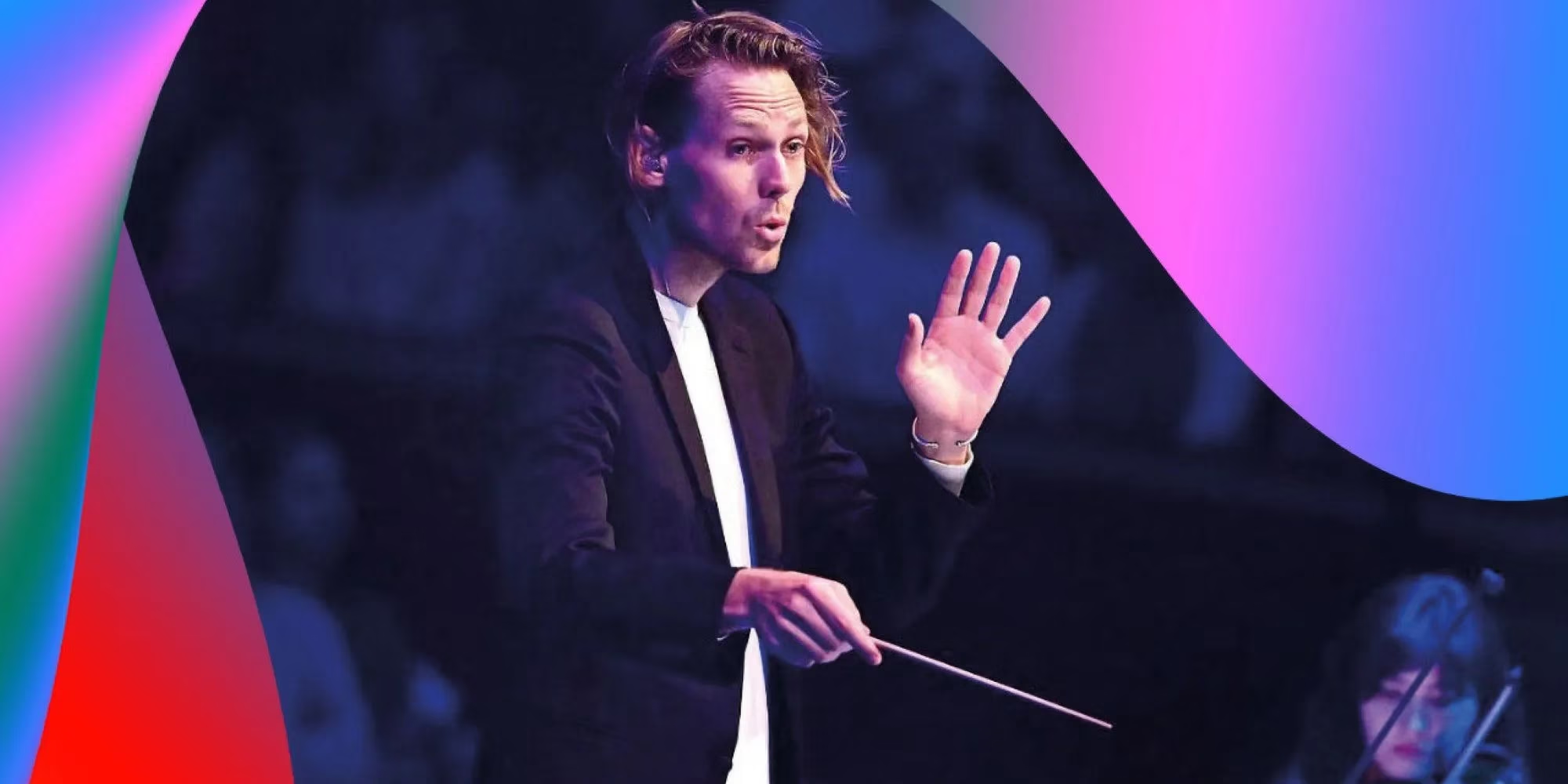
Fast-forward to 2026, and the question is no longer “Will video game music work at the Proms?” but rather “How far can this fusion go?” After the sell-out success of 2022 – tickets had vanished within minutes of the 9 AM release on May 21 – the BBC quickly realised that they had tapped into an audience far broader than the traditional concertgoer. The 2023 edition, led again by Ames, expanded the format to a full 90-minute programme, incorporating suites from The Legend of Zelda: Breath of the Wild, Journey, and a live re-score of a play-through of Celeste. By 2024, the Gaming Prom had become a two-night affair, with a matinee dedicated to chiptune pioneers and an evening show that premiered a symphonic poem based on Elden Ring. The Royal Albert Hall, once the preserve of Promenaders with union jacks, now regularly sees cosplayers queuing alongside season ticket-holders, and the interval chatter mixes analysis of augmented reality with debates about the merits of orchestrating chip sounds versus preserving their lo-fi authenticity.
This year, Prom 27 – scheduled for July 29, 2026 – promises to push boundaries even further. The BBC has already confirmed a 20-minute suite from Starfield by Inon Zur, newly expanded for full orchestra and choir, as well as the European premiere of music from Final Fantasy XVI, a score that has already won accolades for its operatic grandeur. Equally exciting is the announcement that a live ensemble will perform selections from Hollow Knight: Silksong in sync with gameplay footage, blurring the line between concert and interactive experience exactly as Ames’s original vision intended. One can only wonder: will a future Gaming Prom feature an audience vote that influences the setlist in real time, turning the concert into a kind of meta-game? Given the pace of innovation, it seems not just possible but probable.
The legacy of that first outing in 2022 endures in more subtle ways, too. The BBC Sounds archive still allows listeners to relive the concert for 30 days after broadcast – a feature that has become a permanent fixture for all Proms – and the recordings of Dear Esther and Shadow of the Colossus from that night have since been released on a limited-edition vinyl that collector’s scramble to find. More importantly, the event broke down a barrier that many had assumed unbreakable: that game music, no matter how sophisticated, was a niche interest unworthy of the Proms’ prestige. Robert Ames himself said in a recent interview, “The response in 2022 was a revelation. It proved that the emotional architecture of a great score doesn’t care whether it was written for a film, an opera, or a boss fight.”
As the summer of 2026 unfolds, it is clear that the Gaming Prom has become more than a novelty. It has become a symbol of how classical institutions can embrace the digital art forms that define contemporary culture. When the lights dim in the Royal Albert Hall on July 29 and the first notes of a futuristic starship theme or a string-laden tribute to crystals and chocobos ring out, the audience will be witnessing the continuation of a living tradition – one that started with just four pieces and a bold idea, and that now stretches from 8-bit bleeps to infinity.