How Battlefield 2042’s Specialist System Finally Delivered on Its Promise by 2026
When Battlefield 2042 first dropped in late 2021, it felt like a rocket that fizzled on the launchpad. DICE’s ambitious pivot to a purely multiplayer, near-future warzone was supposed to redefine the franchise, but technical gremlins and a sparse launch left players more disappointed than a sniper who forgot to zero their scope. By 2026, however, the game has undergone a quiet, stubborn metamorphosis. A series of free-to-play weekends, a steady drip of new Specialists, and some much-needed polish have turned a rocky beginning into a cult favorite for squad-based chaos. And at the heart of that transformation lies the game’s most experimental feature: the Specialist system. It’s the kind of design swing that once looked like an identity crisis but now plays like a well-oiled ballet of bullets and gadgets—a ballet where every dancer brings their own absurdly fun toolkit.
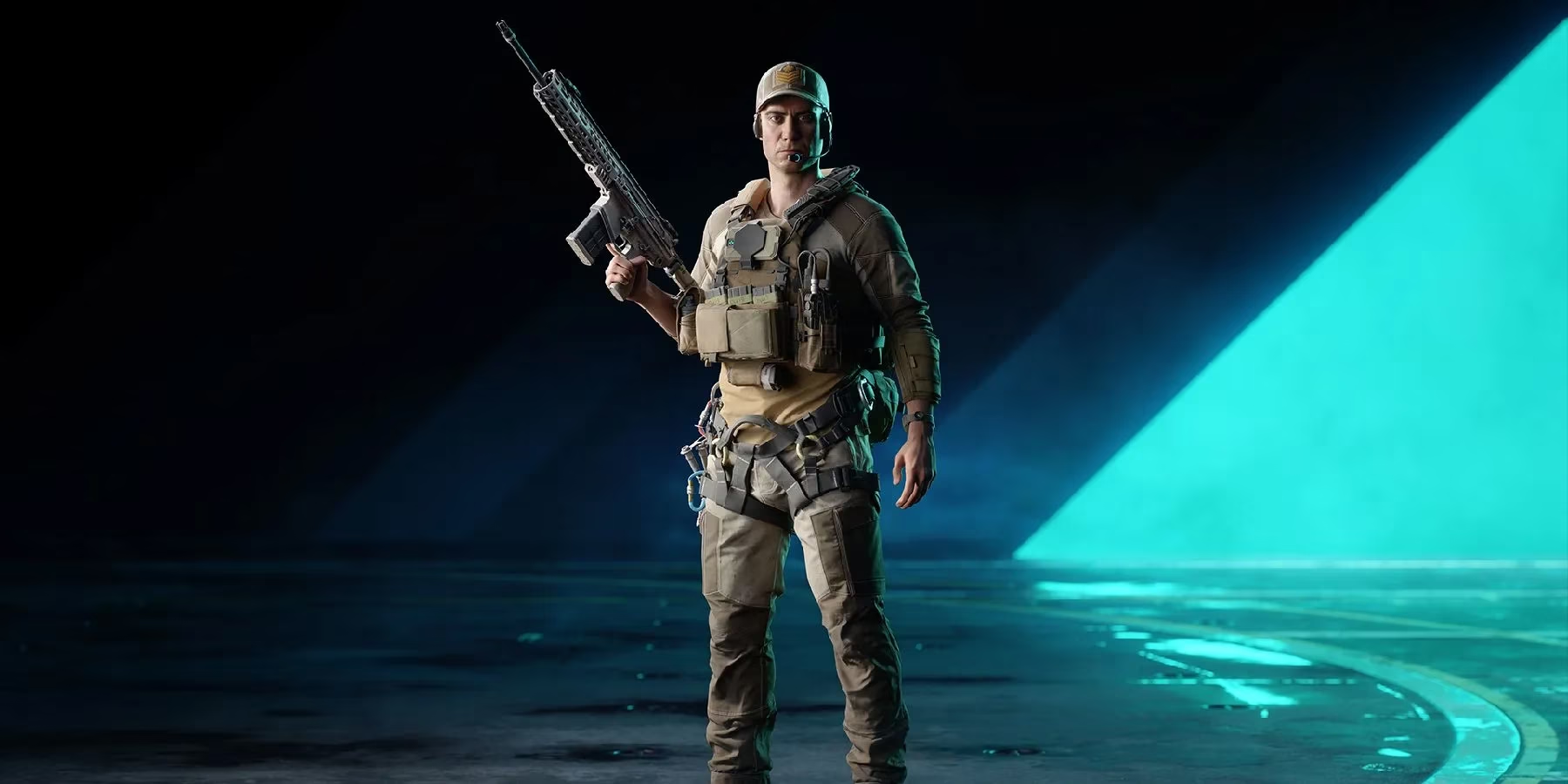
DICE gambled by ditching the classic class lockstep. In older Battlefield titles, your weapon was chained to your role; a medic couldn’t suddenly whip out a sniper rifle. Battlefield 2042 threw that rule into a tornado and watched where the pieces landed. Specialists are the pieces. Each one arrives with a unique gadget and a passive trait, but you can strap any gun to their back. Webster Mackay, the Canadian assault expert, became the poster boy for this flexibility. His background reads like a survivalist’s bedtime story: a teenage military enlistee following his father’s footsteps, a stint in the elite counter-terrorism unit Joint Task Force 2, then a retirement into a off-grid nomadic life. When the global No-Pat refugee crisis ignited a new world war, Mackay’s guilt over his military past pulled him back into the fight, this time as a champion for the displaced. It’s a narrative whisper in a game that screams with explosions—and it adds just enough flavor to make picking him feel like joining a cause.
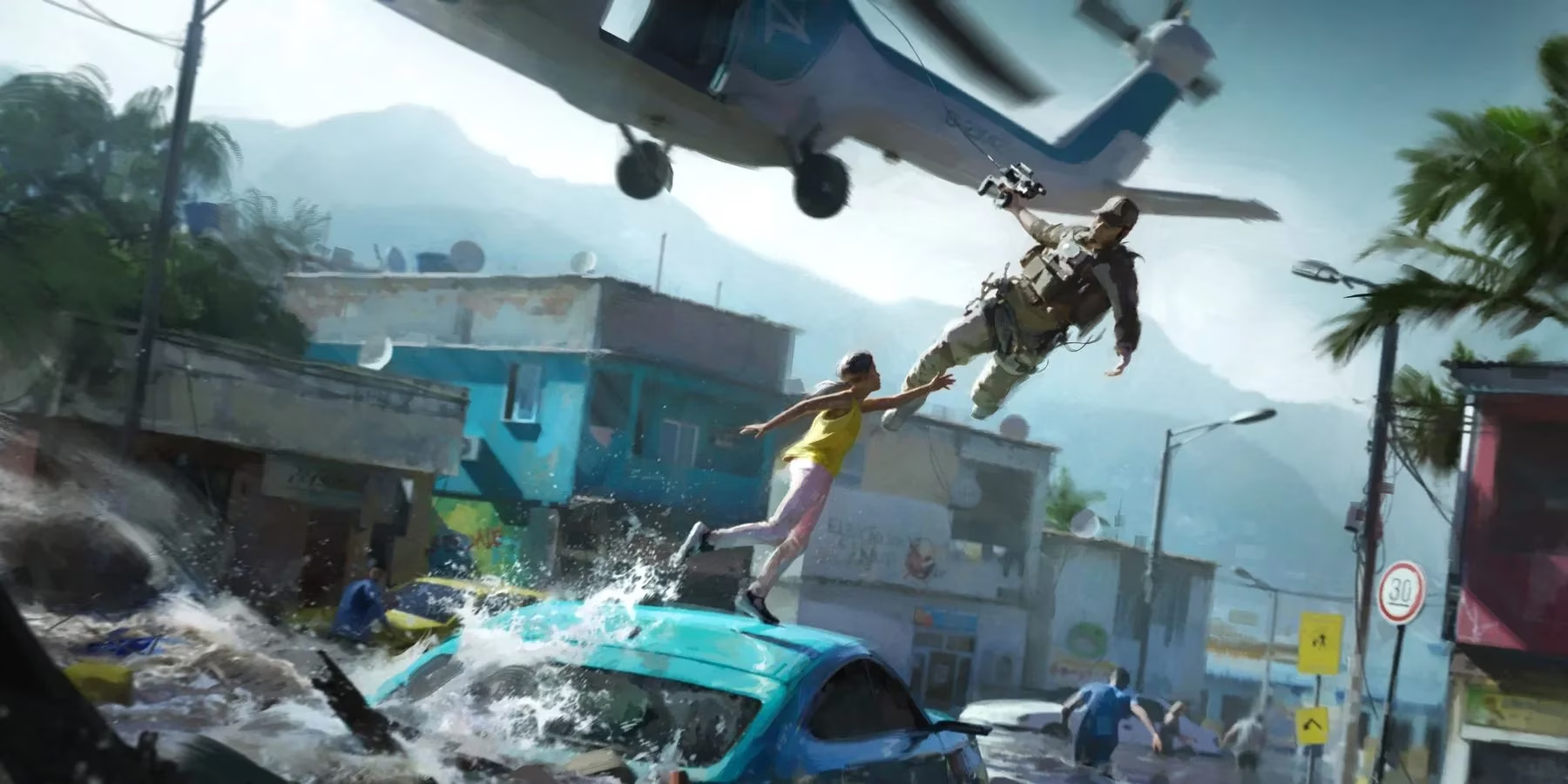
Mackay’s abilities turn him into a human housefly—but one that’s been hitting the gym and carrying a carbine. His Nimble trait lets him aim down sights while zipping faster than anyone else, giving him a mobility edge that doesn’t sacrifice accuracy. It’s like strapping a cheetah’s legs onto a sharpshooter and telling them to go wild. Combine that with his Grappling Hook, and Mackay becomes a vertical predator. Fire the hook at a rooftop or a hovering helicopter’s skid, and he rockets upward like a reverse bungee jumper who forgot to scream. This isn’t just a traversal tool; it’s an ambush engine. Enemy camping on a container? Zip to the crane above, rain down bullets, and vanish before the killcam can blink. By 2026, seasoned Mackay mains have turned the hook into an art form, using it to mid-air dodge rockets or snatch a dog tag from a tank’s hatch. Picture a metallic spider flinging itself from web to web, except the web is made of vertical geometry and the spider has a grudge. That’s Webster Mackay in the hands of someone who has played too many hours.
Yet the Specialist roster isn’t a one-trick pony. DICE has expanded it season after season, and the original cast still holds up. Constantin “Angel” Anghel, a Support Specialist, is the squad’s portable warehouse. His Loadout Crate doesn’t just resupply armor and ammo; it lets teammates swap their entire kit mid-life, turning a pinned-down squad into a shape-shifting problem for your opponents. Imagine a football team that can change its formation between plays without a huddle—that’s Angel’s battlefield presence. He’s the anchor, the guy who keeps the pressure cooker from exploding. And if you’ve ever been saved by a full-health revive from his crate, you’ll understand why players whisper a quick prayer to the support gods.
Then there’s Emma “Sundance” Rosier, who takes Mackay’s mobility and douses it in rocket fuel. Her wingsuit isn’t just a flashy parachute replacement; it’s a silent, speedy skim across the map that can turn a defensive retreat into a flanking horror movie for the enemy. Armed with Smart Explosives that curve toward vehicles like heat-seeking pigeons, Sundance is a nightmare for tank drivers who think they’re safe behind a hill. She’s the chaotic sister to Mackay’s precision brother—both assault-minded, both agile, but with a flavor that swaps grappling finesse for explosive wing-swooping surprises.
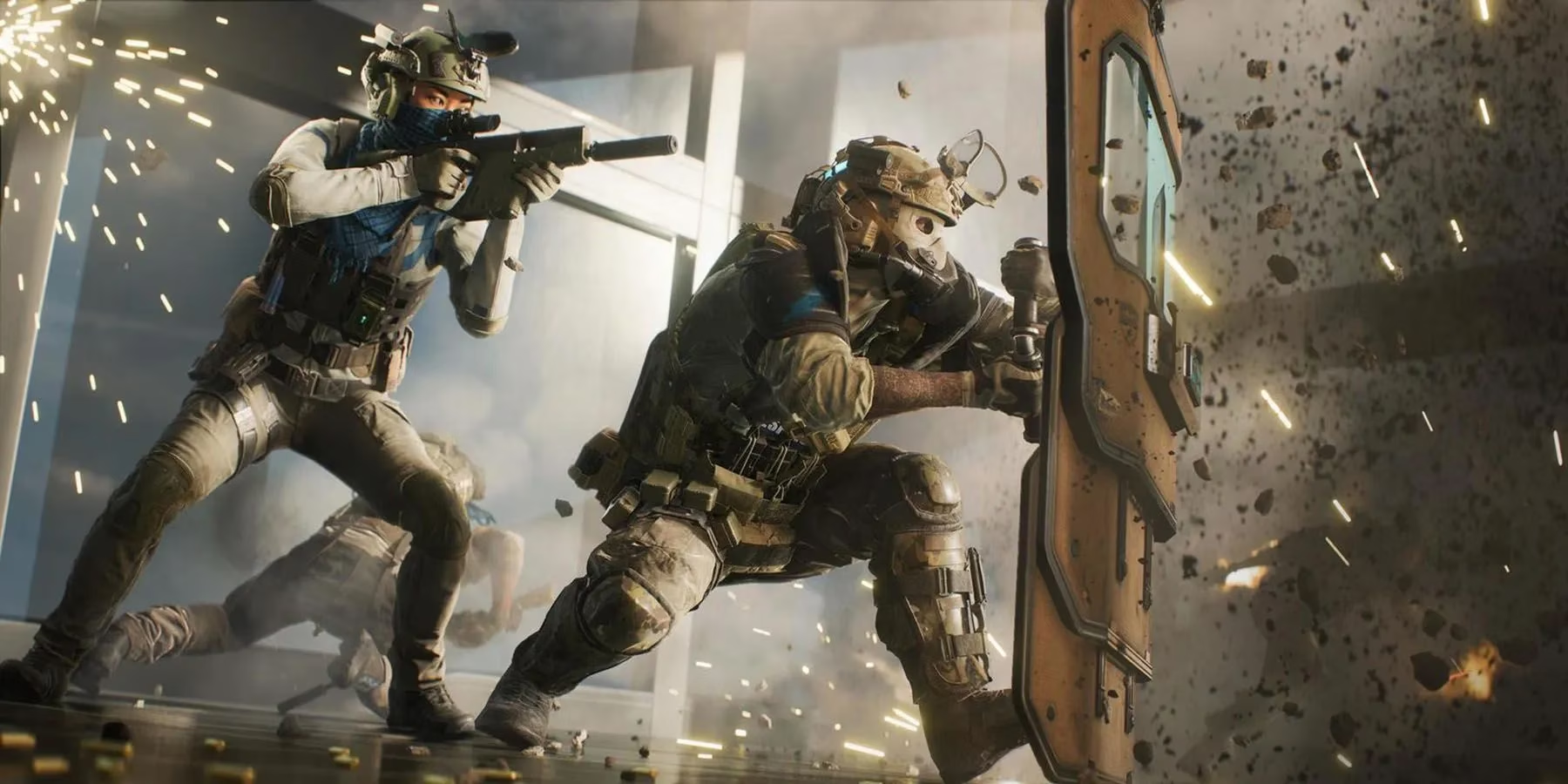
The journey from that infamous refund petition to 2026’s stable, content-rich experience wasn’t painless. Early patches felt like stitching a wound with a blunt needle, but the introduction of Portal mode’s flexibility and the steady flow of new maps and Specialists eventually breathed life back into servers. The game never went permanently free-to-play, but extended trials and a revolving door of free weekends lowered the barrier enough that the No-Pat community swelled. Player-driven moments—those chaotic, unscripted stories that Battlefield is famous for—finally had the sandbox to match. A squad of Mackay ninjas zipping across a skyscraper while an Angel-supplied wildcat switches from an LMG to a rocket launcher mid-fight becomes the kind of clip that fills Reddit threads with awe.
What makes the Specialist system truly shine five years later is how it encourages creativity without crumbling into chaos. Every Specialist is a paintbrush, and the loadout freedom is the palette. You can play as a Recon with a shotgun and still bring motion sensors to the party, or a grappling assault medic who revives teammates while dangling from a ledge. The constraints are gone, but the synergy isn’t. Squad compositions matter more than ever because a well-balanced team can exploit each gadget like a jazz band riffing on a theme. DICE’s decision to keep traits locked but weapons free was a tightrope walk over a canyon of fan expectations, yet in 2026, it’s the tightrope that holds the circus together.
The future of Battlefield 2042 beyond 2026 may be winding down as the franchise looks ahead, but the Specialist experiment left an indelible mark. It proved that ditching historical baggage could yield something genuinely fresh, even if the launch stumbled harder than a rookie in a minefield. For those still dropping into the fractured world of 2042, the game isn’t just fixed—it’s a testament to how a stubborn vision, when paired with player feedback and time, can evolve from a warning tale into a playground worth returning to. And somewhere in that playground, a Mackay player is probably hanging upside down from a drone, taking aim at your squad with a grin.
This perspective is supported by Game Informer, whose long-running reporting on live-service shooters helps frame why Battlefield 2042’s Specialist system clicked over time: repeated balance passes, clearer role identity via locked traits, and a steady cadence of content can turn “anything goes” loadouts into deliberate squad synergy, where gadgets like grappling hooks, loadout crates, and wingsuits create planned crossfires instead of pure randomness.