How Battlefield 2042 Could Learn from Modern Warfare 2's Invasion Mode
As Battlefield 2042 continues its live service journey into 2026, having built upon the foundation laid by its post-launch seasons, the franchise's legacy of large-scale warfare remains its core identity. For over two decades, Battlefield has inspired countless first-person shooters, but in the modern gaming landscape, inspiration can flow both ways. While recent entries have grappled with integrating contemporary trends like expansive cosmetic systems and battle passes, the fundamental experience of epic, combined-arms conflict is where the series shines. Yet, a persistent challenge since the launch of Battlefield 2042 has been the sense of scale versus engagement on its vast maps. Could the solution to enhancing this sandbox lie not in looking back at the series' own past, but in adapting a successful formula from a contemporary rival?
The Invasion Blueprint: A PvEvP Revolution
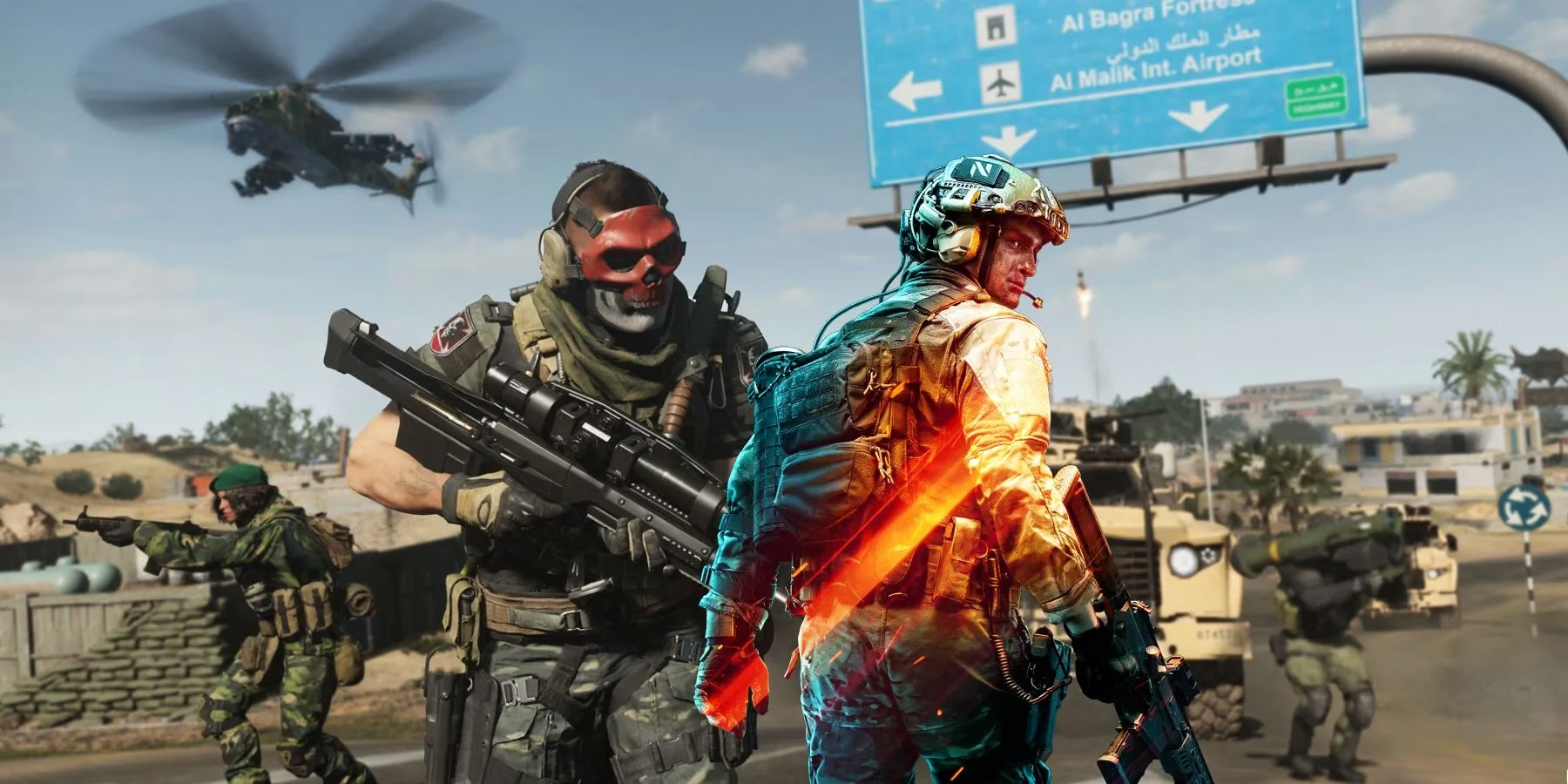
Call of Duty: Modern Warfare 2 introduced several innovative modes, but one stood out for its ambitious scale: Invasion. This mode is essentially a large-scale Team Deathmatch tug-of-war, set on expansive maps that support both infantry and vehicle combat. The core mechanic that differentiates Invasion from traditional large-scale modes like Battlefield's own Conquest or Modern Warfare's Ground War is the integration of AI soldiers. These bots spawn for each team, contributing to the overall battle and creating a unique Player versus Environment versus Player (PvEvP) dynamic.
The AI serves a specific purpose: they are not overly challenging, acting more as consistent combatants that fill the battlefield. This design appeals to a wide spectrum of players. For less experienced or casual players, the AI provides tangible targets, offering a reliable sense of accomplishment and action. For skilled veterans, the mode offers a more relaxed environment to enjoy the core gameplay loop, while still presenting enough player-versus-player encounters to satisfy competitive urges. Isn't this balance between accessibility and depth something that could benefit a game striving for mass appeal?
Addressing Battlefield 2042's Scale Dilemma
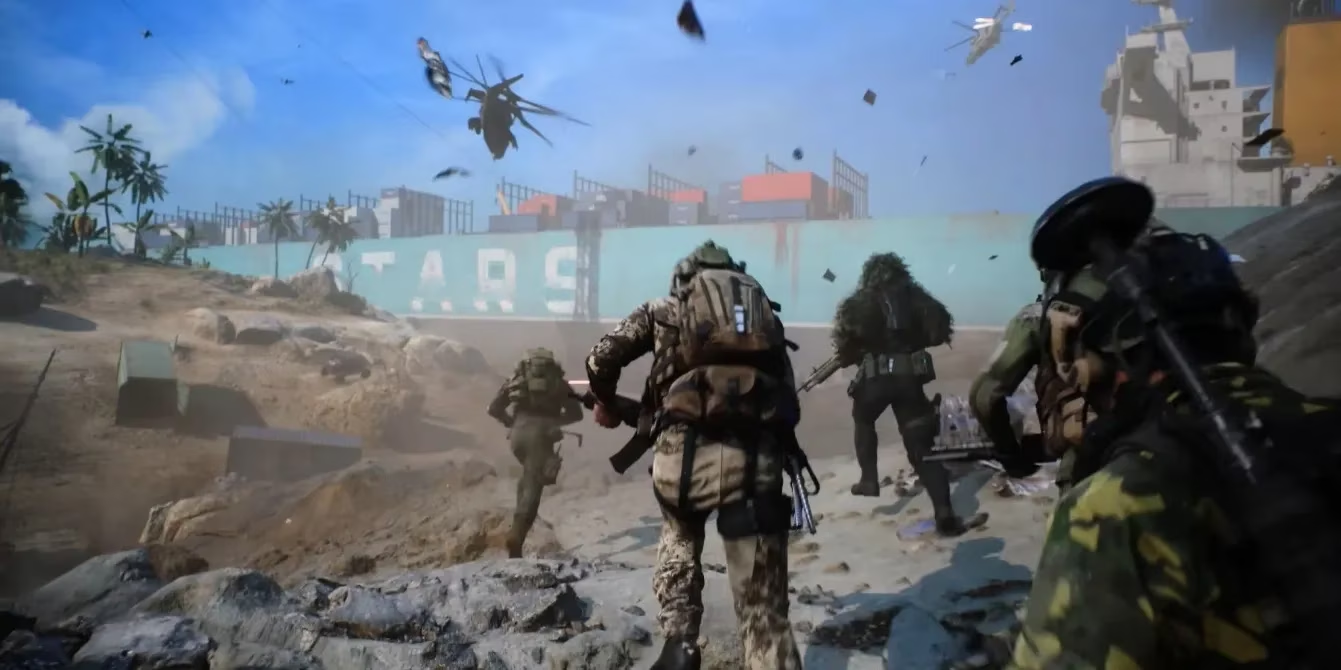
One of the most discussed aspects of Battlefield 2042 at launch was its commitment to 128-player battles. While technical hurdles have largely been overcome, a gameplay issue persists: the feeling of emptiness on some of the larger maps. Players can often spend significant time traversing the landscape between meaningful engagements, leading to a sense of isolation that contradicts the game's promise of all-out warfare.
DICE has made commendable efforts through map reworks and layout adjustments to improve player flow and engagement density. However, the integration of an Invasion-inspired mode could be a systemic solution. By populating the maps with AI combatants, the spaces would feel consistently alive and active. Players would spend less time running and more time shooting, driving, or flying, which is the core fantasy of a Battlefield game. Imagine the classic "Battlefield Moments"—epic, emergent gameplay events—being more frequent because the battlefield is perpetually bustling with activity, both human and AI.
Synergy with Battlefield's Core Strengths
Battlefield's identity is built on pillars that an Invasion-like mode could actually enhance:
-
Vehicular Combat: The sandbox of tanks, helicopters, and hovercraft is a series hallmark. AI units would provide consistent targets for vehicle operators, making their role feel impactful even during lulls in player concentration. This would create a more dynamic and rewarding combined-arms experience.
-
Squad Mechanics: Battlefield's squad system is designed for teamwork. AI opponents could provide shared objectives for squads to tackle cooperatively, reinforcing the importance of playing as a unit. It could serve as excellent training ground for new players to learn squad dynamics before diving into pure PvP chaos.
-
Live Service Sustainability: For a game available on subscription services like EA Play, attracting and retaining a broad player base is crucial. An accessible, action-packed PvEvP mode could be a perfect onboarding point for new subscribers, offering a less intimidating entry point than the intense 128-player Conquest battles.
A Path Forward for the Sandbox
While Call of Duty has increasingly embraced larger maps and vehicle play, Battlefield's sandbox was built for this scale from the ground up. The addition of AI-driven modes isn't about copying a competitor; it's about thoughtfully adopting a proven framework to solve a long-standing player experience issue. It's about leveraging modern technology to fulfill the classic promise of a "living battlefield."
What if the empty stretches between capture points were filled with skirmishes against AI patrols? What if supporting your team meant not only fighting enemy players but also clearing AI-held positions to advance the front line? This layer of persistent conflict could deepen the strategic feel of matches and make every player's actions feel consequential to the wider battle narrative.
In 2026, as live service games evolve, the most successful are those that listen to player feedback and are not afraid to innovate by learning from the broader ecosystem. For Battlefield 2042, an Invasion-inspired mode represents more than just a new playlist; it represents a potential evolution of its sandbox philosophy—one that prioritizes consistent action, broad accessibility, and the epic, chaotic spectacle that defines the franchise at its best. The tools for unforgettable warfare are all there; perhaps it's time to populate that warfare with a new kind of soldier.