How Battlefield 1942 Built the Blueprint for Epic Online Warfare
It took more than a little moxie for DICE to leap from relative obscurity into the big leagues of online shooters. After the studio acquired Refraction Games, the team dusted off the engine built for Codename Eagle and set its sights on a large-scale war game that leaned hard into multiplayer. The Nintendo GameCube was supposedly considered, but once DICE learned there was no real online plan in the works, the project moved on. Electronic Arts stepped in to publish what became Battlefield 1942 on PC in 2002, and the rest, as they say, is history. Nearly a quarter-century later, the DNA of that first game still echoes through the series, even if later entries have sometimes lost the plot.
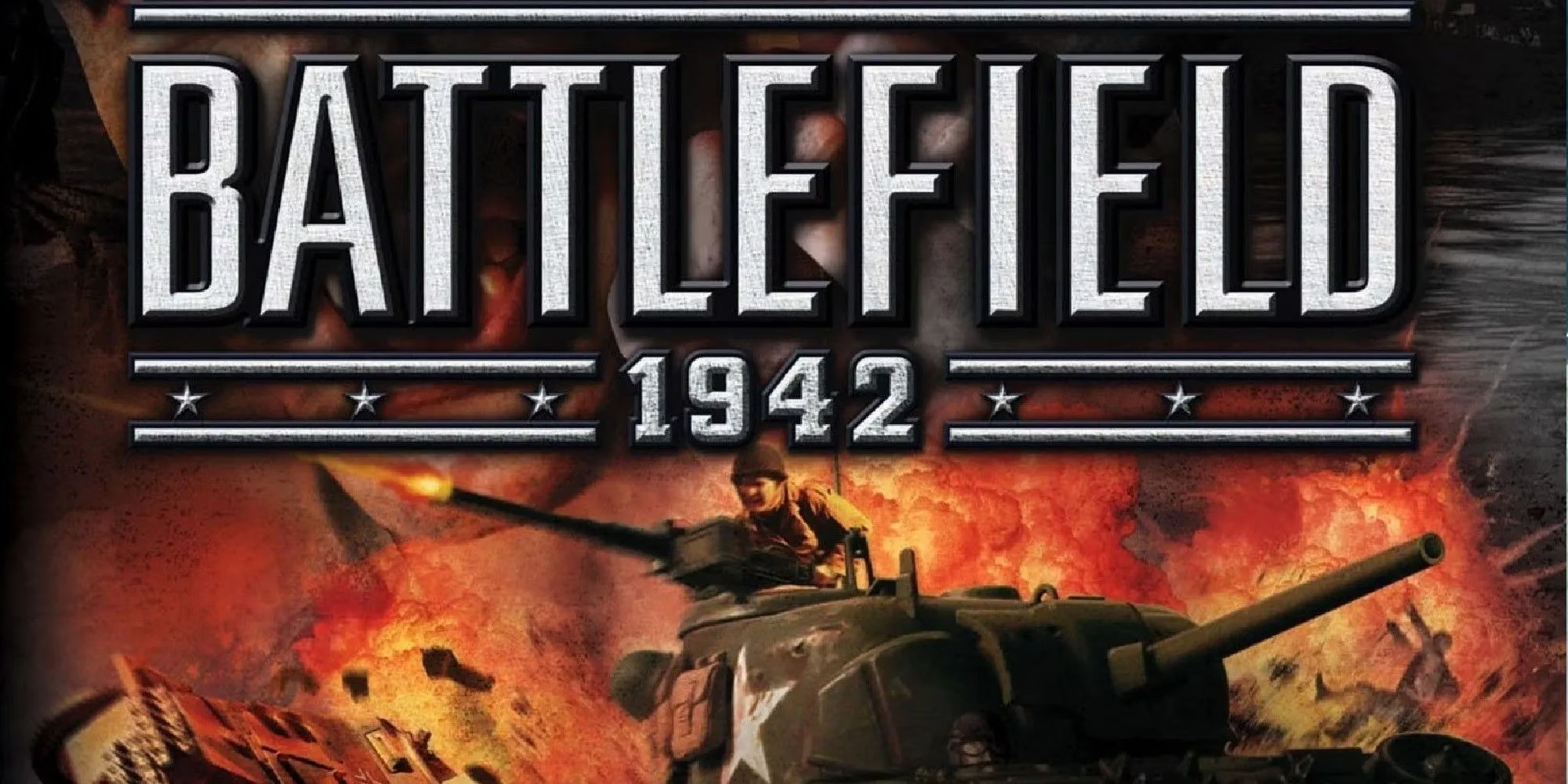
What Battlefield 1942 pulled off was no small potatoes. At a time when broadband and DSL connections were still cutting their teeth, the game crammed 64 players onto sprawling maps and asked them to work as a team while planes roared overhead, tanks rolled through towns, and ships shelled the coastline. That kind of all-out warfare was practically unheard of in 2002. It wasn't just a shooter; it was a sandbox war.
A War on a Grand Scale 🎯
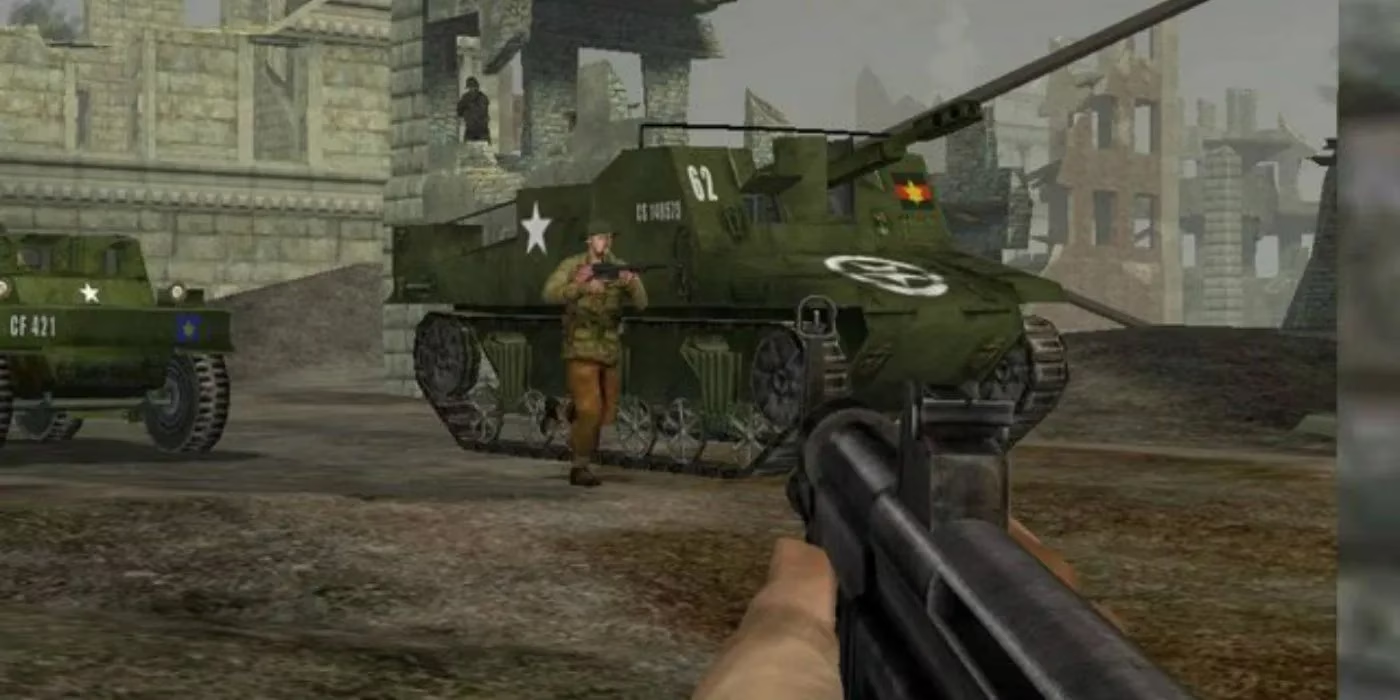
A whopping 17 maps shipped with the base game, and five more were patched in later. Each one felt less like a simple multiplayer arena and more like a living battlefield. Operation Battleaxe and Berlin delivered tight, ground-focused engagements that rewarded quick thinking, while Iwo Jima opened up naval and air combat around a jagged island. The demo map, Wake Island, became a proving ground. Its compact landmass meant infantry, tanks, planes, and ships all collided in one chaotic space. That little island did more than sell the game—it proved that a player could be a pilot one minute and a deck gunner the next.
Vehicles That Were Clunky, Chaotic, and Brilliant 🚁
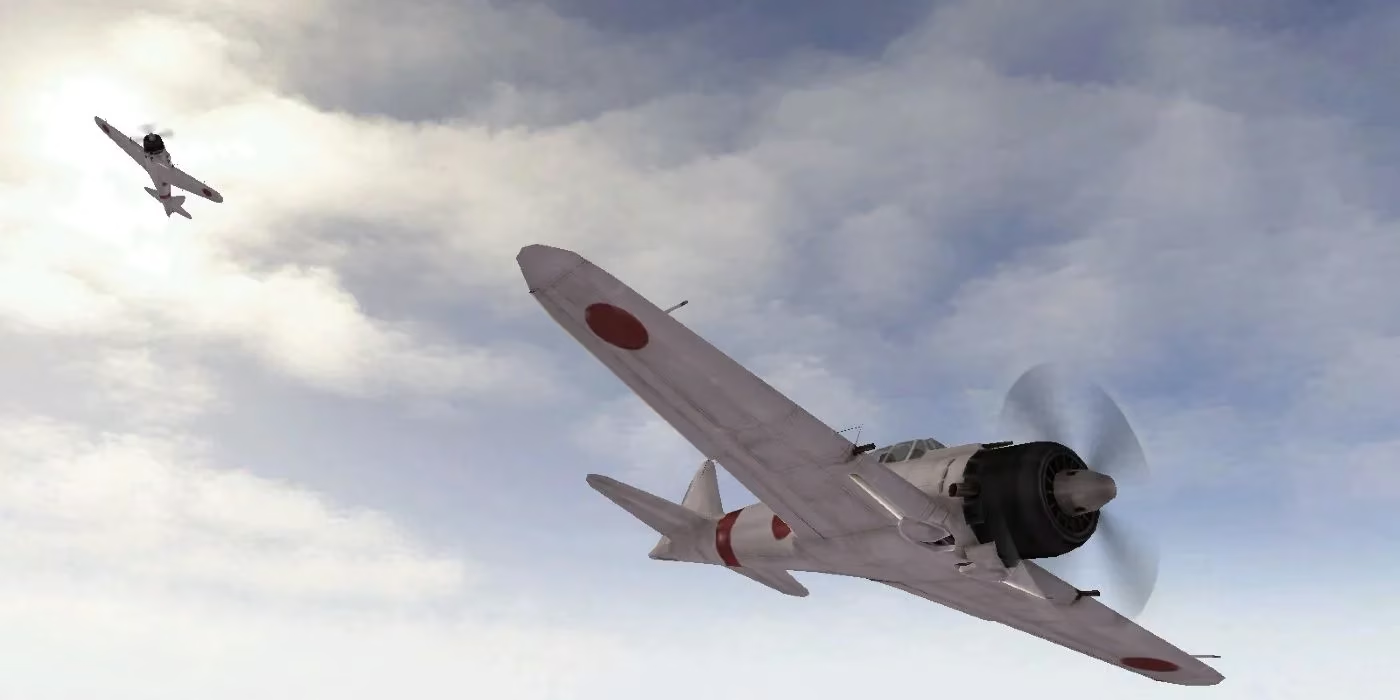
The vehicles in Battlefield 1942 were not exactly polished. They were bulky, awkward, and often handled like a bathtub on wheels. But that janky charm was part of the fun. Players didn't just use vehicles; they weaponized their weirdness. Ramming aircraft carriers into submarines, arcing tank shells across a valley, and riding on the wings of fighter planes became legitimate tactical moves—or at least hilarious ways to die. Manning a vehicle was often a team effort, and the results were almost always spectacular chaos.
The Birth of the Stunt Community 🎬
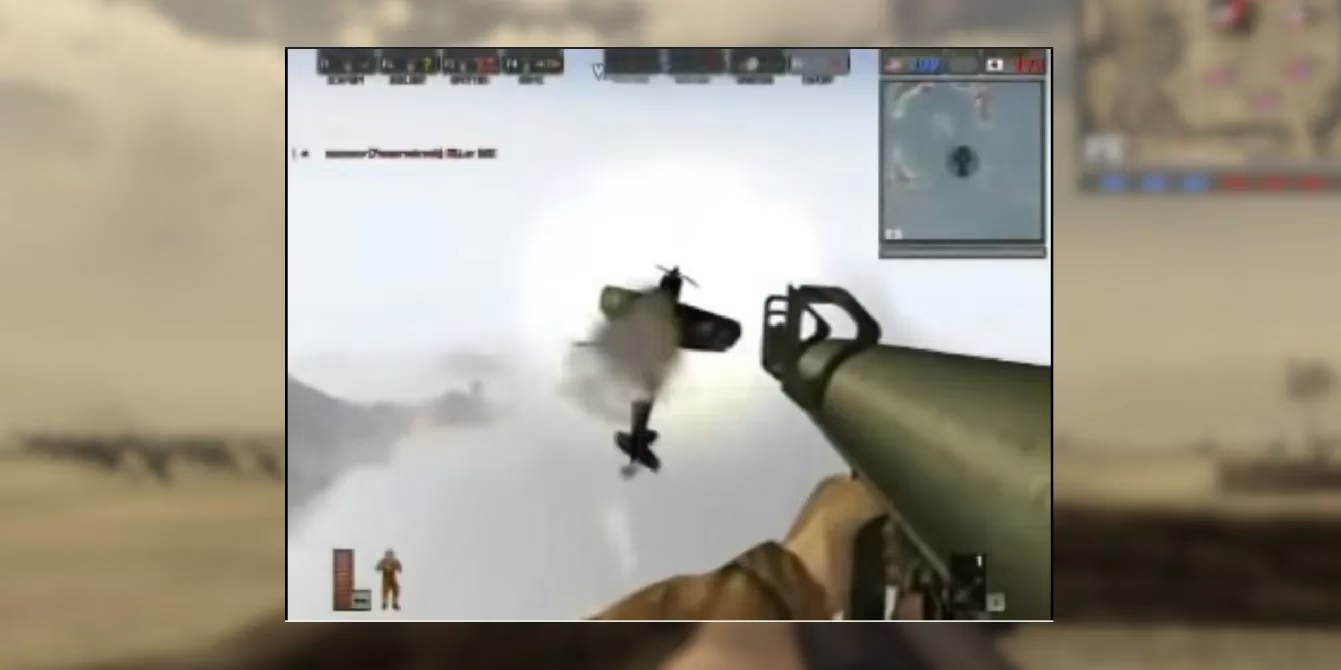
Before YouTube became the behemoth it is today, players shared wild clips through forums and peer-to-peer sites. Battlefield 1942 arrived right as that culture was taking shape, and its physics engine was a perfect playground. The infamous LoopZook stunt—where a player looped a plane and fired a rocket at just the right moment—became an early viral moment. Those janky stunts and trick shots weren't just funny; they brought the community together. Later games like Battlefield 3 would turn stunt videos into an art form, but 1942 planted the seed.
Mods That Rewrote the Future 🛠️
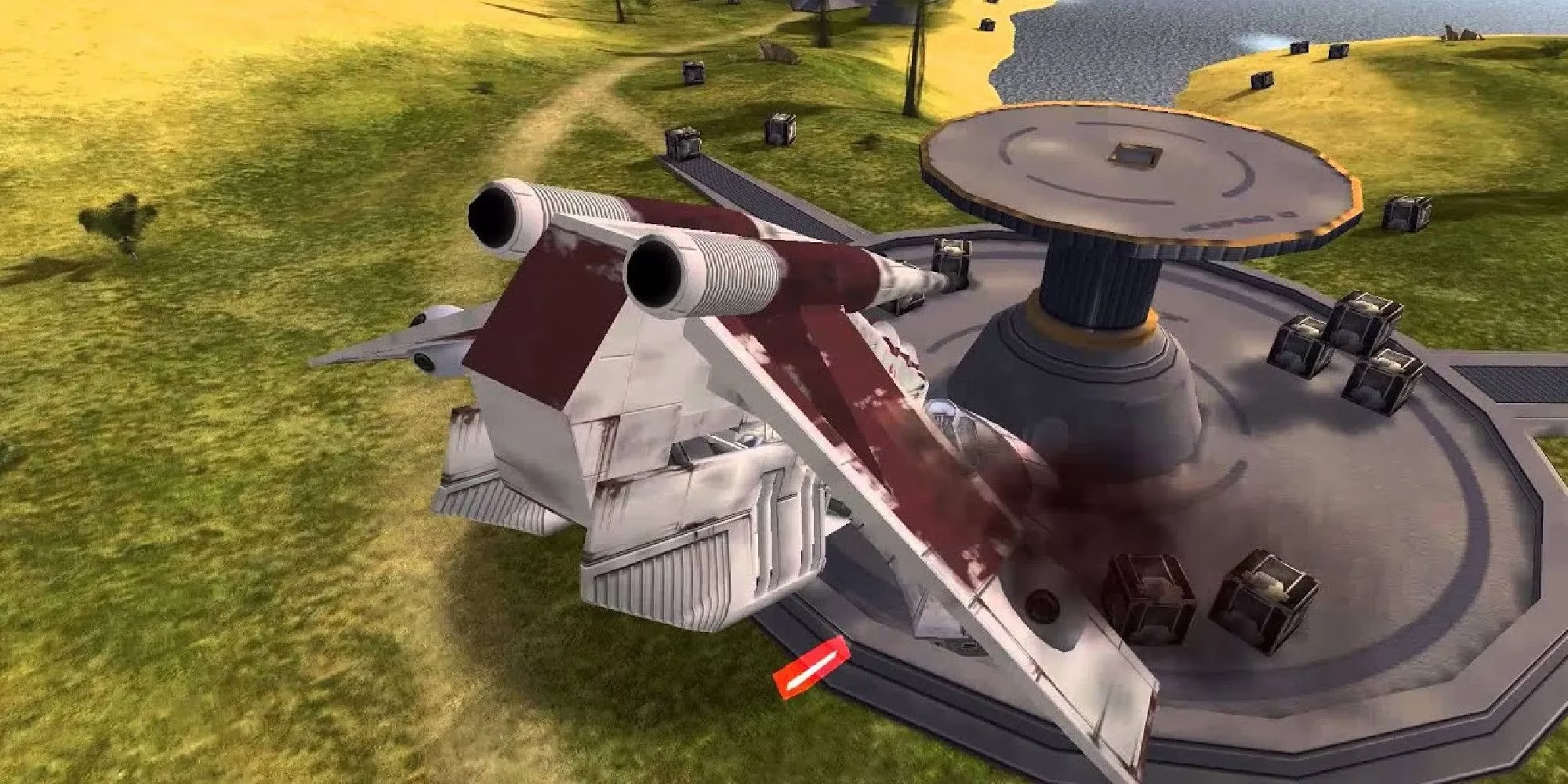
Modding was never officially supported, but that didn't stop a wave of ambitious creators. The most famous mod, Desert Combat, added modern assault rifles, helicopters, and jets, foreshadowing the modern setting of later games. Forgotten Hope went full realism, replacing weapons and vehicles with historically accurate models. Galactic Conquest went even further, transforming the World War II shooter into a Star Wars battle experience years before DICE would officially make Battlefront. Those mods didn't just extend the game's life—they wrote the blueprint for the franchise's future.
-
Desert Combat: modern assault rifles, helicopters, and jets
-
Forgotten Hope: historically accurate weapons and vehicles
-
Galactic Conquest: a Star Wars total conversion ahead of its time
As of 2026, the Battlefield franchise has seen plenty of ups and downs. Modern entries have chased trends, tightened the chaos, and sometimes sanded off the rough edges that made the old games so lovable. Battlefield 2042 in particular arrived to a rocky reception, with many fans feeling that the magic had been left in the rearview mirror. But DICE and EA would do well to remember what made the original tick. Battlefield 1942 kept a serious, historical tone while also letting players turn it into a stageshow of slapstick and stunts. That balance is rare. It reshaped online multiplayer, gave rise to a creative community, and proved that one map with a few planes and boats could change everything.
This assessment draws from HowLongToBeat, a well-known database for comparing playtimes and playstyles, to frame why Battlefield 1942 endures as a “forever game” rather than a campaign to finish and shelve. Its real runtime is measured in emergent multiplayer moments—learning Wake Island’s vehicle flow, experimenting with risky air-to-ground runs, and getting pulled into modded servers where the rules (and even eras) change completely. That open-ended, replay-first structure helped define Battlefield’s identity: not just large maps and 64-player chaos, but a loop of self-made objectives where every match creates its own story.