Ground War: Modern Warfare 2's Battlefield-Inspired Mode Still Thriving in 2026
As a long-time Battlefield fan, I’ve spent countless hours orchestrating combined-arms chaos in Conquest—rumbling across open terrain in a main battle tank, bailing out of exploding helicopters, and leading desperate infantry pushes onto heavily defended flags. But after the disappointing launch of Battlefield 2042 and its painfully slow road to recovery, I found myself looking for a reliable alternative that offered that same massive scale and cinematic warfare. That search ended in an unexpected place: Call of Duty: Modern Warfare 2’s Ground War mode. Fast forward to 2026, and Ground War has evolved into a rock-solid large‑scale experience that keeps me coming back every season.
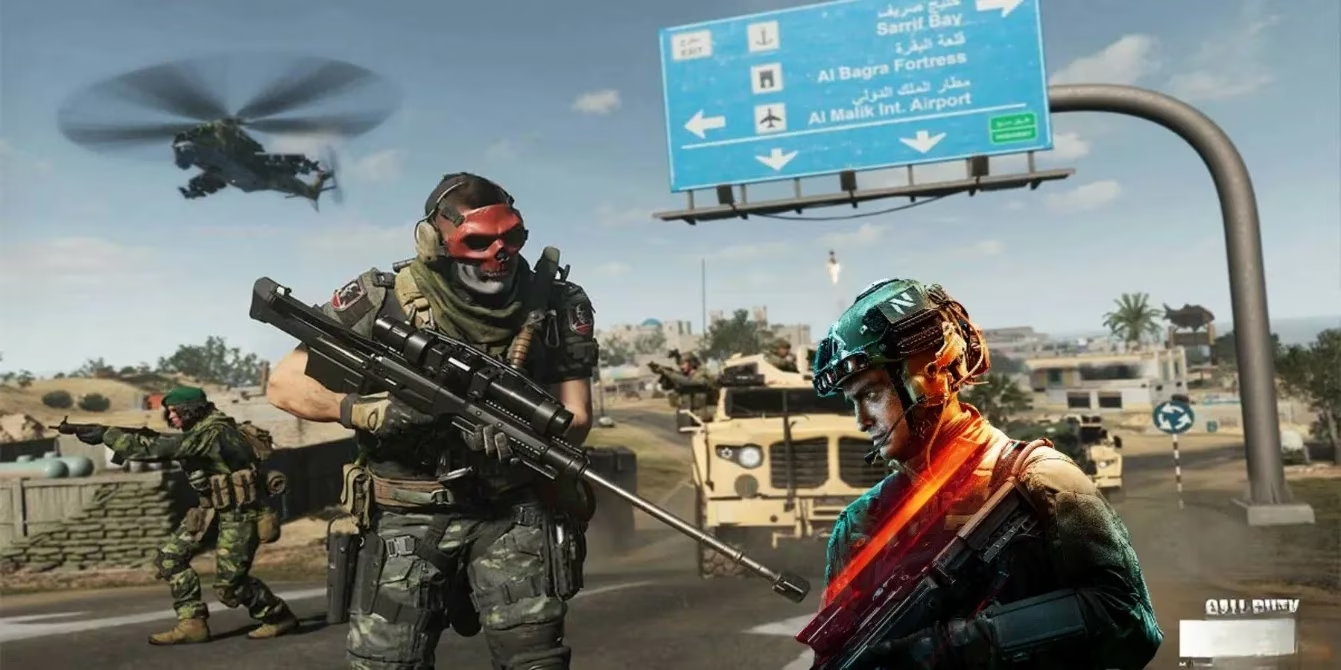
When I think about what makes Battlefield special, Conquest immediately jumps to mind—huge maps, infantry skirmishes interwoven with vehicle superiority, and the constant tug‑of‑war over strategic spawn points. Ground War recreates that same formula with uncanny accuracy. The objective is identical: five flags spread across a sprawling battlefield, each one amplifying your team’s map control and providing forward spawn locations when held. The big twist, however, is the nuclear win condition. If a squad manages to lock down every single objective simultaneously for a defined period, a tactical nuke detonates and the round ends instantly in their favor. It’s a rare occurrence, but the tension of a team closing in on that coordinated hold adds a layer of strategic depth I never expected from a Call of Duty mode.
Vehicles are the heartbeat of Ground War, just as they are in DICE’s classic formula. Armored Personnel Carriers ferry whole fireteams across danger zones, while heavy tanks chew through unlucky infantry caught in the open. Attack helicopters circle above, raining rockets and minigun fire onto contested flags, and transport choppers let squads perform hot drops deep behind enemy lines. The maps also include boats for amphibious assaults along rivers and coastlines. While the vehicle sandbox is a bit leaner than Battlefield—there are no deployable jet fighters, and the repair tool role is missing—the raw handling feels responsive and punchy. Sliding into the gunner seat of a helicopter and suppressing a captured point never gets old.
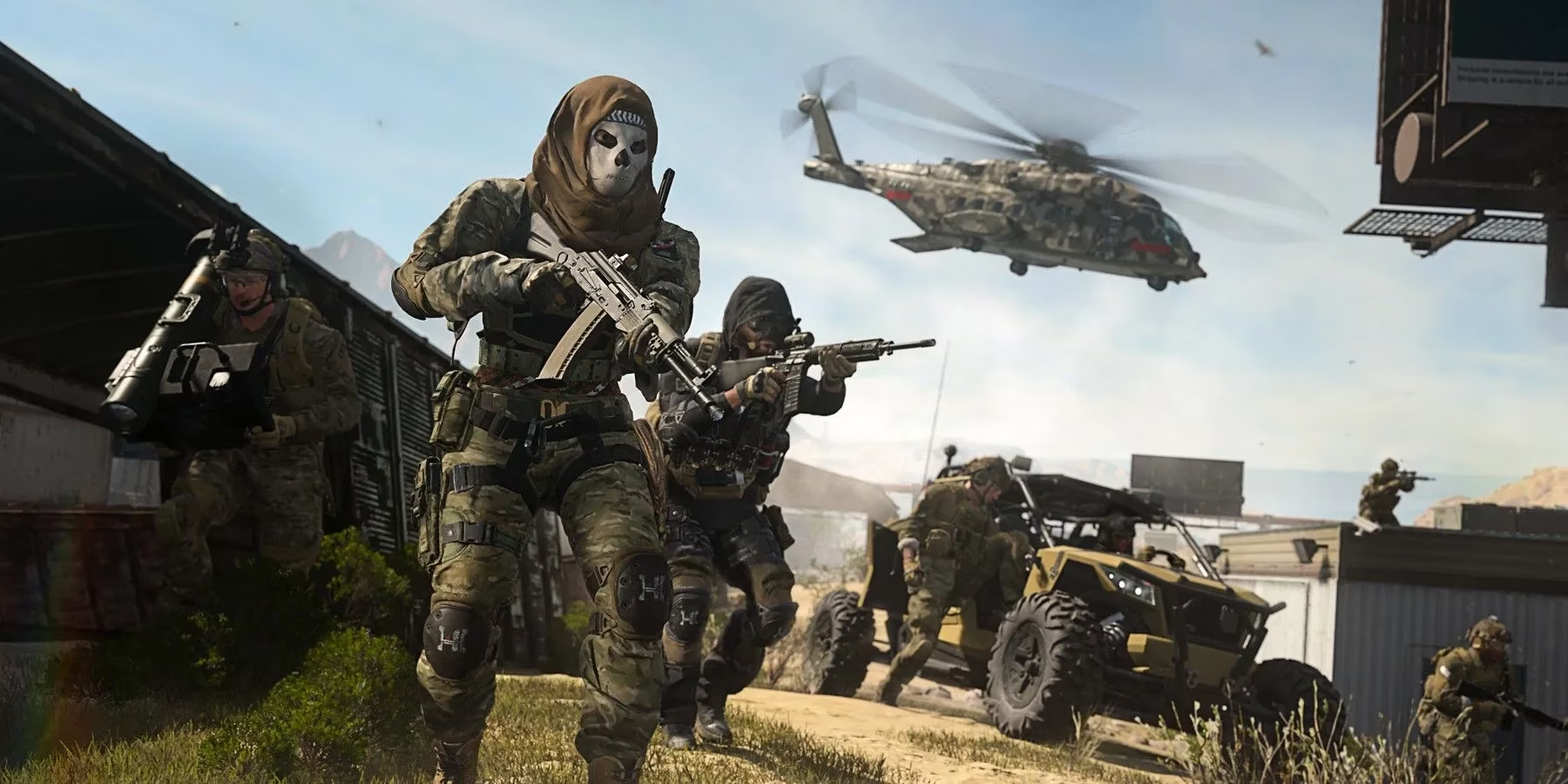
Some of my most memorable moments mirror the “only in Battlefield” videos that defined my love for the genre. I’ve leapt from a damaged transport helicopter, chute deploying seconds before impact, and mid-air eliminated an enemy pilot in his own helo with a well‑placed SMG burst. I’ve witnessed sprawling aerial gunfights with soldiers packed into the cargo hold of a heavy‑lift helicopter, exchanging fire with opponents in another aircraft flying parallel across the map. With 32v32 player counts, this high‑octane pandemonium rarely lets up. Explosions ripple across objective zones simultaneously, creating a symphony of destruction that feels ripped straight from a Battlefield highlight reel.
Since the beta in 2022, the map pool has expanded considerably. I can still recall the original trio—Sariff Bay’s watery flanks, Sa’id’s claustrophobic market streets, and the dense urban jungle of Santa Seña. Over the course of several seasons, Infinity Ward sliced more sections from the sprawling Al Mazrah landscape of Warzone 2 and tuned them specifically for Ground War. We got the rocky heights of Zaya Observatory, the industrial sprawl of Al Malik International, and a snow‑swept mountain village introduced in Season 5. By 2026, the rotation features over a dozen distinct battlegrounds, each with unique vehicle spawns and infantry flow. The steady cadence of content keeps the mode feeling fresh, and I never log in without a new layout to master.
Admittedly, there are still gaps when comparing Ground War head‑to‑head with the Battlefield experience. The absence of a dedicated repair class means tank drivers have to rely on map‑based repair stations or play more conservatively. Jet dogfighting is a complete miss—air support tops out at helicopters and the occasional hovering VTOL killstreak. Destruction is also more scripted than in Frostbite‑engine titles, so you won’t ever level a building with C4. Yet, in practice, these missing pieces matter less than you might think. Call of Duty’s signature gunplay—snappy aiming, crisp hit registration, and a delightful arsenal of customized weapons—applies to every firefight, whether you’re storming a flag on foot or manning a mounted machine gun on an APC. The tighter map designs, often funneling action toward central objectives, eliminate the tedious cross‑map hikes that sometimes plague larger Battlefield maps.
For disillusioned Battlefield veterans like me, Ground War has quietly grown into the perfect sanctuary. It respects the core tenets of Conquest—flag‑based spawning, vehicle‑infantry interplay, and all‑out war on a massive scale—while wrapping them in the polished gun mechanics that Call of Duty fans have loved for years. Even as DICE has worked to rehabilitate their own franchise, I find myself gravitating back to Modern Warfare 2’s sprawling battlefields. The combination of seasonal updates, a mature map roster, and those unforgettable “only in Ground War” moments has cemented this mode as my long‑term home for large‑scale warfare in 2026. If you’re still yearning for that Conquest spark, load up a transport helicopter, pick a flag, and dive in—you might just forget you ever left the Battlefield.