Battlefield's Future: Why the Classic Class System Must Return
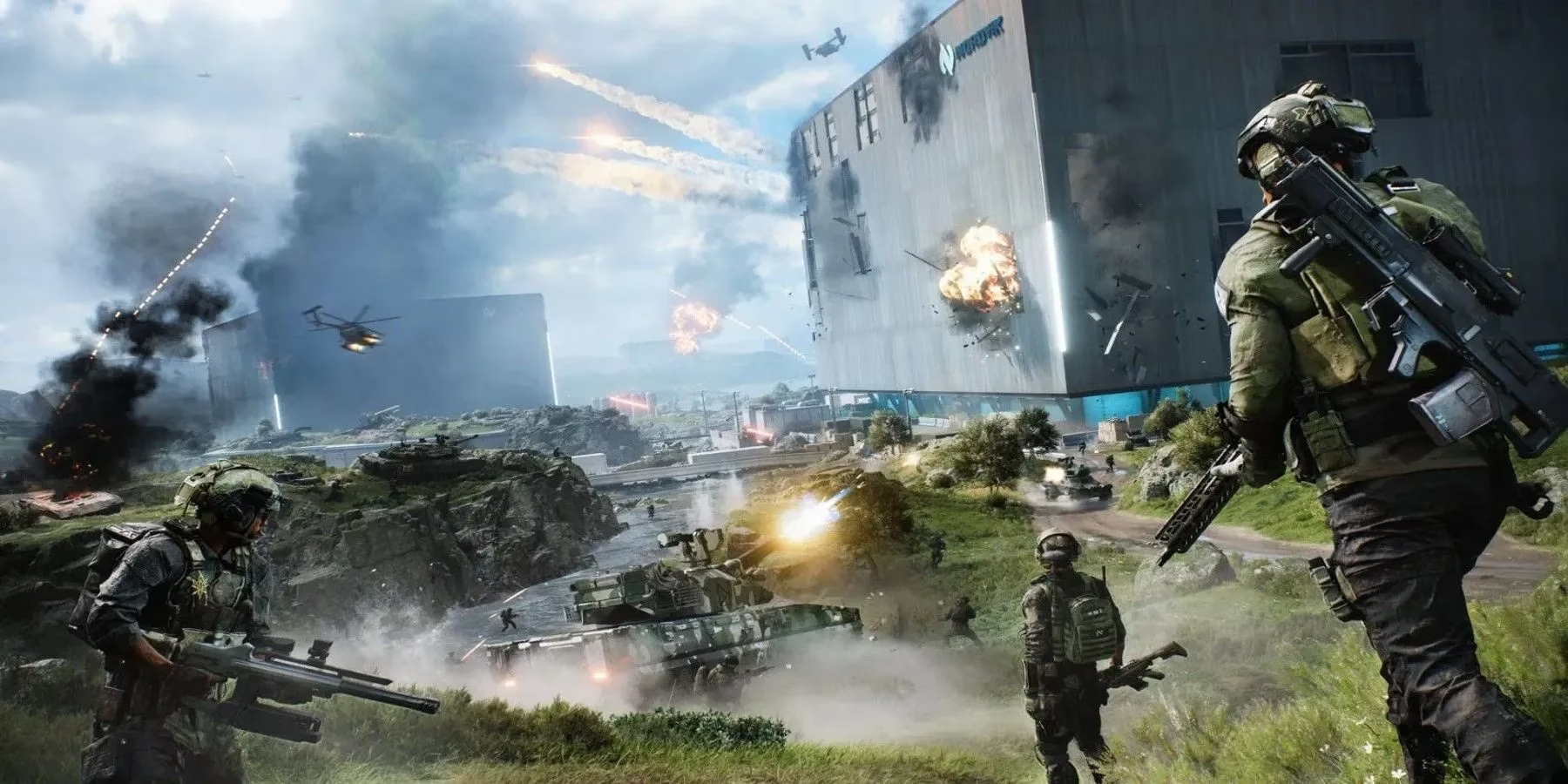
As the gaming community looks ahead to the next chapter of the storied Battlefield franchise, a recent and pivotal shift in Battlefield 2042 offers a clear roadmap for success. The most celebrated evolution in the game's post-launch lifecycle wasn't a flashy new battleground or weapon, but a profound and warmly received homecoming. With the pivotal Season 3: Escalation update, developer DICE undertook a significant course correction, retooling the divisive Specialist mechanic that defined the game's launch and reinstating the class-based system that has been the bedrock of the series' identity for decades. As whispers of a new title in development grow louder, this overwhelmingly positive player response should serve as the definitive guide for the franchise's future direction.
The Unwavering Popularity of the Class System
If there is one foundational element that should undoubtedly carry over to the next Battlefield installment, it is the class-based character selection framework. The iconic quartet—Assault, Engineer, Support, and Recon—is more than just a series staple; it is a universal language within the first-person shooter genre. These archetypal roles provide immediate, intuitive understanding for players of all skill levels. A newcomer can glance at the options and instantly grasp the core gameplay loop associated with each choice, whether it's frontline aggression, vehicle repair, team sustenance, or long-range reconnaissance. For the next game, committing to this classic structure would accomplish two critical goals: it would help mend bridges with veterans still disillusioned by Battlefield 2042's initial missteps, and it would lower the barrier to entry, allowing everyone to dive into the chaotic, large-scale warfare that defines Battlefield without a lengthy onboarding process.
The Misstep of the Specialist System
The Specialist system, introduced at Battlefield 2042's launch, was ostensibly designed to empower players with greater customization and personal agency. Functioning more akin to the hero-shooter or loadout systems seen in titles like Call of Duty: Black Ops 3, it assigned each character a unique name, distinctive visual identity, and a predefined set of gadgets. The intention was to break free from the traditional constraints and offer unprecedented freedom in crafting a soldier's kit.
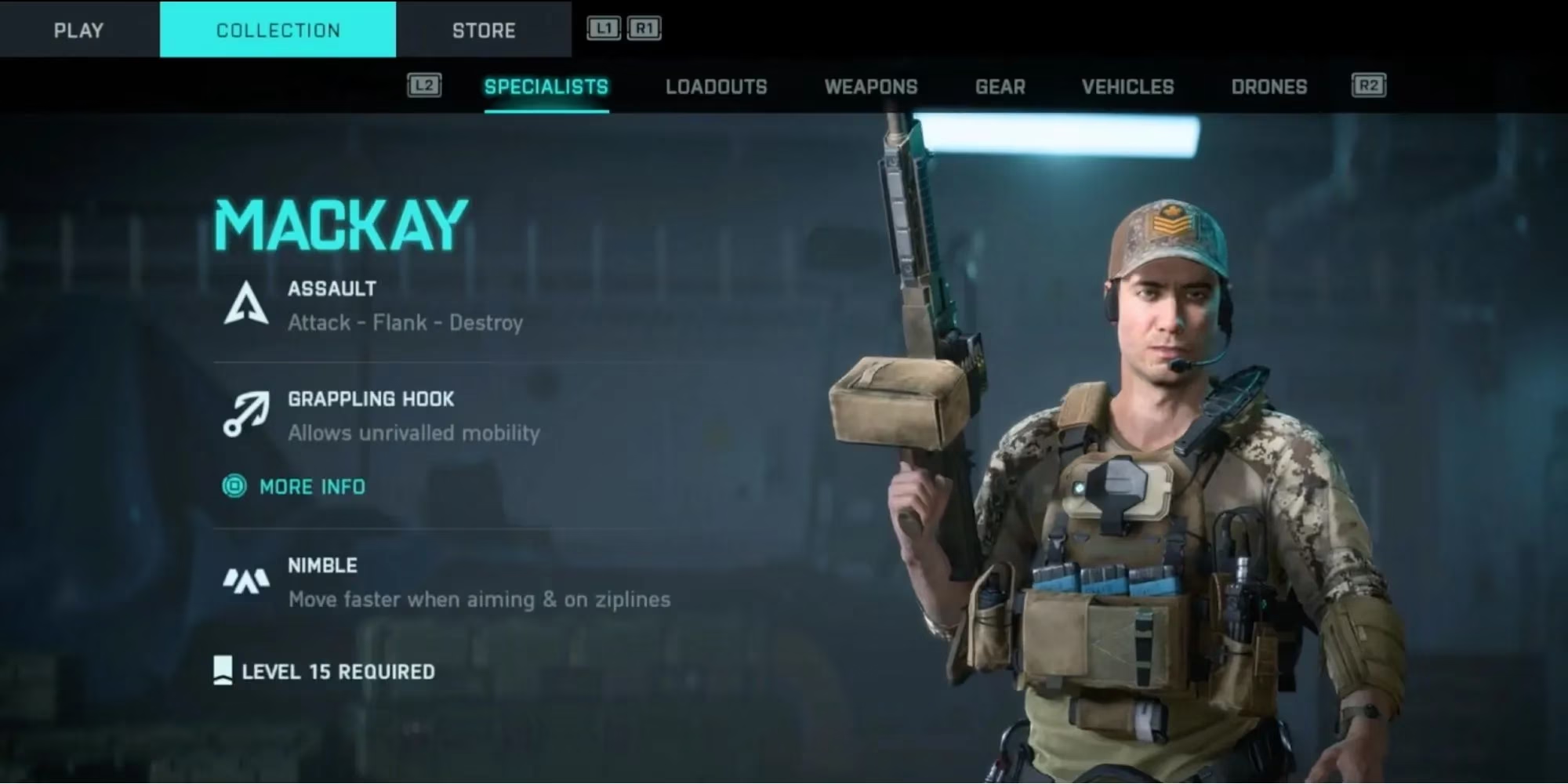
However, this well-intentioned design proved to be a source of significant confusion and frustration for the community. While it did remove previous weapon restrictions tied to classes, it often muddied the waters regarding team roles. In the heat of a 128-player battle, it became challenging to quickly identify which ally could revive you, who could repair your tank, or who was equipped with anti-air capabilities. This lack of role clarity disrupted the strategic, team-oriented gameplay that is central to Battlefield's appeal. The resulting friction not only contributed to the game's notoriously rocky commencement but also created an unnecessary hurdle for players seeking a quick, seamless matchmaking experience.
A Blueprint for the Next Battlefield
With EA and DICE hinting at a major reimagining for the franchise's future, the development team faces the monumental task of curating features. Amidst potential sweeping changes, the class-based loadout system, triumphantly reintroduced in Season 3, stands out as a non-negotiable element to retain. Its value is multifaceted:
-
Instant Familiarity: It taps into decades of franchise legacy, providing a comfortable and recognizable foundation for returning fans.
-
Streamlined Onboarding: It drastically reduces the time between booting up the game and engaging in combat, removing the need to analyze a roster of unique Specialists.
-
Clear Team Play: It reinforces the "rock-paper-scissors" balance and interdependent roles that make Battlefield's large-scale conflicts so compelling.
The modern implementation, as seen in 2042's later seasons, smartly blends tradition with flexibility. While players choose from the four core classes, each class still contains multiple character variants (the former Specialists) to allow for personal flair and gadget choice within a clearly defined role. This hybrid approach ensures players know exactly what gameplay experience they are selecting—be it a medic-focused Support or an ammunition-supplying one—without sacrificing all customization.
Learning from the Past, Building for the Future
DICE's concerted efforts to address feedback and overhaul Battlefield 2042 demonstrate a vital willingness to listen to its player base. The community's vocal and positive reception to the class system's return was a cornerstone of the game's remarkable turnaround in perception. For the next title, launching with this refined, straightforward system already in place would provide a massive head start. It would signal to players that the developers have learned a crucial lesson, building trust from day one and allowing the game to focus on delivering the cutting-edge, large-scale warfare and destruction that fans crave, free from foundational controversies.
As development continues on the next Battlefield experience, the message from the community is clear. The path forward is not found in reinventing the core identity but in perfecting it. By embracing the class system that defined its golden age, the next Battlefield can secure a stable foundation upon which to build its new era of all-out warfare.