Battlefield's Future: How DICE Can Learn from Call of Duty's Progression Systems
For years, the gaming community has engaged in a spirited debate, comparing the titans of the first-person shooter genre: Call of Duty and Battlefield. While personal preference often dictates the winner—with fans favoring Call of Duty's fast-paced, arcade-style action and others championing Battlefield's expansive, vehicle-heavy warfare—the introduction of large-scale modes like Ground War in Call of Duty has begun to blur these traditional distinctions. As this rivalry continues into 2026, a consensus has emerged in one critical area: progression systems. Most players and analysts agree that Call of Duty maintains a clear and significant advantage in providing players with long-term goals and rewarding gameplay loops, an area where the Battlefield franchise has historically struggled to keep pace.
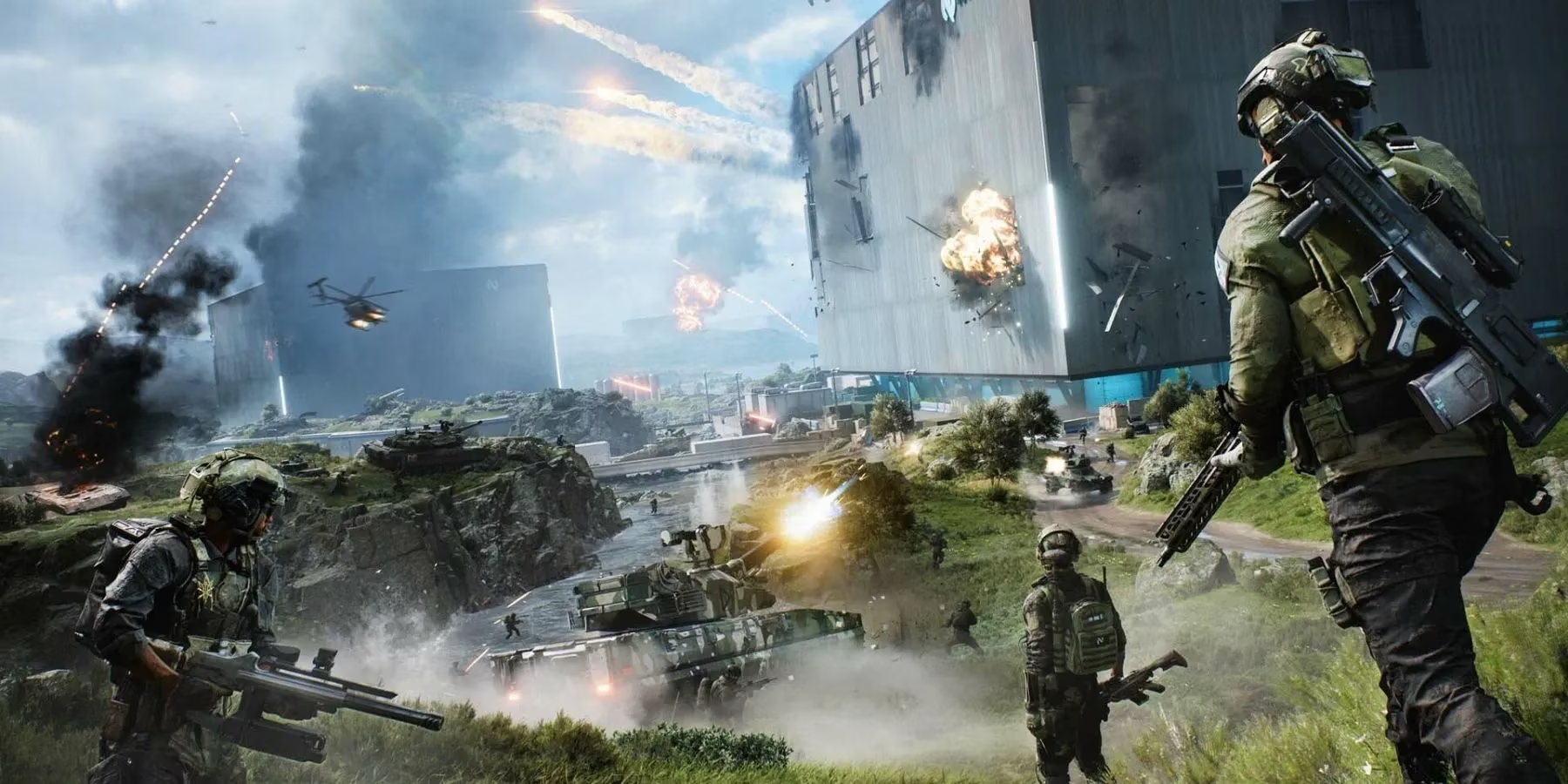
While the core gameplay and unparalleled environmental destruction in Battlefield titles ensure that every match feels dynamic and unique, many of these games suffer from a notable lack of meaningful content to unlock. Call of Duty players, in contrast, are consistently presented with clear objectives to strive for, whether through intricate challenges, extensive weapon camouflage grinds, or the pursuit of max prestige ranks. For gamers who seek tangible rewards and long-term progression, Battlefield experiences can feel shallow, leading to quicker player burnout. Therefore, as DICE looks to the future of the franchise, integrating stronger, more engaging progression systems should be a paramount priority to retain its dedicated player base and attract new fans.
Revamping the Leveling System: Beyond Endless S-Levels
A primary area for improvement lies in the fundamental leveling structure. Call of Duty's approach to ranking up has consistently set the industry standard. The classic prestige system remains beloved by the community, and more recent iterations, like the seasonal model in Call of Duty: Modern Warfare II, offer players a manageable and refreshing grind every few months. Historically, only Battlefield 3 offered a standout progression journey with its Colonel 100 rank, a feat that required hundreds of hours of dedicated playtime, granting max-level players genuine prestige and a formidable reputation.
The current S-Level system in Battlefield 2042 feels unsatisfying and endless, lacking a proper, rewarding end goal. DICE has a clear path forward:
-
Reintroduce a Prestige or Colonel-Style System: Embrace a format that provides a definitive, long-term achievement. This could involve resetting ranks for exclusive rewards or implementing a multi-tiered officer rank system that takes significant time to complete.
-
Seasonal Rank Resets with Meaningful Rewards: Follow the modern Call of Duty model by offering fresh sets of levels each season, coupled with unique cosmetic or functional unlocks that incentivize continued play.

Weapon Progression: A Camo Grind Worth the Effort
Another critical frontier is weapon customization and camo challenges. Call of Duty's system, featuring dozens of unique weapon skins earned through specific, often demanding challenges, is a masterclass in player engagement. It pushes gamers to experiment with different weapons, attachments, and playstyles, ultimately providing a powerful means of personal expression. While Battlefield has improved gun customization, the methods for unlocking skins and the overall variety pale in comparison.
DICE can bridge this gap by:
-
Implementing a Multi-Tiered Camo System: Create challenges for specific weapon categories (e.g., assault rifles, sniper rifles) and universal mastery challenges. 🎯
-
Diversifying Challenge Requirements: Tasks should encourage objective play, vehicle destruction, long-range shots, and other core Battlefield mechanics, not just simple eliminations.
-
Expanding Cosmetic Variety: Offer a vast arsenal of skins, from realistic military patterns to more visually striking mastery camos that truly stand out on the battlefield.
Enhancing Challenges and Cosmetic Rewards
Beyond camos, a robust system of general challenges is essential. In Call of Duty, dedicated players can pursue calling card challenges to earn animated "mastery" cards, adding another layer of long-term goals. Battlefield's equivalent, ribbons and medals, often feel underwhelming as rewards.
To improve, DICE should:
-
Introduce a Calling Card/Dog Tag System: Allow players to unlock dozens of unique dog tag designs and player card backgrounds through bonus challenges. This provides cosmetic rewards that are constantly visible to other players.
-
Link Challenges to Playstyle Diversity: Design challenges that reward players for acting as medics, engineers, supports, and recons, reinforcing class roles and teamwork.
-
Provide Usable, Showcase Rewards: Ensure that earned cosmetics are prominently displayed in lobbies, on kill cards, and in end-of-round screens, giving players a reason to show off their accomplishments.
Specialist/Operator Progression: Filling a Void
A recent and curious misstep by Call of Duty's developers was the removal of Operator-specific progression levels in Modern Warfare II. This presents a golden opportunity for DICE. The next Battlefield title's Specialists (or their equivalent) could feature an individual leveling system.
| Progression Tier | Unlock Examples | Impact on Gameplay |
|---|---|---|
| Level 10 | Alternate Uniform, Common Voice Line | Minor cosmetic customization |
| Level 25 | Unique Helmet, Rare MVP Animation | Enhanced personal expression |
| Level 50 | Legendary Skin, Exclusive Quip Set | Significant prestige reward |
This system would reward player loyalty to a specific character, granting alternate skins, unique voice lines, MVP animations, and perhaps even slight cosmetic variants for their specialist equipment. It adds a personalized grind that complements weapon and overall rank progression.
The Battle Pass Is Not Enough
While Battlefield 2042's seasonal battle pass provides a stream of content, it is fundamentally insufficient as a standalone progression system. Once players complete the tiers—a task achievable by many dedicated gamers well before a season ends—they are left in a content drought until the next season begins. The player dissatisfaction surrounding live-service games like Overwatch 2 has proven that a battle pass alone cannot sustain long-term engagement for most of the player base.
The next Battlefield must avoid this fate by viewing the battle pass as one component of a larger ecosystem. It should be supplemented by:
-
Permanent progression systems (prestige, weapon camos, specialist levels).
-
Long-term challenge tracks that persist across seasons.
-
Prestigious rewards that cannot be simply purchased but must be earned through skill and time investment.
In conclusion, as the gaming landscape evolves, player expectations for rewarding progression have never been higher. By thoughtfully analyzing and integrating the strengths of Call of Duty's proven systems—meaningful rank resets, engaging camo grinds, diverse challenges, and deep operator customization—DICE can forge a path forward for the Battlefield franchise. The goal is not to copy, but to adapt and innovate, providing the series' passionate community with a wealth of reasons to stay on the battlefield for hundreds of hours to come. The foundation of fantastic large-scale warfare is already there; now it needs the enduring rewards to match.