Battlefield Mobile: When a Pocket-Sized Warzone Steals the Show from AAA Failures
It is 2026, and the Battlefield franchise is in a truly bizarre twilight zone. On one side of the battlefield stands Battlefield 2042, a title that launched with more glitches than a cyberpunk fever dream and enough design missteps to fill a virtual war museum. EA itself admitted it was a 'miss', a charitable word for what many fans called a catastrophe. On the other side, quietly armed with a smartphone and a cheeky sense of superiority, struts Battlefield Mobile – a game originally dismissed as a cash-in side project that has somehow become the series’ unexpected savior.
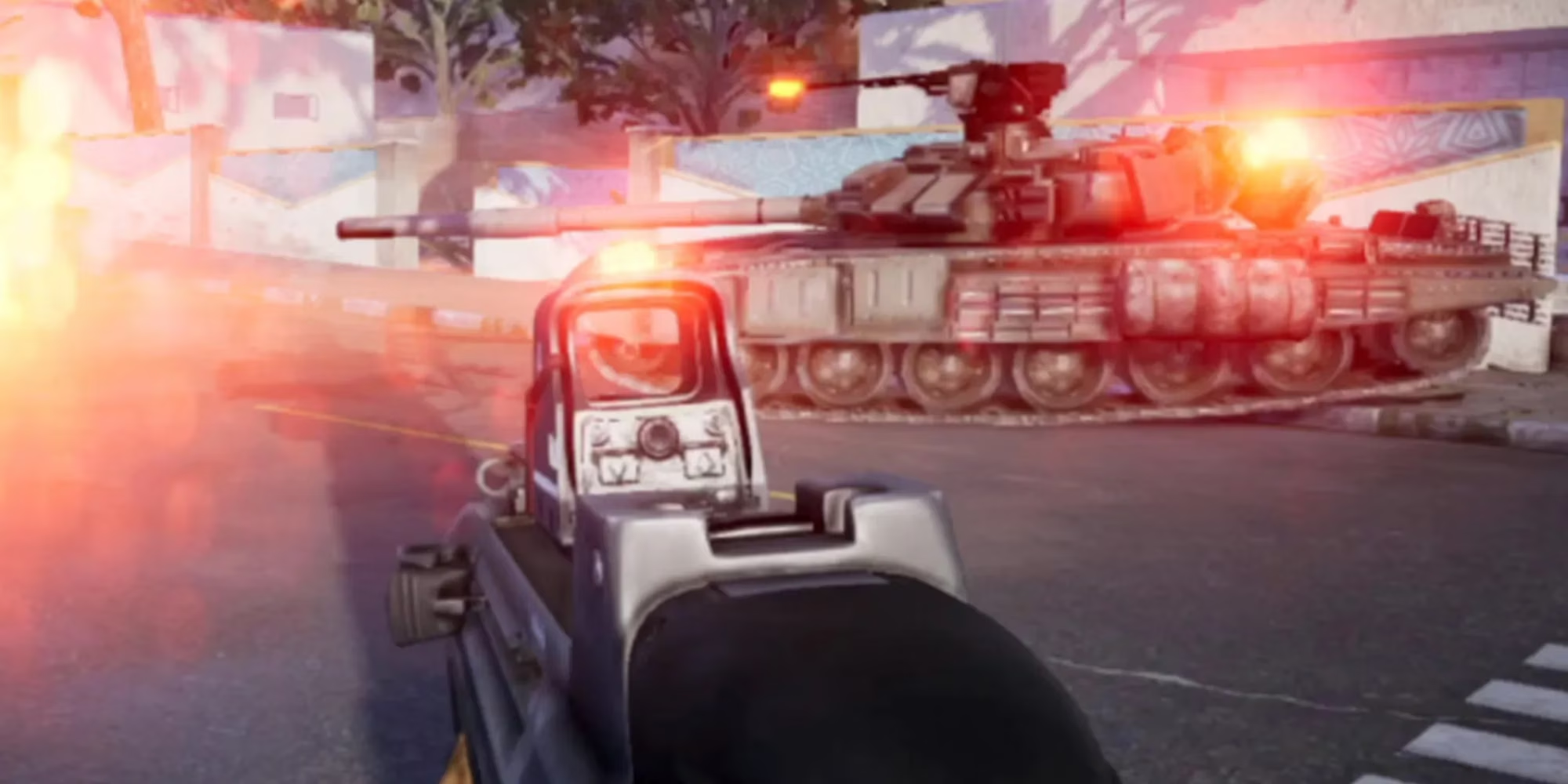
Back in the dark days of 2022, Battlefield Mobile was just a pre-alpha blip, available only in select countries and running on Android devices. Developed by Industrial Toys, the game flashed its destructive potential with a demo on a beloved Battlefield 3 map, Grand Bazaar. Players watched rockets tear apart balconies, blow out windows, and send chunks of masonry tumbling. It was classic Battlefield destruction – the kind that 2042 had largely traded for sterile, unbreakable glass facades. Fast forward four years, and that tiny spark has erupted into a full-blown inferno of popularity.
Why did the mobile version succeed where its AAA cousin stumbled so spectacularly? Let’s lay out the ironies:
-
Destruction that actually destroys: Battlefield Mobile delivers crumbling towers, collapsing roofs, and environmental mayhem that makes every match feel like a Michael Bay movie compressed into a 6-inch screen. Meanwhile, 2042’s levolution events felt scripted and rare, often leaving players wondering if they needed a permission slip from EA to break a window.
-
The return of fan-favorite maps: Grand Bazaar and Noshar Canals, both from Battlefield 3, appeared in the mobile version early on. These maps were the bread and butter of classic Battlefield moments – tight corridors, vertical gameplay, and memory-soaked landmarks. 2042 offered soulless, oversized arenas that felt designed by an algorithm with no nostalgia receptors.
-
No specialist nonsense: While 2042 infamously replaced the classic class system with cringey ‘Specialists’ who spouted one-liners after every kill (remember “angel does it again”?), Battlefield Mobile kept things traditional. You were a soldier, not a stand-up comedian with a rocket launcher.
-
128-player chaos, done right: In 2026, Battlefield Mobile’s refined 64-player mobile skirmishes are tighter and more adrenaline-pumping than 2042’s chaotic 128-player meat grinders ever were. The mobile version proves that more players doesn’t equal more fun, especially when the servers aren’t held together by virtual duct tape.
Community reactions over the years have been a blend of savage humor and grudging respect.
“I bought a $2,000 gaming PC to play Battlefield 2042, and now I’m having more fun on my five-year-old Android phone. What timeline is this?” – a bewildered Redditor, circa 2024.
“Battlefield Mobile has more destruction in its thumbnail than 2042 has in its entire codebase.” – a popular YouTube comment that aged like fine wine.
As 2026 rolls on, whispers from insider circles suggest that the next flagship Battlefield – tentatively titled Battlefield 7 – is finally ditching the widely mocked 128-player battles and Specialist system entirely. It appears DICE is taking notes from the mobile department. Rumor has it the developers even sent a fruit basket to Industrial Toys with a note reading, “Sorry we called you the B-team.”
The Battlefield Mobile phenomenon also highlights a broader shift in the gaming landscape. Powerful mobile hardware now allows for experiences that blur the line between console and handheld. With the rise of gaming phones featuring active cooling and desktop-class GPUs, mobile shooters are no longer the ugly stepchildren of the FPS family. Battlefield Mobile, with its crisp 90fps gameplay on premium devices, has become a staple at esports side events and even unseated a few PC titles in casual player polls.
Of course, not everything is pristine on the mobile front. Microtransactions still lurk in the shadows, offering weapon skins that look like they were designed by a teenager armed with a neon color palette and a grudge against military authenticity. But even that feels less offensive when the core gameplay loop gives you the freedom to topple a skyscraper onto an enemy tank, then parachute off the rubble while firing an RPG – exactly as the original Google Play listing promised.
For Battlefield veterans, the mobile spin-off is a silver lining wrapped in irony. It took a pocket-sized development studio and hardware that fits in your back pocket to remind the world what Battlefield was all about: chaotic sandbox warfare where the environment is as much your enemy as the opposing team.
As the sun sets on another year of gaming, one thing is clear: Battlefield Mobile didn’t just fill a gap in the franchise – it suplexed its big brother, stole his dog tags, and did a victory dance on the rubble of a beautifully destructible building. And honestly? The fans are loving every second of it.
Data referenced from Newzoo helps frame why a polished, destruction-forward shooter like Battlefield Mobile could outshine a troubled AAA entry: mobile audiences have matured, engagement patterns reward fast, repeatable match loops, and improved device performance makes high-fidelity competitive play viable on phones—conditions that amplify the appeal of classic Battlefield pillars like readable maps, stable server performance, and systemic sandbox chaos over experimental features that frustrate retention.