Battlefield 6's Comeback Quest: Facing Old Rivals and New Realities in 2026
As a professional gamer, I've witnessed countless gaming rivalries rise and fall, but the perennial clash between Battlefield and Call of Duty has a unique, undying pulse. In 2026, with the dust settled from the 2025 launches, we can see a landscape fundamentally reshaped. Battlefield 6, or as it's now known post-launch, entered the arena not just to challenge the financial behemoth that is Call of Duty: Black Ops 7, but to undertake a far more critical mission: a redemption arc for its own soul. The head-to-head battles fans debated a decade ago feel like a nostalgic memory. Today, the real war wasn't just for market share against Activision's titan; it was a grueling, internal campaign to win back the trust of a core fanbase left wary by years of turbulence.
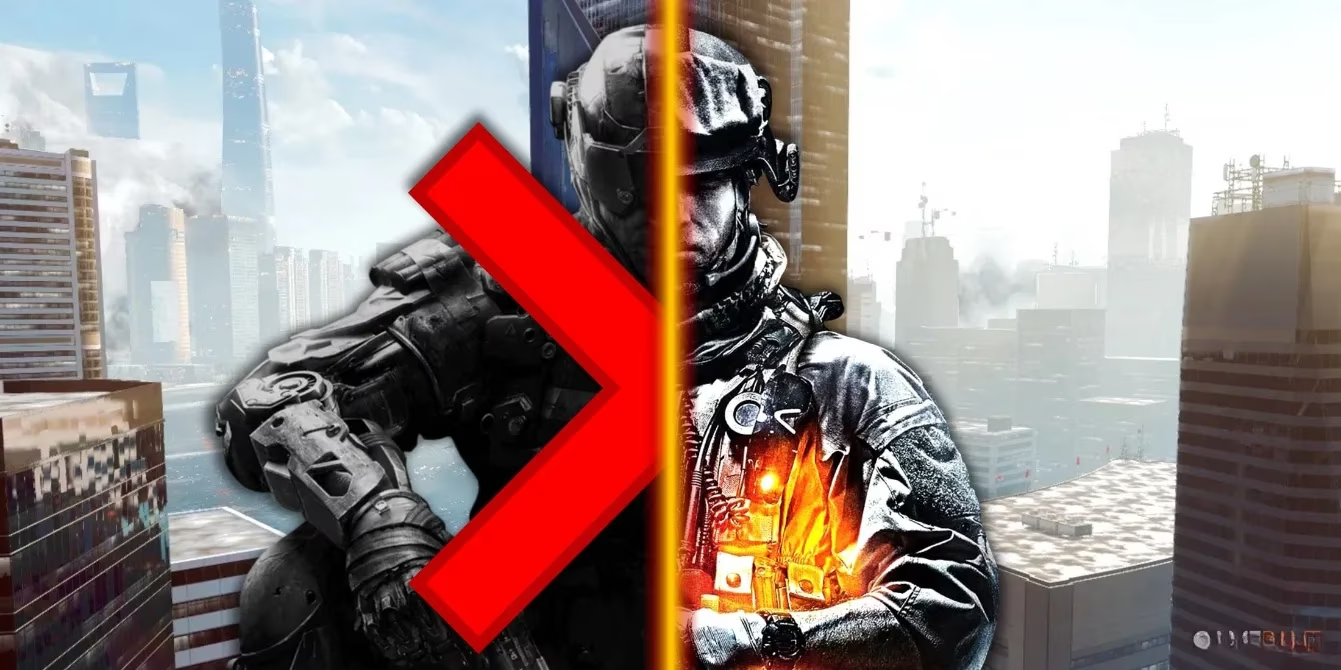
The narrative from EA and DICE was clear and, to long-time players, hauntingly familiar: "Back to its roots." We heard this same chorus before Battlefield 2042, promised as a "love letter to the fans." I remember the crushing disconnect when that game launched. The absence of the classic class system, the vast but barren maps, and the out-of-place, quippy Specialists—it felt like a identity crisis. Many in my circles felt it strayed further from Battlefield's core DNA than even the divisive Battlefield V. While 2042 underwent a remarkable, four-year-long recovery, that initial sting left a deep scar of skepticism.
This is where the Battlefield Labs initiative proved to be a masterstroke. As a participant in those early tests, I could feel a tangible shift. It wasn't just marketing; it was a transparent, collaborative effort to avoid past pitfalls. The labs environment showed players like me that developers were genuinely listening. Yet, scrolling through forums and discords in late 2025, a palpable anxiety lingered beneath a surface of cautious optimism. Could they really get it right from the start this time? Early details about Battlefield 6 sparked controversy, but mostly, the community was holding its breath, hoping a beloved franchise had finally learned its lesson.
Now, in 2026, we can assess the outcome. The competition with Call of Duty remains, but it's evolved. These titans often cater to different audiences within the broader FPS sphere:
-
Battlefield 6: Large-scale, combined arms warfare, dynamic destruction, squad-focused play.
-
Call of Duty: Black Ops 7: Fast-paced, cinematic, solo-campaign-driven, tight arena combat.
Yet, the legacy of their rivalry persists in every discussion, a testament to its enduring place in gaming culture. However, the battlefield (pun intended) has expanded dramatically. DICE's primary concern in 2026 isn't just Call of Duty.
The stunning success of indie projects like Battlebit Remastered was a wake-up call. It proved that the core Battlefield formula—large-scale chaos, team play, and destruction—could be executed brilliantly without AAA budgets, and it resonated deeply with fans craving that pure experience. This created a new competitive axis:
| Competitor | Threat Type | Key Lesson for Battlefield |
|---|---|---|
| Call of Duty | Traditional, Market-Dominating Rival | Maintain polished, high-production-value identity. |
| Indie Shooters (e.g., Battlebit) | Disruptive, Fan-Focused Innovation | Never take core community desires for granted. |
| Live-Service Giants (e.g., The Finals) | Modern Engagement & Style Competitors | Innovate within identity; don't just chase trends. |
Therefore, the tightrope DICE had to walk with Battlefield 6 was incredibly narrow: 😅
-
Honor the Classics: Revive the class system, deliver epic "Battlefield Moments" through environmental chaos, and focus on map design that encourages strategic play.
-
Deliver a Modern Experience: Ensure buttery-smooth performance, robust anti-cheat, a compelling live-service roadmap, and gameplay that feels contemporary, not dated.
-
Prove It Has Legs: Demonstrate a long-term vision that builds trust, not just a one-time nostalgic trip.
From my professional vantage point in 2026, the launch and subsequent seasons of Battlefield 6 show a franchise that has, for the most part, found its footing again. It didn't "beat" Black Ops 7 in sales—that financial colossus was always a distant peak. Instead, it achieved something more vital: it secured its own future. By successfully marrying that classic, large-scale warfare feel with a stable, content-rich modern framework, it has reclaimed its throne as the premier large-scale military shooter. The rivalry with Call of Duty is now less about direct combat and more about coexisting as two pillars of the FPS genre, each serving their king. The real victory for Battlefield wasn't in outperforming an old rival, but in finally listening to its own players and fending off the innovative sparks from new ones. The battle for relevance is perpetual, but for now, the franchise is back in the fight where it matters most: in the hearts of its soldiers.