Battlefield 2042’s Rocky Road and the Game Pass Revival by 2026
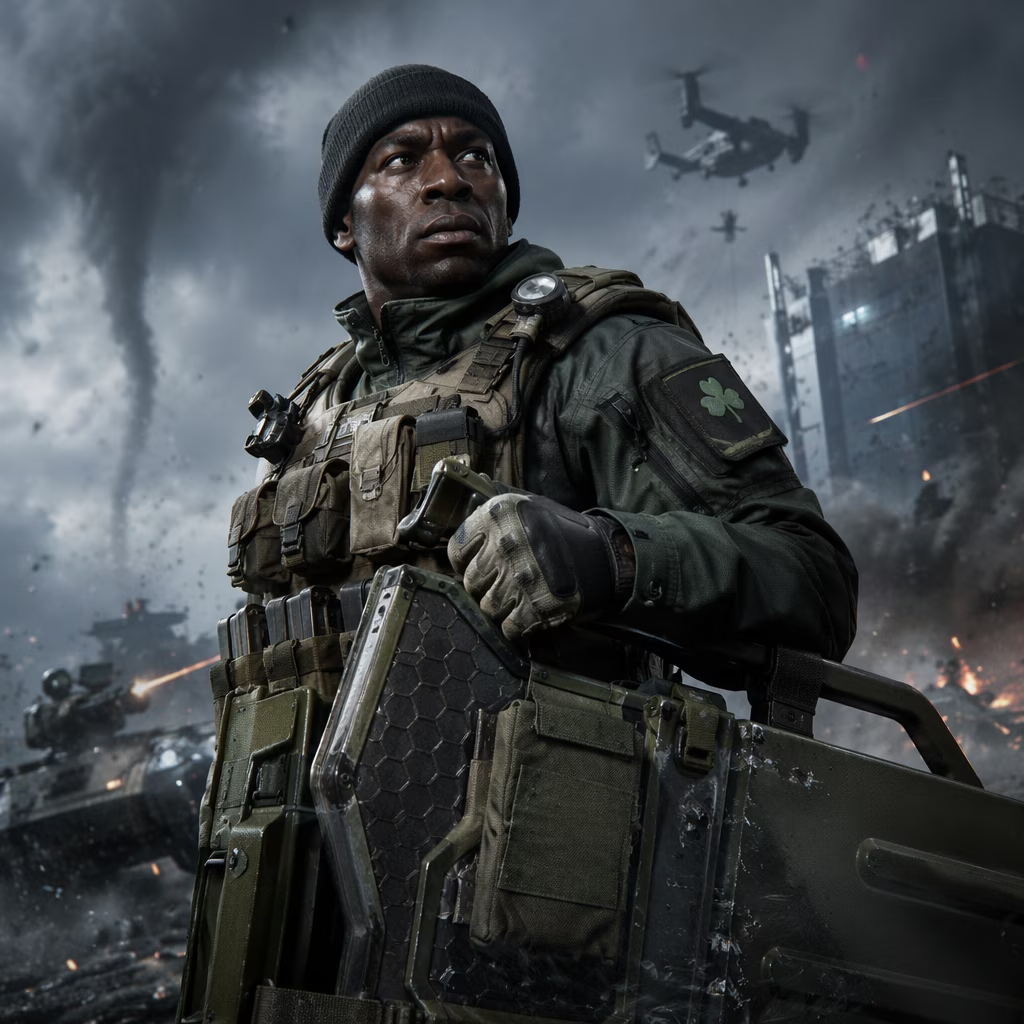
The opening chapter of Battlefield 2042’s life was, to put it gently, a disaster. By early 2022 the once-ambitious shooter had seen its player base collapse, with Steam charts showing numbers that rivalled decade-old titles rather than a live-service flagship. New content was repeatedly pushed back, the season pass roadmap evaporated, and the community’s patience wore thinner than a sniper’s resolve in a 128-player lobby. EA and DICE, however, refused to call retreat. Quietly, behind the scenes, a new plan was taking shape — one that would place the game in the hands of millions at no extra cost, hoping to refill the servers and rewrite the narrative.
The first public clue came in late February 2022, when eagle-eyed Xbox owners in Europe noticed something peculiar on the Microsoft Store. Battlefield 2042 briefly sported a Game Pass tag, a badge usually reserved for titles included with the subscription. Screenshots of the label spread across forums before it was hastily removed. At the same moment, FIFA 22 received an identical, likely accidental, tag. Since EA Play is bundled with Game Pass Ultimate, the implication was clear: both titles were being lined up for the service. It felt like a slip of the digital tongue, a peek behind the curtain that hinted at an official announcement just around the corner.
 .jpg)
.jpg)
Yet seasoned observers knew better than to celebrate prematurely. A few months prior, Resident Evil Village had received the same accidental Game Pass badge, only to vanish without any subsequent launch on the service. The storefront glitch left a lingering question mark, and Battlefield 2042 found itself in exactly the same uncertain limbo. For weeks the community held its breath, scouring every earnings call and developer update for a concrete signal.
When the move finally materialised, it was impossible to ignore the parallel with another recent high-profile addition. Square Enix’s Guardians of the Galaxy had landed on Game Pass soon after being labelled a commercial disappointment. Despite strong reviews, the single-player adventure hadn’t met sales targets, so a subscription deal was struck to inject fresh interest—and it worked. Social media chatter reignited, download numbers soared, and the game earned a second wind. EA clearly took notes. Let’s be honest, when you’ve sunk years of development into a live-service giant only to watch it stumble, you’ll try just about anything to get boots back on the ground.
As 2022 wore on, the trickle of information turned into a flood. The first season, “Zero Hour,” finally launched, bringing a new map, a specialist, and much-needed quality-of-life fixes. While the content was modest compared to the original roadmap, it arrived alongside the Game Pass debut, creating a synchronised push that Dice hadn’t managed at launch. The servers, which had felt like ghost towns during off-peak hours, began to hum again. Players who had sworn off the game or never bought it in the first place decided to give it another shot—because, really, what was there to lose with no extra entry fee?
By 2023, Battlefield 2042 had transformed from a cautionary tale into a quiet redemption arc. Seasonal drops grew more ambitious, the class system was reworked to resemble the fan-favourite structure of older entries, and new maps felt less barren. The player count stabilised, and a small but dedicated community took root. Observers noted that the game’s presence on Game Pass acted like a permanent free weekend, constantly replenishing the population with curious newcomers and lapsed veterans. It wasn’t the explosive comeback of a blockbuster, but it was steady, and in the games-as-a-service world, steady is often enough.
Fast forward to 2026, and Battlefield 2042 stands as a peculiar case study in resilience. It never became the genre-defining hit that EA originally promised, but it did outlast its own disastrous launch in a way few believed possible. The Game Pass integration, once seen as a desperate last throw of the dice, is now regarded as the single most important lever in the game’s survival. Through it, Dice learned a hard lesson: a broken launch doesn’t have to be the final chapter, provided you’re willing to open the gates and let the players back in at their own pace. And as luck would have it, a store listing glitch that sparked so much speculation turned out to be the most truthful thing EA never officially announced.