Battlefield 2042’s 2022 Collapse and the 400‑Fix Update That Sparked Its Long Redemption
The early months of 2022 remain etched in the memory of Battlefield 2042’s most loyal players – and not for good reasons. After launching in late 2021 to a wave of disappointment, DICE’s flagship shooter kept bleeding players at an alarming rate. By early April 2022, the situation had become dire. Steam concurrent player counts had already slipped below Battlefield V, then sagged to the level of Battlefield 1, and then, in a moment that felt like a final nail in the coffin, the 24‑hour peak crashed into triple figures for the first time. EA had already publicly admitted the game was a failure, and the community was openly wondering whether the series could survive such a wound.
Against this grim backdrop, DICE community manager Kevin Johnson stepped forward with a sliver of hope. He teased Update 4.0, a patch that was promised to carry more than 400 individual fixes. While the full patch notes were still a few days away, the early reveals painted a picture of a development team that was finally listening. The sheer scale of the update – described at the time as “just the tip of the iceberg” – gave exhausted fans a reason to hold on.
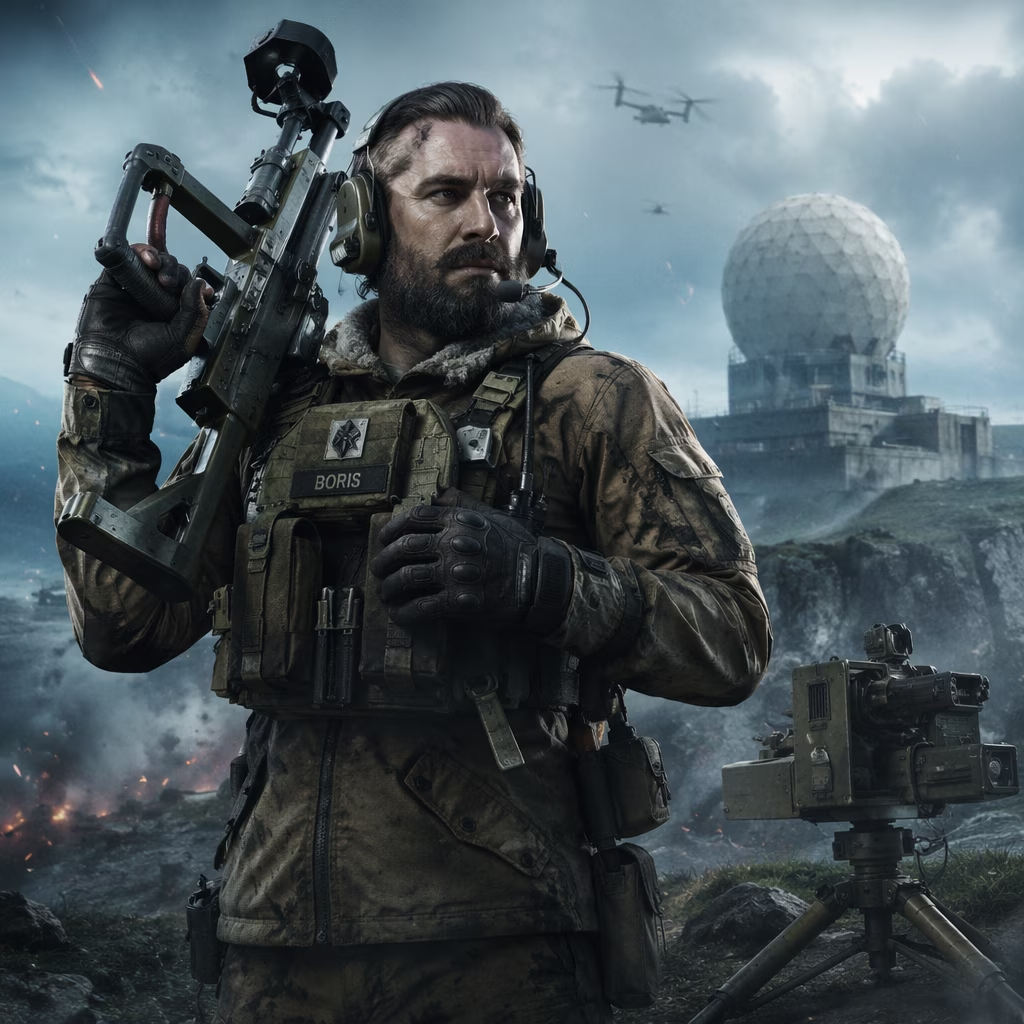
Among the many changes, the rebalancing of vehicular warfare stood out. For months, helicopters and tanks had dominated matches to the point where infantry players often felt like target practice. Update 4.0 aimed to level the field by tweaking armor, cooldowns, and the interplay between anti‑vehicle gadgets and heavy machinery. Specialist reworks for Rao and Paik also arrived, addressing long‑standing complaints about overpowered abilities that turned some encounters into one‑sided guessing games. Rao’s hacking tools and Paik’s wall‑hack‑style scanner were reigned in, making them more tactical without becoming oppressive.
In a move that acknowledged how players actually spent their time, Ribbons – the in‑match scoring tracks that unlock weapon attachments and cosmetics – were restructured to work more naturally across modes like Rush. Previously, grinding specific Ribbon categories outside of Conquest or Breakthrough felt frustratingly slow. The update made progression more mode‑agnostic, hoping to breathe life into less popular playlists and give solo‑co‑op enthusiasts a fairer path.
Perhaps the most anticipated overhaul, however, touched the attachment system. Since launch, attachments had felt more like minor stat tweaks than genuine playstyle choices. The 4.0 redesign promised to make them “more impactful on your loadout,” altering handling, damage profiles, and recoil patterns in ways that could fundamentally change how a weapon performed. Early data leaks suggested that suppressors would finally offer meaningful stealth, while heavy barrels would trade mobility for precision – exactly the kind of trade‑offs the community had been demanding.
When Update 4.0 finally dropped, the immediate reception was cautiously optimistic. The sheer number of bug fixes – over 400 – was staggering for a live‑service title only four months old. Rubber‑banding reductions, hit registration improvements, and UI clean‑ups made the hour‑to‑hour experience noticeably smoother. Yet the patch also revealed the monumental gap between stabilization and revival. The triple‑digit player counts didn’t spike overnight. The game was still suffering from a fundamental content drought, a barren map design that many found sterile, and the lingering resentment of a full‑priced release that had felt, to some, like an early access experiment.
However, looking back from 2026, it’s clear that Update 4.0 marked an inflection point. It was the moment DICE stopped trying to put out spot fires and began building a foundation. The reworked Ribbons, vehicle balance, and attachment overhaul all signalled a willingness to re‑examine core systems rather than simply patch surface‑level bugs. This philosophy would carry over into the subsequent seasons. Season 2 brought a refreshed Kaleidoscope map that added cover and verticality, Season 3 reintroduced the classic class system, and the eventual arrival of legacy maps triggered a slow but steady climb in player numbers.
Two years after that disastrous spring, Battlefield 2042 made another critical pivot. In early 2024, EA shifted the game to a free‑to‑play model, much as it had done with Battlefield Heroes in an earlier era. The move was initially critiqued as a sign of desperation, but it worked. The barrier of entry vanished, and with years of content now available – including six fully‑fledged seasonal battle passes, Portal’s ever‑expanding toolset, and a Hazard Zone revamp that made the mode genuinely tense – the title found a second life. By 2026, Battlefield 2042 regularly holds a steady six‑figure concurrent player base across all platforms, a far cry from those humiliating triple‑digit days.
The journey from “worst reviewed game of the year” to a serviceable and even beloved live‑service shooter has been anything but linear. It demanded the swallowing of pride, the admission that core design pillars were broken, and a long, expensive commitment to fixing them. Update 4.0, with its 400‑plus fixes, was only the beginning – but it was the beginning that proved DICE was willing to invest in its mistakes rather than abandon them. For the fans who stuck around, and for the ones who returned, that patch is now remembered not as a miracle cure, but as the first honest conversation between a developer and its community after a relationship that had soured almost to the point of no return.