Battlefield 2042: The Battle Royale That Never Admitted It
When I look back at Battlefield 2042 in 2026, I do not see a normal Battlefield that simply stumbled. I see a battle royale wearing a Battlefield uniform and pretending not to know where it came from. The game launched in 2021 after a notoriously rough development, and by the time EA and DICE stopped adding major seasons, the conversation had already hardened into a verdict: 2042 was a failed entry. But the more I revisit its systems, the more I feel like I am walking through a theater set struck mid-scene. The battle royale props are still nailed to the floor.
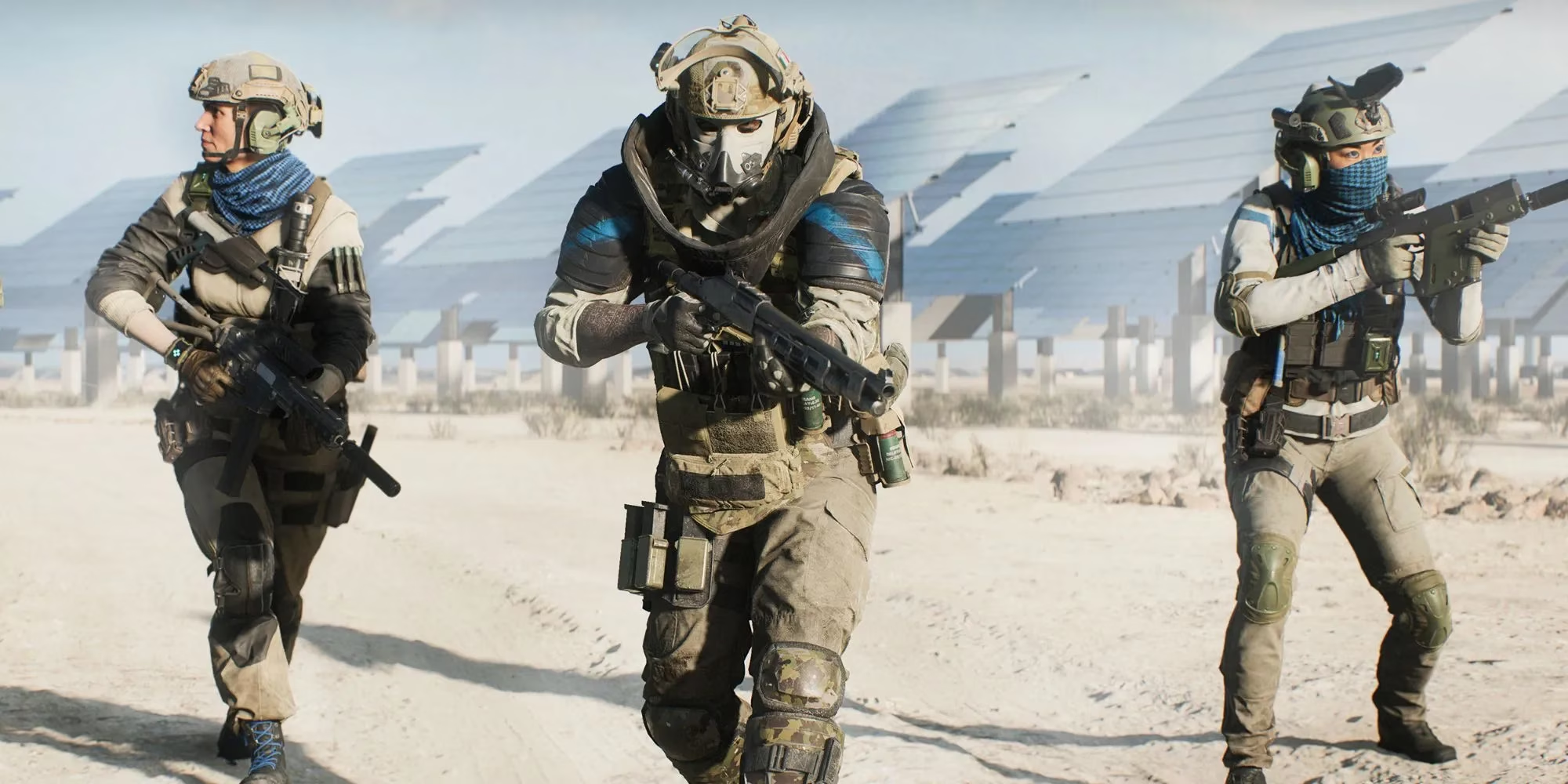
The Firestorm That Should Have Been a Warning
I remember Battlefield V's Firestorm mode, and I remember how quickly it faded. Criterion Games handled most of its development, and it arrived as a late addition to BF5 in 2019. By then, Fortnite, PlayerUnknown's Battlegrounds, and Apex Legends already dominated the genre. Firestorm was not just late; it was broken enough to become a punchline. EA had published Apex Legends and Battlefield V within roughly a month of each other, which meant the company was competing with itself in the same space. Even an armchair economist could see that was undesirable. Yet EA still seemed determined to make Battlefield a battle royale contender. 2042 entered pre-production shortly after BF5, and that ambition followed it.
The Battle Royale Bones in 2042
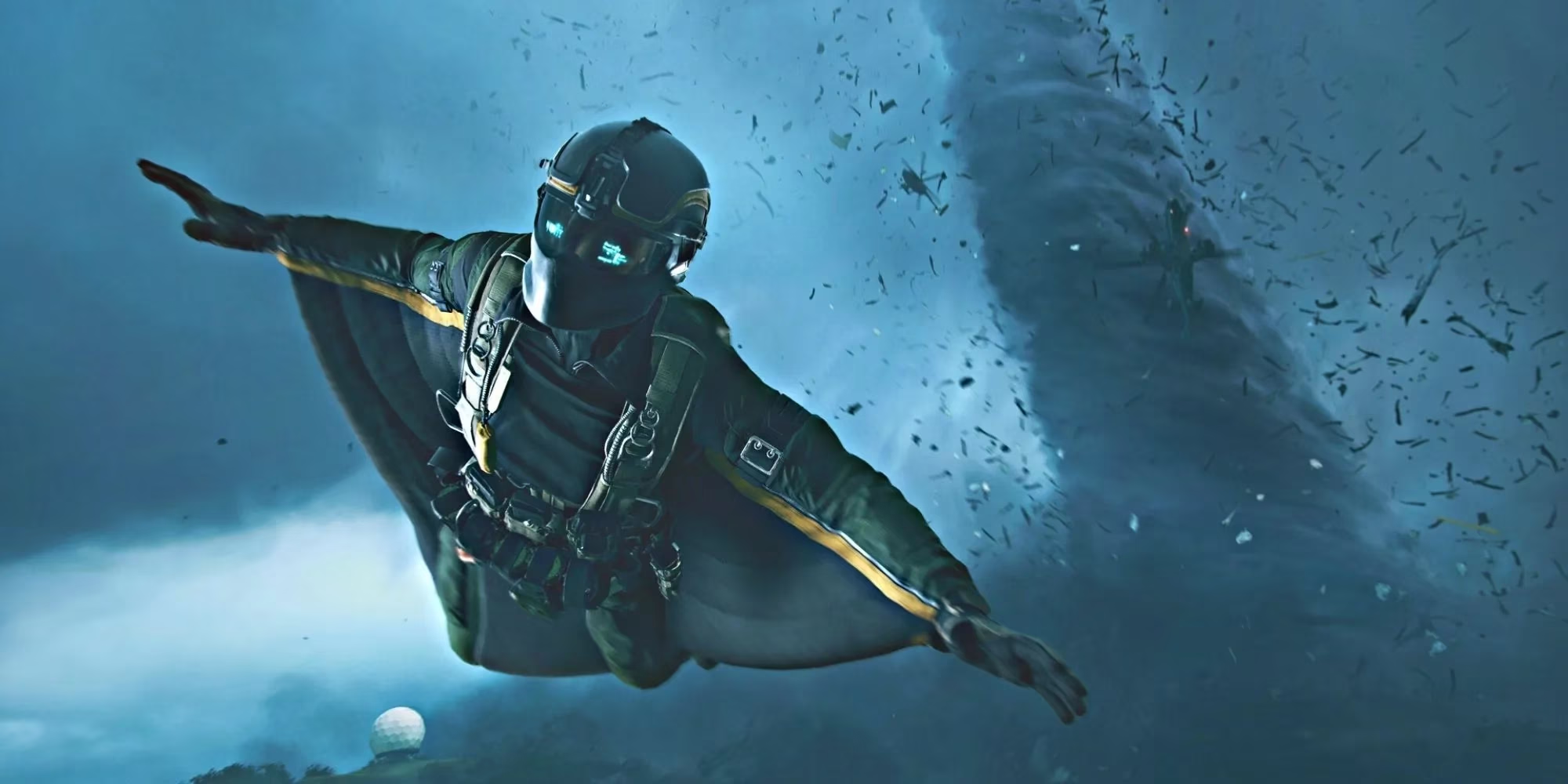
The most obvious leftover is the Specialist system. I have always found it easier to understand Specialists if I imagine them as Apex Legends characters who wandered into a Battlefield game. EA had watched Apex turn playable characters into a monetization engine. Call of Duty: Black Ops 3 and Black Ops 4 had also found success with Specialists. So 2042 abandoned the traditional class system and gave players freeform loadouts. In a battle royale, that makes sense: you pick a hero, you scavenge, you adapt. In a class-based Battlefield, it felt like a transplant that never fully took.
Hazard Zone makes the origin even clearer. Specialist selection is restricted to one per team there, which is exactly the kind of rule that belongs in a squad-based battle royale. The Plus System, which lets me swap weapon attachments on the fly, feels like an Apex idea pushed further. Battlefield 4 was famous for its attachment variety, but the Plus System turns that variety into an in-match reaction tool. In a BR, where every fight is emergent and every attachment matters, that is brilliant. The vehicle call-in system is similarly clever for a mode with huge maps and long rotations. It is also one of the best additions to 2042.
There are smaller tells, too. The deployment cutscenes, the main menu character display, and the cosmetic skins all feel borrowed from Fortnite, Apex, and Warzone. I do not think every game with skins is a battle royale, but Fortnite turned character skins into a cultural phenomenon, and 2042 clearly wanted some of that energy. The result was a disconnected story and a future of wackily dressed mercenaries.
| System | Battle royale logic | What it became in 2042 |
|---|---|---|
| Specialists | Unique heroes with monetizable identities | Controversial replacement for classes |
| Plus System | On-the-fly attachment swapping for loot-driven fights | One of the game's better ideas |
| Vehicle call-in | Solving huge BR map traversal | Useful, but awkward in some modes |
| Hazard Zone | Squad extraction with restricted picks | A niche mode with BR DNA |
| Cosmetics | Character-driven microtransactions | Skins that hinted at a different game |
How 2042 Reportedly Started as a Battle Royale
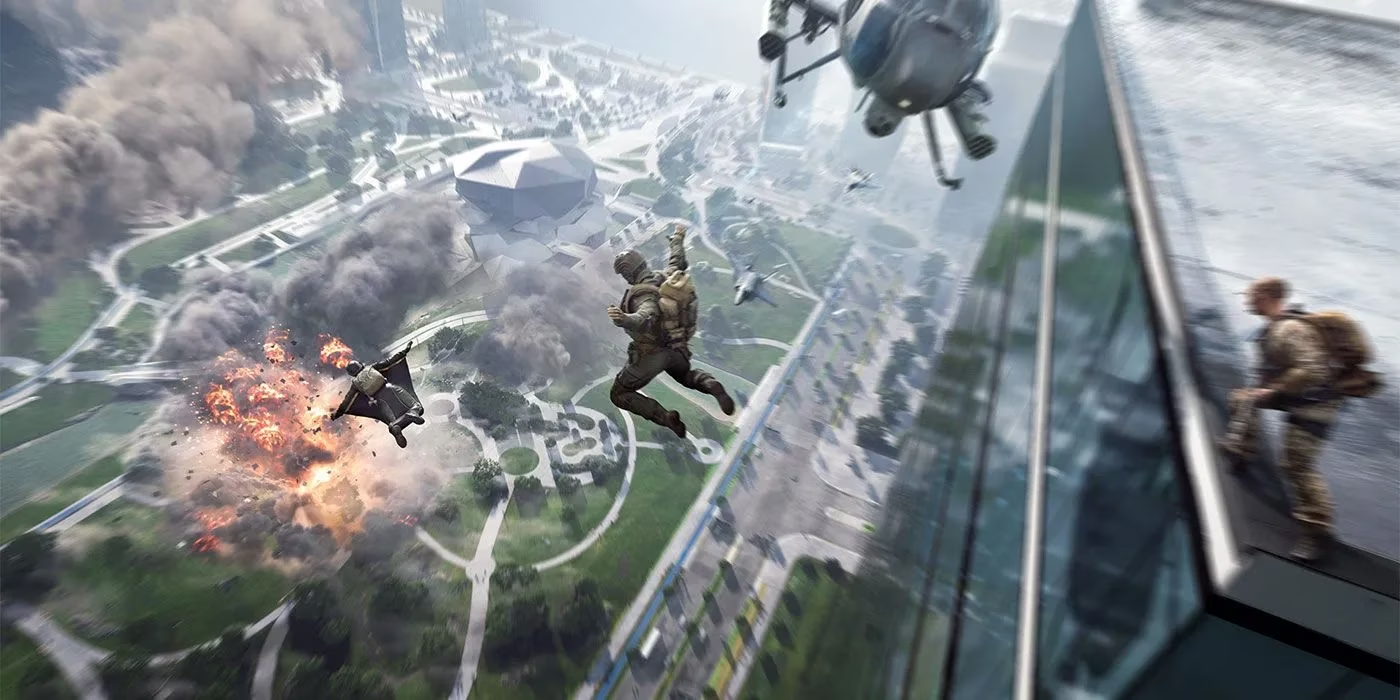
Tom Henderson, a notable Battlefield insider, discussed the development timeline with information from former DICE developers. According to that account, the original concept for Battlefield 2042 was a battle royale. EA wanted a dedicated Battlefield BR even with Apex Legends and Firestorm nearby. The vehicle call-in mechanics and Plus System were conceived in early pre-production, while DICE also had to spend resources updating the Frostbite engine. Around late 2019, EA began to see Apex Legends as a long-term success. The monetization of Apex characters, plus Call of Duty's Specialist success, reportedly pushed EA to abandon the traditional class system.
Then two events in early 2020 changed the trajectory. COVID-19 forced DICE into work-from-home development, which helps explain many missing features at launch. More importantly, Warzone broke out. Call of Duty essentially took the battle royale market share EA hoped to claim, so 2042 shifted toward a more traditional experience. That pivot explains why the maps are large but not quite large enough to support a full battle royale. It also explains why Specialists feel caught between two worlds. They were not designed for a classic Battlefield, but they make sense as remnants of an Apex-inspired experiment.
Why This Still Matters in 2026
In 2026, the story has a strange epilogue. EA finally has a dedicated Battlefield battle royale in Battlefield REDSEC, the free-to-play mode tied to Battlefield 6. The next mainline game also returned to a class-first identity, which makes 2042 look even more like a transitional fossil. I can appreciate 2042 now as a game that was stitched together from two different species: a battle royale that never fully hatched and a Battlefield that never fully reclaimed its own skin.
That does not excuse the launch. It does not excuse the missing features, the voice chat problems, or the identity crisis. But it does make the game more interesting to me. The Plus System and vehicle call-in are two of the earliest BR-oriented systems, and they ended up being two of the more engaging parts of 2042. They kept some player agency from the original concept. The Specialists, meanwhile, remain a vestigial fin on a land animal: an organ from an aquatic ancestor that still shows up in the skeleton.
I do not think Battlefield 2042 was secretly a battle royale at launch. I think it was a battle royale that got caught mid-transformation. The game is a cathedral built from scaffolding originally measured for a circus tent. Once I see it that way, the strange shape of 2042 finally makes sense.