Battlefield 2042's Shock Free Play Days Debut: A Retrospective
In the first week of January 2022, Microsoft turned heads across the gaming world with a Free Play Days lineup that felt like a curveball. While the inclusion of Frogwares' Lovecraft-inspired detective adventure The Sinking City and the dimension-spanning tactical RPG Star Renegades made sense for fans of cult hits, the third title was a genuine bolt from the blue: Battlefield 2042. DICE and EA's ambitious online shooter had barely been on shelves for seven weeks, launching on November 19, 2021. Yet from January 6 through January 9, 2022, Xbox Live Gold and Xbox Game Pass Ultimate subscribers could download and play the full game without spending an extra dime. For a service that usually rolls out the red carpet for older blockbusters, this quick turnaround was a shot across the bow.
What Is Free Play Days?
For the uninitiated, Microsoft's Free Play Days is a perk for Xbox Live Gold and Xbox Game Pass Ultimate members. Selected games become available to download and play at no added cost for a limited window. Once the clock runs out, access disappears, but subscribers can purchase the title at a discount on the Microsoft Store. Previous heavy hitters included Tom Clancy's Ghost Recon Breakpoint and Assassin's Creed Odyssey, both of which arrived long after their initial launch. That is why seeing Battlefield 2042 on the roster so soon felt like a head-scratcher.
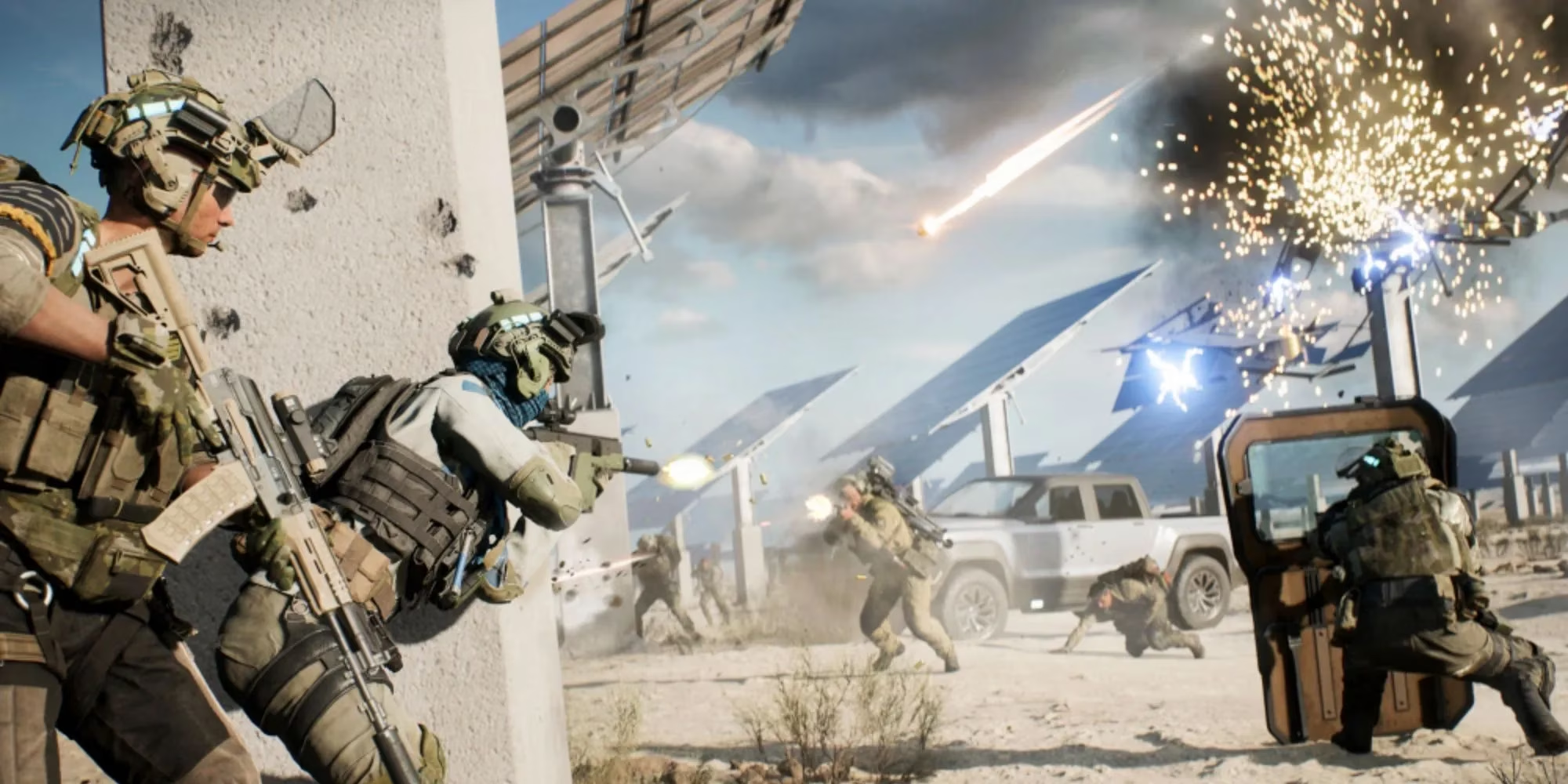
Why Battlefield 2042 Showed Up So Early
Normally, there is a decent gap between a game's release and its Free Play Days debut. Battlefield 2042 smashed that unwritten rule to pieces. The likely culprit was the game's rocky launch. Soon after release, the title became one of Steam's worst-reviewed games of the year, and DICE found itself in a firefight of negative feedback. Fans complained about missing features, performance hiccups, and design choices that strayed too far from the series' roots. The developers quickly went into damage-control mode, promising fixes and patches to address the loudest gripes.
The numbers told their own story. Battlefield 2042 initially drew around 100,000 concurrent players on Steam in November. By the time January rolled around, that figure had dropped to roughly 10,000 players per day. For a game built around massive online multiplayer matches, a dwindling player base is the kiss of death. Offering the game to already-paying Xbox subscribers was a clever way to pump fresh blood into the servers. It was a classic 'try before you buy' move, with the added hope that a free weekend might win back some goodwill.
The Other Two Games Held Their Own
While Battlefield 2042 hogged the headlines, The Sinking City and Star Renegades were no slouches. The Sinking City dropped players into a flooded, nightmare-tinged New England town inspired by the works of H.P. Lovecraft. Its slow-burn investigations and oppressive atmosphere made it a perfect palate cleanser for players tired of nonstop shooting. Star Renegades, on the other hand, offered a stylish, dimension-hopping RPG experience with tactical combat and a roguelite structure that rewarded smart planning. Together, the trio gave subscribers a little something for every mood.
| Game | Genre | Why It Stood Out |
|---|---|---|
| The Sinking City | Lovecraftian detective adventure | Cult favorite with eerie storytelling |
| Star Renegades | Dimension-spanning tactical RPG | Deep combat and replayable structure |
| Battlefield 2042 | Online first-person shooter | Blockbuster that launched weeks earlier |
The Aftermath: A Cautionary Tale for 2026
Fast-forward to 2026, and the Battlefield 2042 Free Play Days moment has aged into a fascinating case study. It showed that even flagship franchises can stumble out of the gate, and that subscription services can double as emergency lifeboats. While the free weekend did not instantly turn the tide, it gave the game a shot in the arm and put it back on the radar for players who had written it off. The move also foreshadowed a broader industry shift: publishers increasingly use Game Pass, PlayStation Plus, and other subscription libraries to revive struggling multiplayer titles.
For players, the takeaway remains simple. Free Play Days is a low-risk way to sample big-budget games before committing hard-earned cash. For publishers, it is a reminder that a rough launch does not have to be the final word. Sometimes, the best fix is letting the crowd in for free.