Battlefield 2042's Santa Boris Controversy: A Holiday Misstep Revisited
In the annals of live-service gaming, few moments have been as unintentionally revealing as Battlefield 2042's accidental Christmas cosmetics leak. Back in late 2021, as the game struggled through a disastrous launch, players discovered that DICE and EA had prepared a festive set of skins—including a Santa Claus outfit for the demolition specialist Boris, along with holiday-themed wraps for a tank, a gun, and a helicopter. The reveal, which seemed to slip out before its intended date, sparked immediate and polarized reactions. Now, in 2026, with the benefit of hindsight, that controversy serves as a textbook example of how not to handle a live-service crisis.
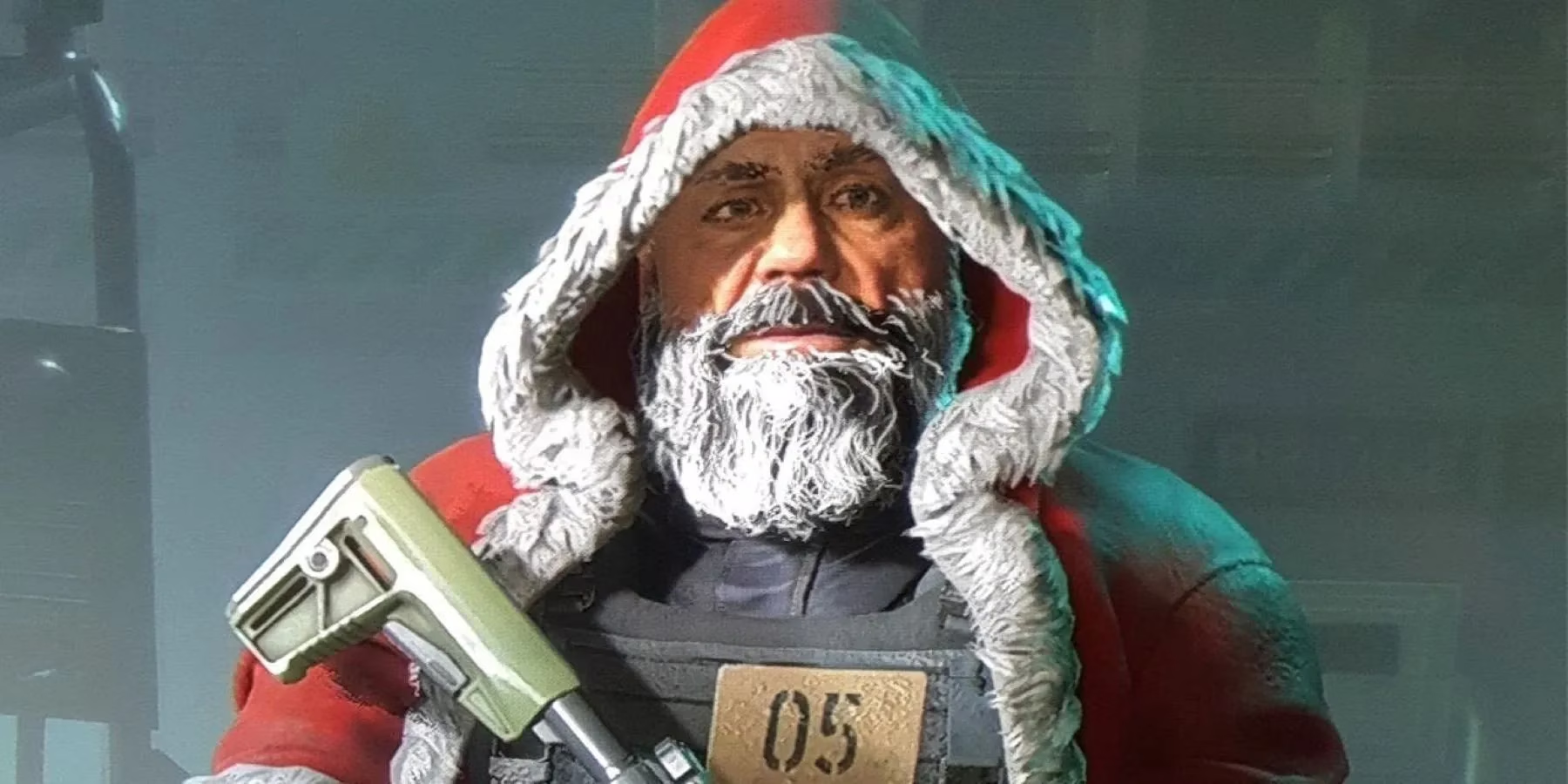
The core complaint from a vocal segment of the community was simple: the tone was wrong. Battlefield, they argued, had always been a series rooted in gritty, semi-realistic warfare. Turning a specialist into Father Winter felt like a jarring departure, especially when the game was still reeling from broken smoke grenades, dominating hovercrafts, and a general lack of polish. As one player put it at the time, "While smoke grenades are breaking and hovercrafts are dominating everything, it's not the right time for festive skins." Was this really the gift that players wanted? Hardly. Many would have preferred a fix for Portal XP or a stability patch over a Santa suit.
Yet the backlash was not unanimous. A counter-argument quickly emerged: Battlefield has never been a pure mil-sim. From the wacky Easter eggs of Battlefield 3 to the lighthearted banter of 2042's own specialists, the series has always had a playful streak. Comparing the Santa Boris skin to Fortnite crossovers, some defenders said, was unwarranted. After all, players were already swimming through the air due to bugs and listening to quippy one-liners—things were already lighter than previous titles. Why draw the line at a holiday hat?
The timing, however, could not have been worse. Battlefield 2042's head of design had recently departed, and complaints were pouring in from every corner. The Christmas skins, reportedly prepared before launch when the game was still expected to be a hit, felt like a tone-deaf distraction. Instead of addressing the community's most pressing issues, the studio appeared to be prioritizing cosmetic sales. That perception, fair or not, deepened the trust deficit between DICE and its player base.
| Complaint | Player Sentiment |
|---|---|
| Tone mismatch | "Santa Claus doesn't belong in Battlefield." |
| Timing | "Fix the game first, then sell skins." |
| Comparison to Fortnite | "This isn't a cartoon battle royale." |
| Defense of skins | "Battlefield has always had goofy moments." |
Fast forward to 2026, and Battlefield 2042 has undergone a long, arduous redemption arc. Numerous updates have stabilized the experience, reworked specialists, and restored some goodwill. Yet the Santa Boris incident remains a cautionary tale. It illustrates a fundamental tension in live-service games: cosmetics are a business, but they must align with community expectations and the game's current state. When a game is on fire, selling holiday hats feels like adding fuel to the flames.
Could the studio have handled it differently? Absolutely. A simple delay of the festive skins until the core issues were resolved might have avoided the uproar. Or a transparent communication strategy—acknowledging the problems while framing the skins as a lighthearted bonus—could have softened the blow. Instead, the accidental reveal forced a defensive posture, and the community's trust eroded further.
Looking back, the Christmas skins were a symptom of a larger problem: a disconnect between developer intentions and player priorities. In 2026, as new Battlefield titles loom on the horizon, the lesson is clear. Live-service games thrive on community goodwill, and that goodwill is earned by listening—not by dropping Santa suits when the house is on fire. Players will forgive a lot, but they won't forget being ignored. The Santa Boris skin may be a forgotten cosmetic now, but its legacy as a misstep endures.