Battlefield 2042's Hazard Zone: Why DICE Abandoned Its Tarkov-Inspired Mode
Battlefield 2042 arrived with ambitions as vast as its tornado-swept maps, but not every launch feature could weather the storm. Among the most visible casualties was Hazard Zone, a squad-based extraction mode that aimed to bottle the tension of Escape from Tarkov inside Battlefield’s sandbox. It ended up as a stillborn experiment—a paper boat set adrift in a hurricane, never catching the wind it needed. In 2022, DICE officially pulled the plug on active development for the mode, and by 2026 the aftertaste of that decision still lingers over the franchise’s direction.
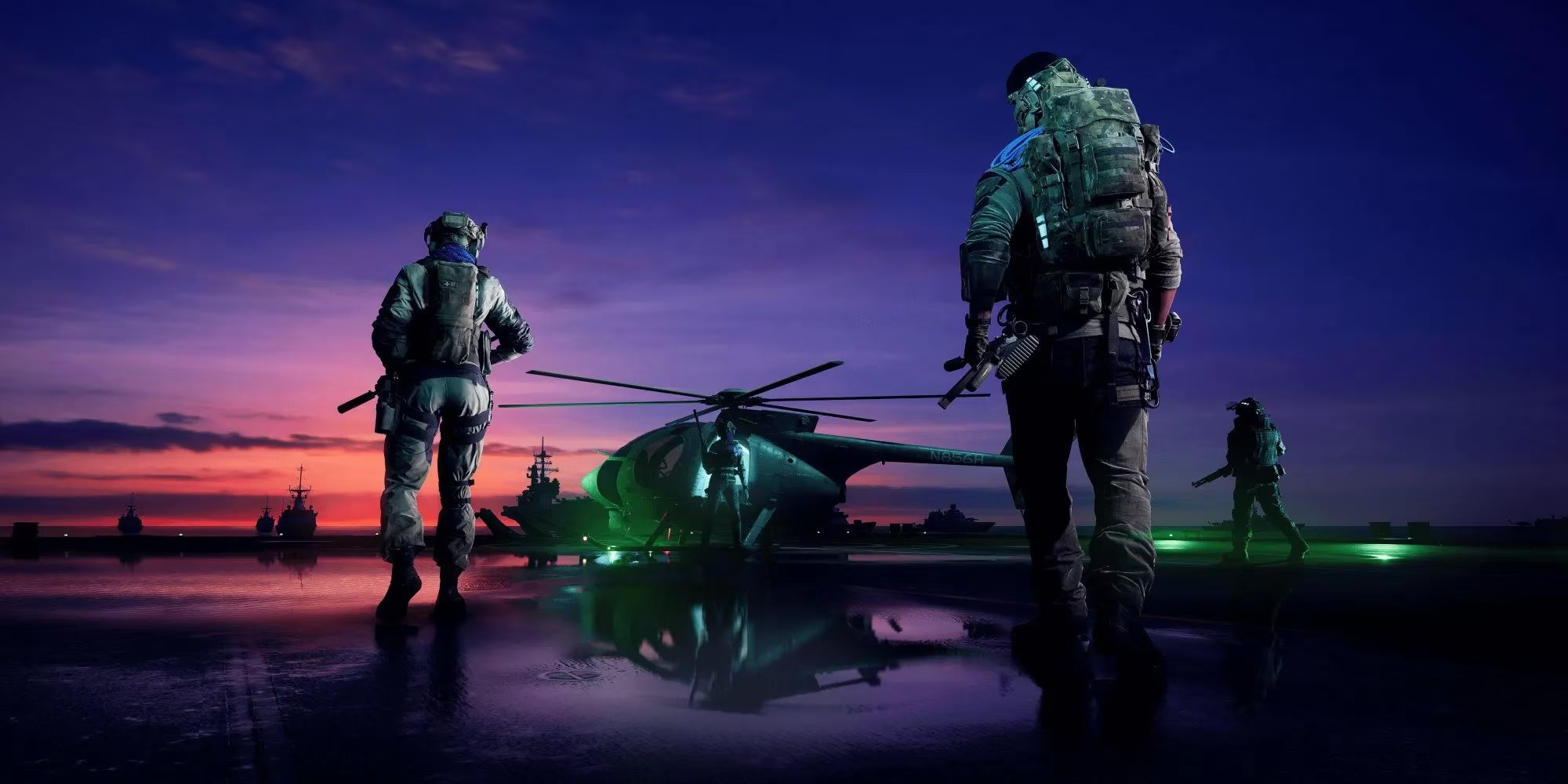
Hazard Zone was meant to be a high-stakes ballet of infiltration and escape. Squads would drop into a map, hunt down data drives guarded by AI combatants, and race to an extraction point before rival players could intercept them. On paper, this recreated the tension loop that made extraction shooters such a beloved niche. In practice, however, it unraveled like a cheap spool of thread. The risk-reward engine simply never idled high enough. Players quickly realized that dying didn’t carry a meaningful penalty. Losing a streak perk felt about as impactful as forgetting a grocery coupon. Dark Market Credits, the mode’s currency, flowed so freely that no one struggled to re-arm with a decent loadout after a bad run. As TheGamer’s Harry Alston observed at the time, “I just didn’t care about whether I lived or died, which sort of gets rid of that ‘tense squad-based action’ angle.”
This emotional flatline gutted the experience. Extraction shooters thrive on that gut-twisting moment when you’re weighing a high-value loot bag against your team’s survival. Hazard Zone replaced that with a risk-free theme park ride. It felt less like a desperate scramble through hostile territory and more like a casual shopping trip where the mannequins occasionally shot back. The mode became a ship with a beautifully painted hull but no rudder beneath the waterline—it looked the part, yet drifted nowhere.
Creative director Lars Gustavsson owned the miss frankly in a 2022 development update. “We had high hopes, we set out on a path but we haven’t gained the traction we wanted with this mode,” he admitted. DICE’s accompanying notes confirmed that Hazard Zone would stay accessible—no one planned to switch it off like a flickering neon sign—but “beyond addressing critical errors and odd behaviors that may appear in the future, we’re no longer actively developing new experiences or content for the mode.” New seasonal maps would not support it, leaving the playlist frozen in time like a fossil trapped in amber.
Looking back from 2026, that fossil has become a quiet cautionary tale within the live-service world. Hazard Zone still technically exists—you can boot it up today and wander its hushed lobbies—but finding a full squad feels like trying to catch smoke with a butterfly net. The mode serves as a museum piece, a reminder that grafting a popular formula onto an existing framework rarely works without a deep understanding of what makes the formula tick. Extraction shooters need scarcity, permanent loss, and a sense of real jeopardy to shine. Battlefield’s DNA, built around large-scale chaos and quick respawns, clashed with that philosophy at a cellular level. Handing players a bottomless wallet of in-game currency was like trying to fuel a campfire with ice cubes—the fundamental elements simply refused to combust.
After withdrawing support for Hazard Zone, DICE refocused on Battlefield 2042’s core rhythm. The team laid out a roadmap of four seasons packed with new specialists, weapons, gadgets, and a dual-tier Battle Pass. Quality-of-life patches arrived in waves, each one an attempt to “restore the trust that many of you feel was hurt when we launched back in November of last year.” Season 1 kicked off in summer 2022 with a new map and specialist, and later seasons layered on Portal mode enhancements and the return of class-based roles that players had been clamoring for. Over time, the game’s reputation slowly climbed out of the crater left by its launch, though it never fully shed the stigma of being the Battlefield entry that overpromised and underdelivered.
Now, in 2026, Hazard Zone lingers like a half-erased chalkboard sketch—still visible, but no longer part of any lesson plan. Its failure taught the industry a valuable lesson about the fragility of genre blending. Players can smell artificial stakes from a mile away, and no amount of atmospheric lighting or slick UI can mask the absence of genuine consequence. For Battlefield fans, it became a scar that the franchise carried into subsequent titles, which leaned hard into classic sandbox warfare and left the extraction experiments behind. DICE never publicly revisited the mode’s design, and community conversations about it have long since petrified into “what could have been” forum threads.
The Hazard Zone saga ultimately isn’t a story about a bad mode—it’s about how even a studio with deep resources can misread the core emotional driver of a genre. It’s the difference between baking a cake and merely assembling store-bought ingredients on a countertop. The ingredients were all there: squads, loot, extraction points, AI threats. But without the heat of meaningful risk, the recipe never became a cake. It just stayed a pile of flour and sugar, waiting for an oven that never arrived.