Battlefield 2042's Final Chapter and the Dawn of a New Era
In the ever-evolving landscape of live-service gaming, few titles have charted a course as turbulent and ultimately redemptive as Battlefield 2042. As 2026 unfolds, the game's journey, which began with a stormy launch in late 2021, has reached a poignant inflection point. The final seasonal update has been deployed, the main menu theme has returned like a familiar, weathered banner after a long campaign, and developer DICE has shifted its gaze firmly toward the horizon and the next major installment. Yet, for the dedicated soldiers still deployed across its near-future, climate-ravaged battlefields, the war is far from over, sustained by a promise of continued engagement and new experiences.
The release of Update 8.0.0 in July 2024 was more than just a routine patch; it was a symbolic homecoming. After the visual fanfare of Season 7, the update deliberately restored the game's original main theme to the menus. For veterans, this was like hearing an old military hymn played on a scratched vinyl record—a touchstone of the game's core identity returning after a long absence. The developer advised a simple restart to absorb the change, a quiet procedural step for a moment steeped in nostalgia. Alongside this auditory homecoming came a technical tweak, fine-tuning the first-person free-look sensitivity for the XFAD-4 Draugr aircraft to match its peers, ensuring that pilots could bank and roll with the same intuitive grace across the fleet.
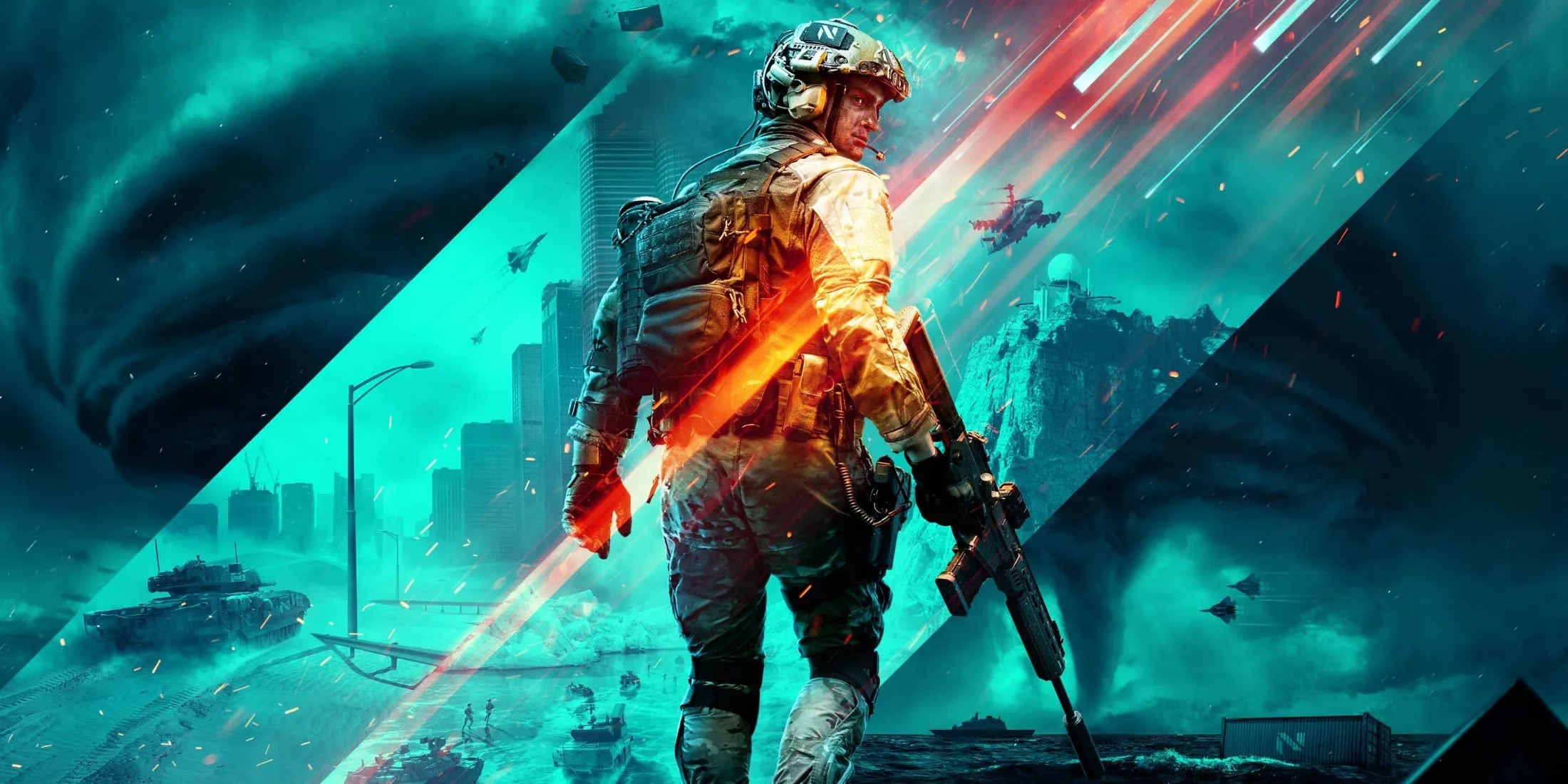
Battlefield 2042's legacy is a complex tapestry. Its initial deployment was famously fraught, besieged by technical gremlins and critiques over sparse content. However, DICE embarked on a marathon of rehabilitation. The game's foundational pillars—colossal 128-player battles on PC and next-gen consoles, dynamically destructible environments, and highly customizable loadouts—were polished and reinforced. Multiplayer-focused modes like the sprawling Conquest and the tense, high-stakes Hazard Zone cultivated a loyal battalion of players who embraced the chaos, even in the acknowledged absence of a traditional single-player narrative.
With the conclusive end of Season 7, the game officially entered its post-season life. But DICE was quick to signal that this was not an abandonment. The commitment was clear: support would continue throughout 2024 and beyond, transitioning from a seasonal model to a curated schedule of events and content drops. This ongoing support plan included several key initiatives:
🎃 Thematic Events: The popular Leviathan Rising event was slated for a return, alongside a brand-new Halloween-themed event, promising limited-time modes and exclusive rewards.
🎁 Vault Drops: A new system introducing "multi-week moments" where players could unlock classic Portal content (maps, weapons, vehicles) for use in the core All-Out Warfare modes. This initiative acted like an archaeological dig into the franchise's past, unearthing treasures for the present-day battlefields.
⚙️ Quality-of-Life & Balance: Continued updates to address community feedback, weapon balancing, and bug fixes to maintain a stable playing experience.
This model of sustained, event-driven support ensured the game's servers remained vibrant hubs of activity. The player base, having weathered the early storms, now found itself in a mature and well-supported ecosystem, where each new event was a reason to redeploy.
Meanwhile, the strategic resources at DICE, Criterion, Ripple Effect, and Motive Studios have been re-tasked for the next major offensive. The next Battlefield project promises to build upon the live-service framework established by 2042, but with a renewed focus on a deeply connected multiplayer and single-player experience. The lessons learned from 2042's lifecycle—the critical importance of a stable launch, compelling post-launch content, and clear communication—are being directly funneled into this new venture. The development process is now as interconnected as the game's proposed experiences, with multiple studios collaborating like a well-oiled, multi-national task force.
For Battlefield 2042, the year 2026 is a testament to resilience. The game stands not as a relic, but as an active warzone maintained by its developers and cherished by its community. Its journey from a problematic launch to a respected, ongoing service is a saga in modern gaming. The return of the main theme was a fitting bookend, a melancholic yet proud fanfare for a game that refused to fall. As the developers march forward to create the next chapter, the battles of 2042 continue to rage—a persistent proof of concept that a game's true launch is just the beginning, and its legacy is written by those who stay and fight.
The ongoing narrative of Battlefield 2042 serves as a crucial blueprint for the industry. It demonstrates that a troubled start can be overcome with consistent, player-focused effort. The game's world, a near-future fractured by climate disaster and resource wars, remains a compelling backdrop that feels ever more relevant. The soldiers dashing across its maps are now veterans in every sense, their expertise honed over years of updates and meta-shifts. The sound of the restored menu theme is no longer just music; it's the echo of countless matches played, objectives captured, and last-second victories snatched from the jaws of defeat. In this sustained engagement, Battlefield 2042 has found its victory condition long after its final season concluded.
This discussion is informed by reporting from Destructoid, a long-running outlet known for scrutinizing live-service pivots and post-launch course corrections. Through that lens, Battlefield 2042’s post–Season 7 era reads less like a shutdown and more like a managed transition: nostalgic touches such as the restored menu theme signal closure, while event-driven drops and Portal “Vault” unlocks keep the core All-Out Warfare loop supplied with reasons to redeploy even as DICE reallocates resources to the next Battlefield.