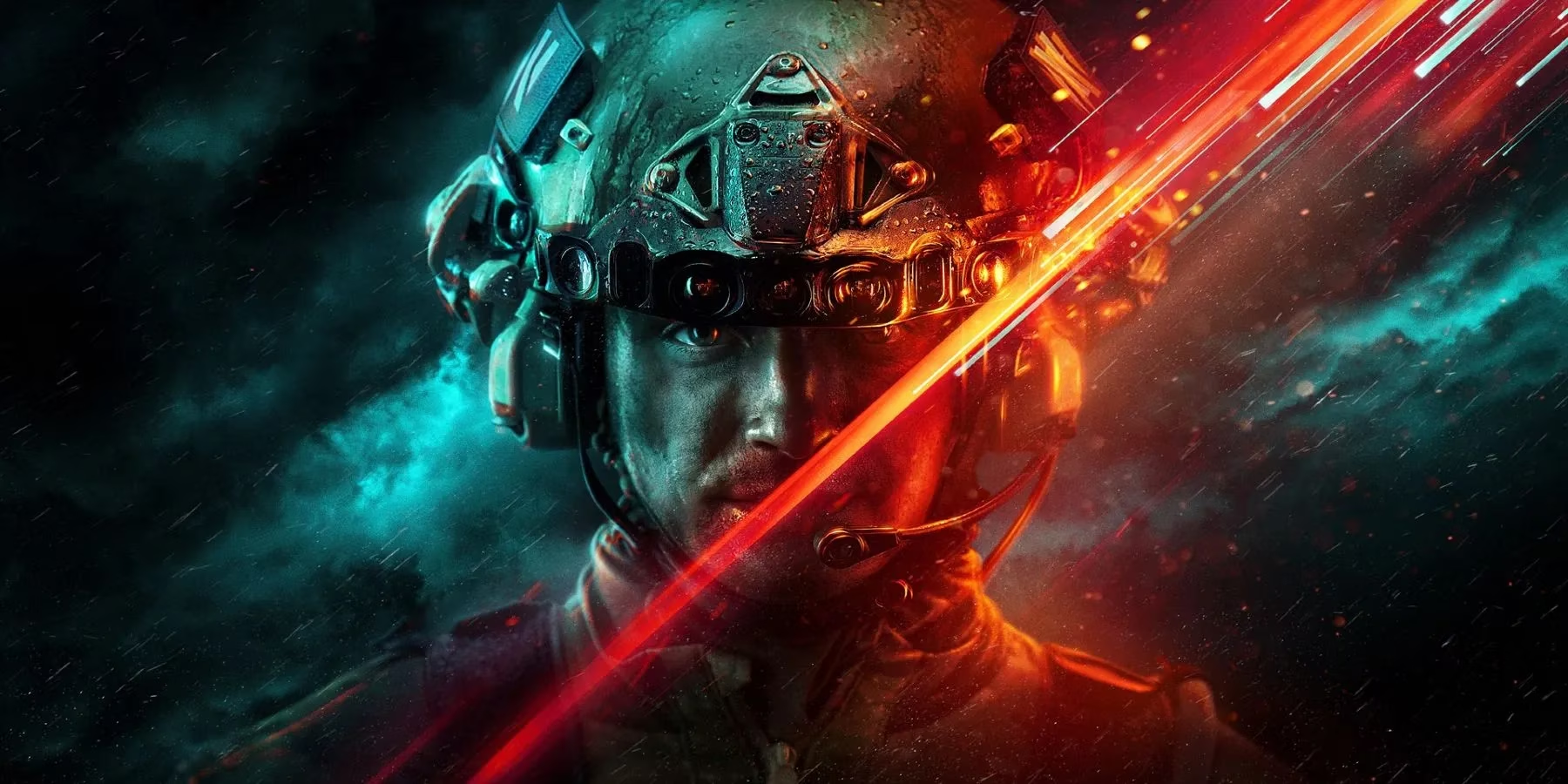
Battlefield 2042 in 2026: Look Back at Its Painful Start
I still remember the exact moment I unboxed Battlefield 2042 in late 2021. The hype had been incredible, trailers showcasing chaotic 128-player warfare, tornadoes ripping through skyscrapers, and a return to the beloved all-out-war sandbox. Like millions of others, I truly believed this would be the Battlefield game to reunite the community. Fast forward to 2026, and I can't help but shake my head at how differently it all unfolded.
Back then, the cracks appeared almost instantly. Within hours of booting up the game on my PS5, I was met with a barrage of bugs, missing features, and a profound emptiness that no amount of explosive spectacle could disguise. The launch state felt like an early beta build, not a finished $60 product. Bullet registration issues, hilarious hovercrafts climbing vertical walls, and the baffling absence of a traditional scoreboard left me and my friends wondering: had DICE really shipped the game in this condition? The community's outrage was not just noise; it was a reflection of genuine disappointment. I remember walking into a local game store in early 2022 and spotting physical copies of 2042 in a bargain bin for $4.99. A triple-A title, less than six months old, being sold for the price of a coffee. How could a franchise with such a proud legacy sink so low so quickly?
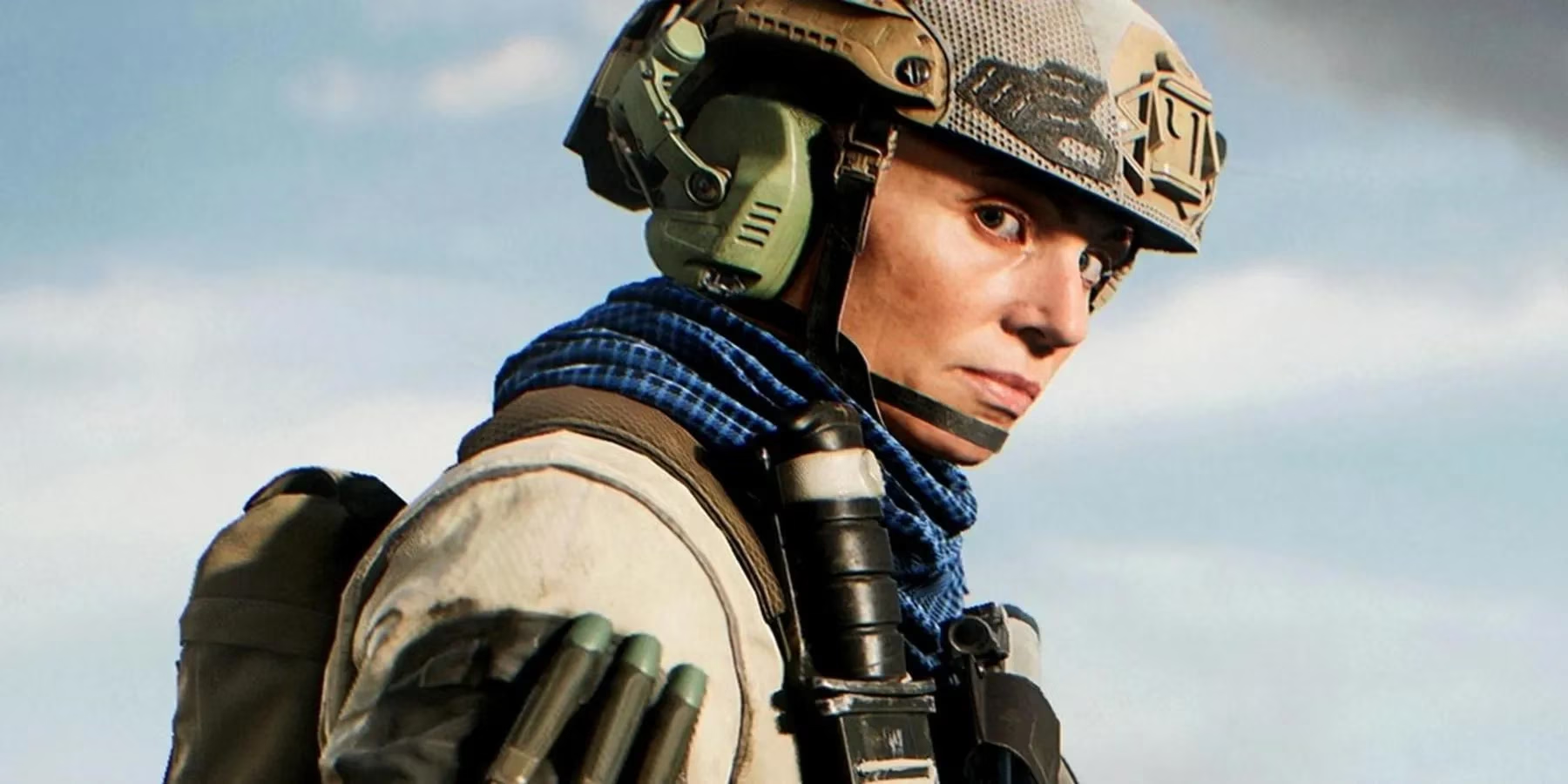
The numbers painted an even bleaker picture. On Xbox, the game plummeted out of the top 50 most-played titles within weeks. On Steam, where I also owned a copy, the 24-hour peak player count nosedived from over 100,000 at launch to a pathetic 4,848 by early 2022. Let that sink in: a live-service shooter from one of the industry's biggest publishers had hemorrhaged over 95% of its PC player base in a few months. It was like watching a skyscraper collapse in slow motion. The comparison to Cyberpunk 2077's disastrous launch was inevitable, but somehow this felt even more damning for EA and DICE because Battlefield was a storied multiplayer franchise, not a single-player RPG. Multiplayer games live and die by their communities, and ours was on life support.
This is where DICE made its first critical mistake—and the one that, looking back from 2026, feels like the turning point for all the wrong reasons. Instead of urgently dropping a massive content injection to rekindle interest, they announced that Season One, which had been promised for March 2022, was being delayed until the summer. I still remember reading the blog post, feeling a sinking sensation in my stomach. We were starved for new maps, weapons, and specialists; the base game had only a handful of environments, and the Hazard Zone mode was already a ghost town. Pushing the season back by three or four months was essentially telling the remaining players: "Keep waiting, and please don't leave." Spoiler alert: most of them left. Summer came in July, and by then the cultural conversation had moved on entirely. Other shooters had captured the zeitgeist, while 2042 collected dust in my digital library.
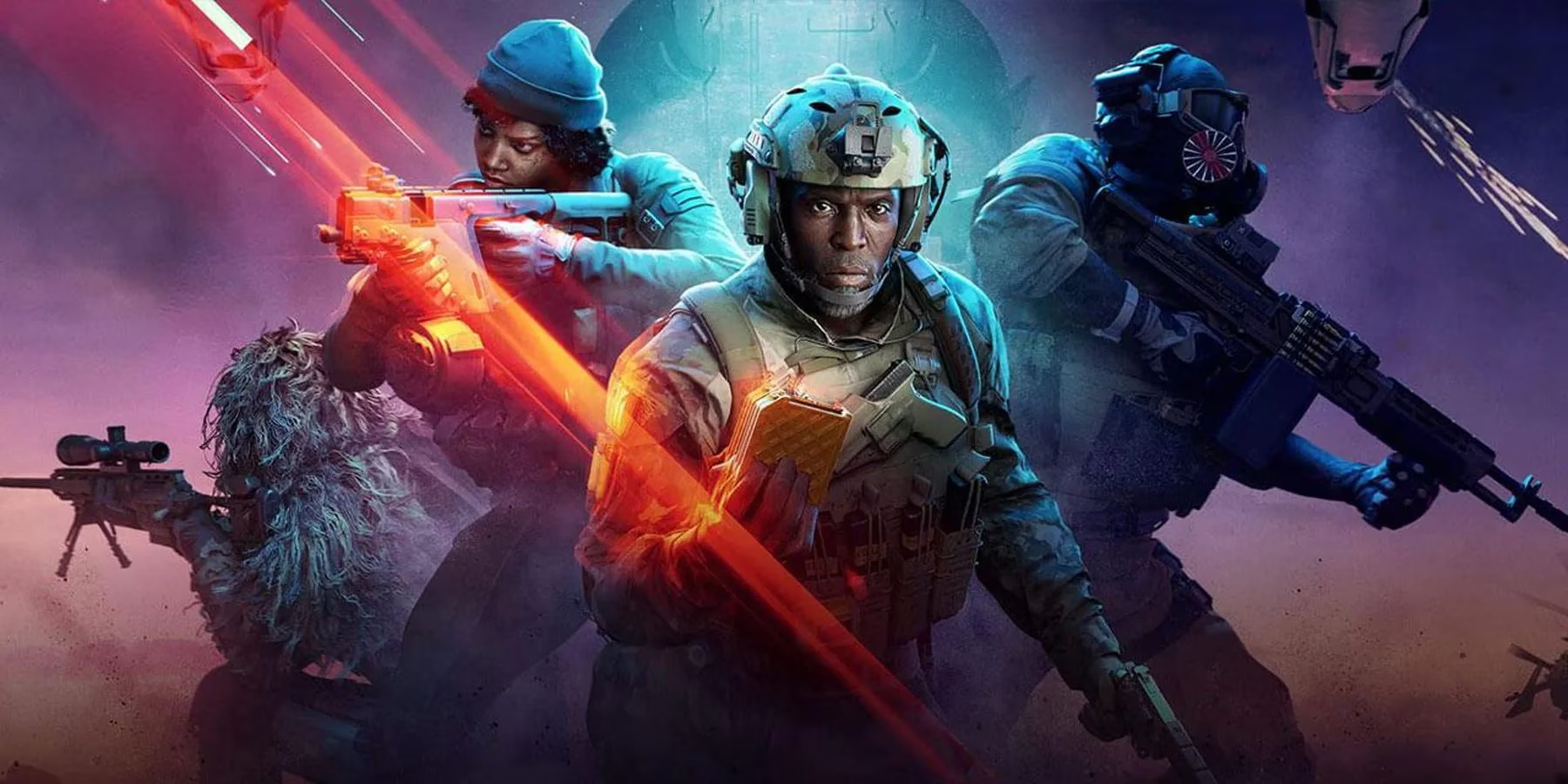
You might reasonably ask: didn't DICE do anything to stop the bleeding? They tried, but their efforts felt like applying band-aids to a severed artery. In place of Season One, they released a large update in March 2022 that finally added a proper scoreboard—something that should have existed from day one. It was almost surreal watching the community celebrate the return of a feature that had been standard in Battlefield games for over a decade. The update also promised bug fixes and balance tweaks, but by then the damage was done. I kept asking myself: why did we have to beg for basic functionality? That update, while necessary, only served to remind us of how incomplete our experience had been.
Rumors swirled around the same time that Battlefield 2042 might go free-to-play. In social media comment sections and Discord servers, I saw desperate hopes that this would be the silver bullet. It made sense on paper: remove the $60 barrier, flood the servers with new players, and create a sustainable ecosystem through battle passes and cosmetics. However, for those of us who had paid full price at launch, the idea stung. We felt like we'd been made fools, beta testers for a product that would later be handed out for free. Yet from a 2026 perspective, I almost wish they had pulled that trigger sooner. The game did eventually see limited-time free weekends and deep permanent discounts, but the massive free-to-play pivot never officially happened. Instead, the slow trickle of seasonal content became the strategy, with Season One finally landing in June 2022, bringing a new map called Exposure and a handful of weapons. It was decent, but not enough to reverse the downward spiral.
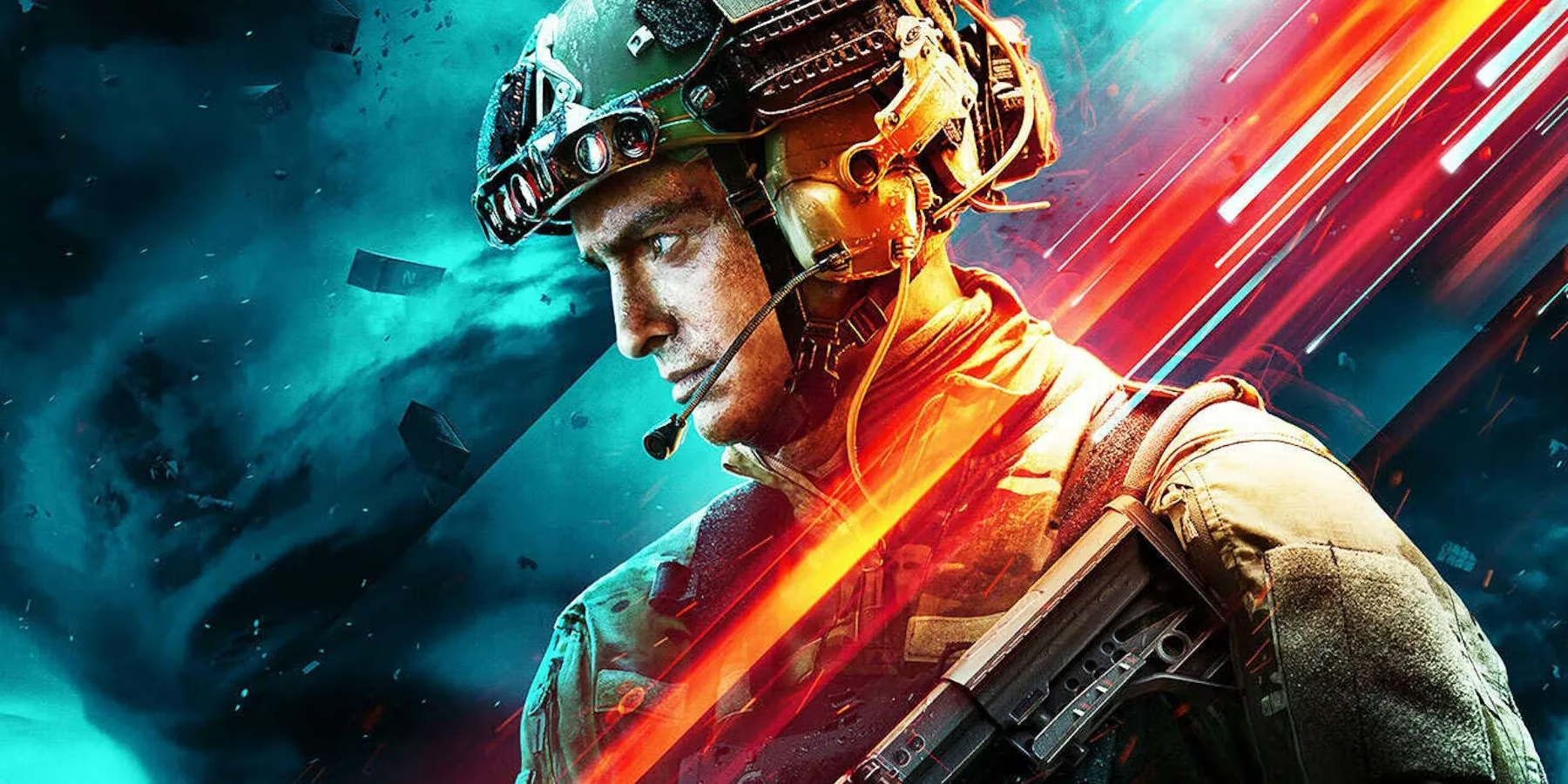
From my living room in 2026, what lessons can I draw from this turbulent launch? DICE eventually found a rhythm, releasing Season after Season through 2023 and into 2024, introducing reworks of classic maps and even bringing back the class system that had been controversially abandoned. The game never fully recovered its lost audience, but a small, dedicated community kept the servers alive. As I write this, Battlefield 2042 stands as a cautionary tale within the gaming industry: a product pushed out before it was ready, mismanaged at the exact moment it needed bold leadership. The delay of Season One wasn't just a scheduling failure; it was a signal to players that the people in charge didn't fully grasp the urgency of the situation. That single decision, more than any bug or missing feature, cemented the title's reputation as a lost cause for years to come.
Was it all bad? No. In the rare moments when the chaos clicked, when a sandstorm engulfed a capture point and my squad held the line, I felt glimmers of the Battlefield magic. But those moments were far too sparse. Now, in 2026, I occasionally reinstall the game to see how it has evolved, and it's undeniably in a better state. Yet I can't shake the feeling of "what if." What if Season One had arrived on time, packed with generous content? What if the core experience had been polished from the start? The gaming landscape is ruthless, and attention spans are short. Battlefield 2042 learned that the hard way, and we as players are still recounting the story.
Looking at my shelf today, I see the Battlefield 2042 case wedged between newer titles that have come and gone. It serves as a permanent reminder: even the mightiest franchises can stumble, and recovery is never guaranteed. The next Battlefield installment is rumored to be in development, and I can only hope that DICE and EA have truly internalized the painful lessons of 2022. For now, all I have are memories of a launch that promised the world and delivered a desert, and the small comfort that, at least in video games, there's always another battle just over the horizon.