Battlefield 2042: Hype, Sales, and a Cautionary Tale in 2026
In the months leading up to its November 2021 launch, Battlefield 2042 was supposed to be the holiday season’s must-buy first-person shooter. Marketing trailers promised massive 128-player battles, dynamic weather, and a return to the franchise’s chaotic glory. Many expected it to go toe-to-toe with Call of Duty: Vanguard and Halo Infinite. Instead, the game landed with a thud that could be heard across the entire industry. To put it mildly, the launch was a rough ride. Bugs, missing features, and design choices left players scratching their heads. Within days, Battlefield 2042 became one of the worst-reviewed titles on Steam and a strong contender for the most disappointing game of 2021.
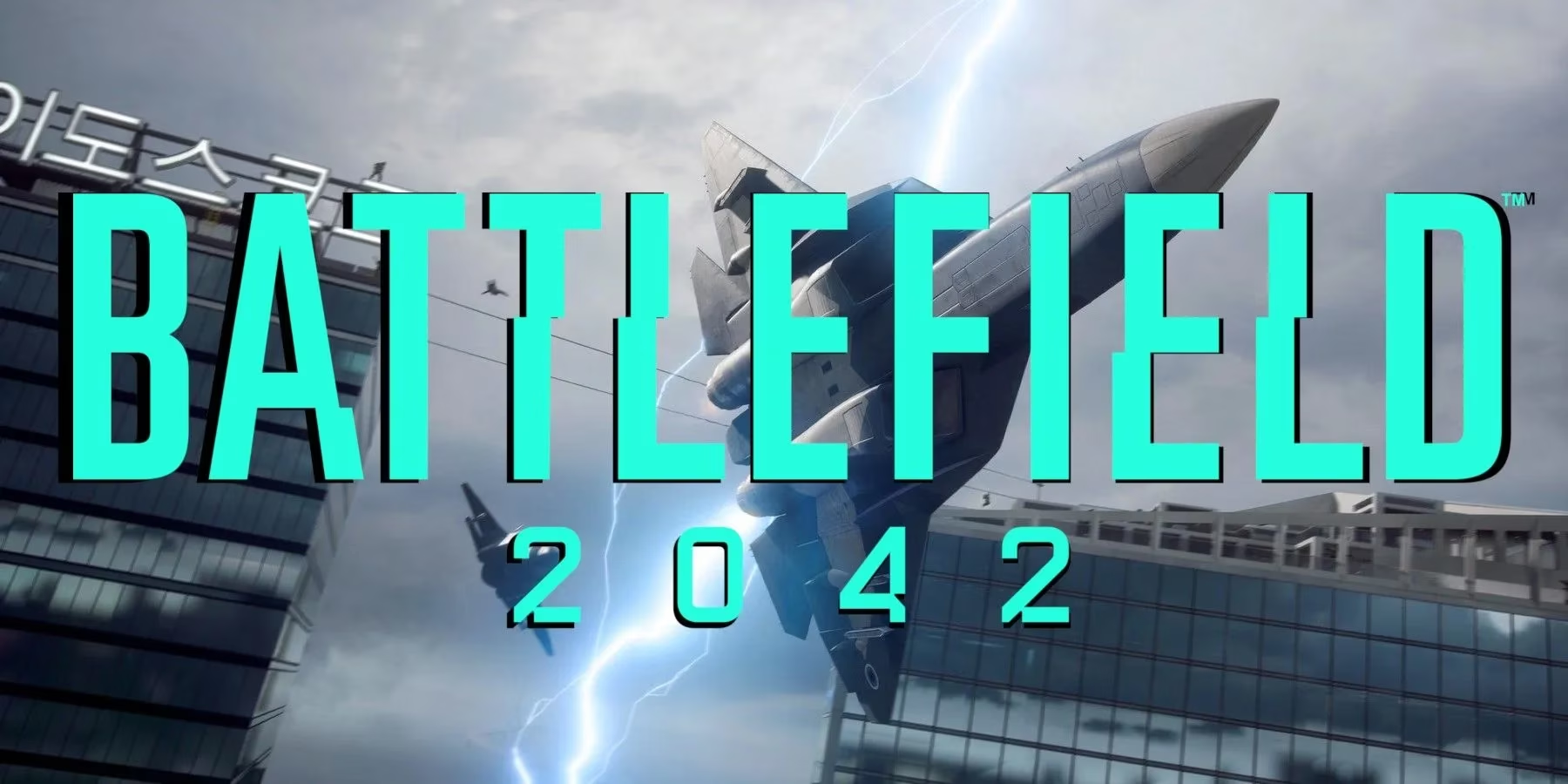
Yet, despite the negative reception, the game apparently sold well out of the gate. Well-known Battlefield leaker Tom Henderson claimed that Battlefield 2042 moved around 4.23 million units in its first week. That figure is just shy of Battlefield 3’s 4.68 million first-week sales, and it towers over Battlefield 4 (2.59 million), Battlefield Hardline (1.48 million), and Battlefield: Bad Company (0.44 million). The data’s exact source remains unclear, so fans should take it with a grain of salt. Still, the numbers suggest that the pre-release hype and marketing blitz did their job—at least initially.
| Battlefield Title | First-Week Sales (approx.) |
|---|---|
| Battlefield 3 | 4.68 million |
| Battlefield 2042 | 4.23 million |
| Battlefield 4 | 2.59 million |
| Battlefield Hardline | 1.48 million |
| Battlefield: Bad Company | 0.44 million |
However, a strong first week does not guarantee a healthy player base. For a multiplayer-focused game, word of mouth is everything. If players stop buying and logging in because of overwhelming negativity, the community can shrink fast. Battlefield 2042 is not a free-to-play title like Halo Infinite, so it needs sustained sales and engagement to keep servers lively. The early sales may have been impressive, but the long-term outlook was far less certain. Fans, as one might expect, were not exactly thrilled with the state of the game.
EA and DICE eventually responded. In late 2021, EA confirmed that Vince Zampella, head of Respawn Entertainment and DICE LA, would take charge of the Battlefield series. The move was widely seen as a positive step, since Respawn’s recent games—like Apex Legends and Star Wars Jedi: Fallen Order—had been well-received. It signaled that EA understood the franchise needed a new direction. Over the following years, Battlefield 2042 received multiple seasons of content, including new maps, specialists, weapons, and quality-of-life fixes. Seasons like Zero Hour, Master of Arms, Escalation, Eleventh Hour, New Dawn, Dark Creations, and Turning Point gradually improved the experience. By 2024, however, EA announced that Season 7 would be the game’s final full season, and future support would shift to smaller updates.
Now, in 2026, Battlefield 2042 is no longer the center of the franchise’s future. The game remains playable on PC, PS4, PS5, Xbox One, and Xbox Series X/S, but its active development has largely ended. The broader Battlefield community has turned its attention toward the next mainline entry, which EA and its restructured studios have been teasing through Battlefield Labs and other initiatives. Vince Zampella’s leadership continues to shape the franchise’s direction, and the next game is expected to learn from 2042’s mistakes. For many fans, the memory of 2042 is a cautionary tale: no amount of flashy marketing can save a game if the core experience does not deliver.
What makes Battlefield 2042 so fascinating in retrospect is the gap between its commercial start and its cultural legacy. It sold millions, yet it also became a punchline. It had ambitious ideas—Portal mode, dynamic maps, 128-player battles—but execution fell short. The game’s story is a reminder that hype is a double-edged sword. It can fill digital shelves on day one, but it cannot keep a community alive on its own. In 2026, the Battlefield series is looking forward, not backward. The next title has a lot to prove. If it succeeds, 2042 may be remembered as the painful lesson that paved the way. If it fails, the franchise could face an even steeper climb. Either way, the ghost of 2042 still lingers—a ghost that, let’s be honest, nobody wants to see return.
Expert commentary is drawn from PC Gamer, whose reporting often underscores how troubled live-service launches can still post strong early sales before player sentiment reshapes a game’s reputation, a pattern that fits Battlefield 2042’s arc from heavy launch-week momentum to a longer struggle over trust, retention, and post-release recovery.