Battlefield 2042: A Veteran's 2026 Autopsy of a Broken Battlefield
In 2026, Marcus—a Battlefield veteran who cut his teeth on Wake Island in 2002—sat down with Battlefield 2042 one more time. He wanted to believe the patches, the seasons, and the nostalgia had finally turned the tide. Instead, he got that familiar sinking feeling: this was not the Battlefield he grew up with. It was a Modern Warfare-shaped impostor wearing a Battlefield mask, all hat and no cattle. DICE had built a game with 128 players, enormous maps, and extreme weather, yet it somehow felt smaller, noisier, and less focused than the 64-player classics. The franchise that once defined large-scale warfare had lost the plot, and in 2026, the autopsy still stings.
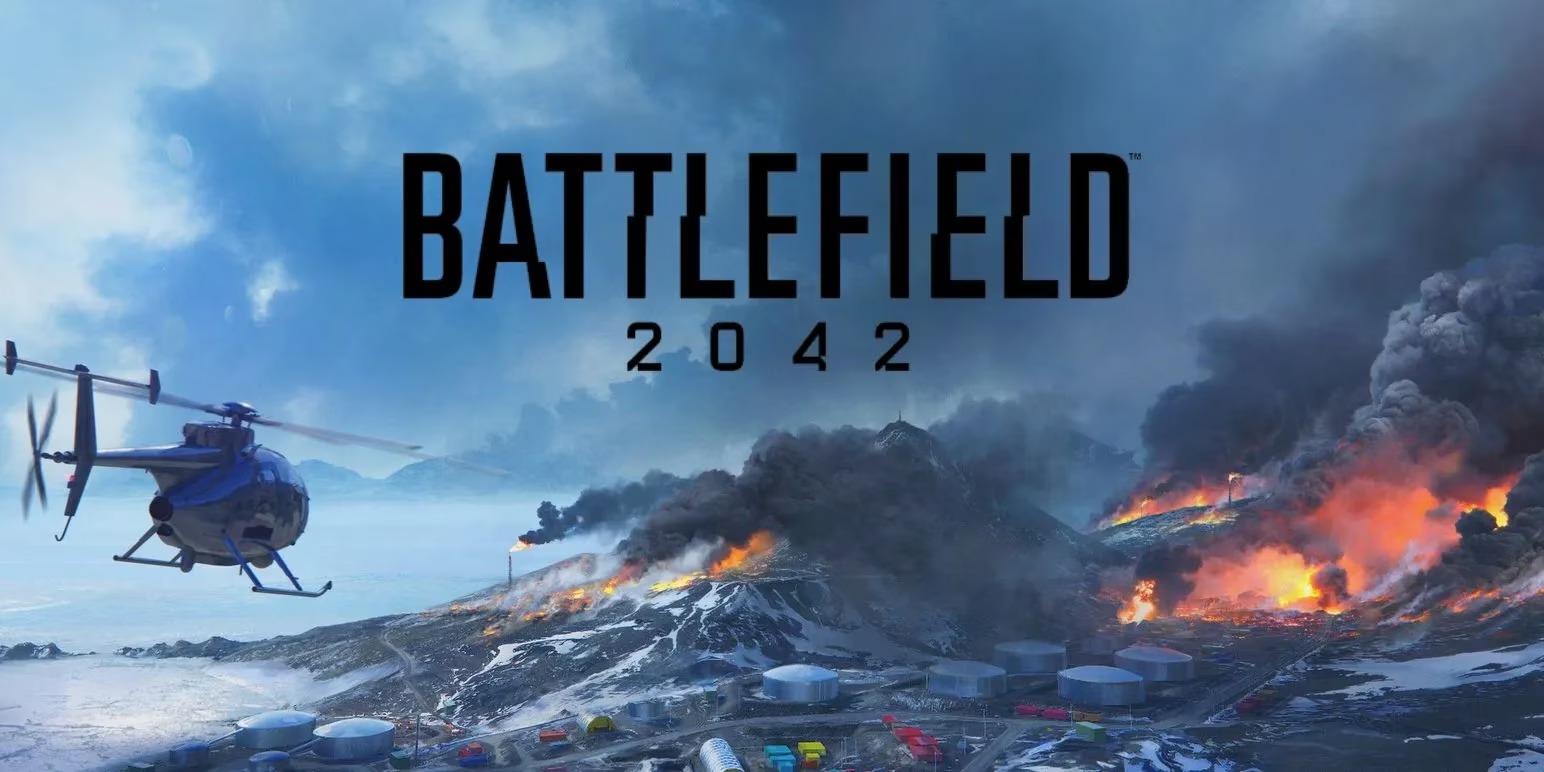
The 128-Player Mirage
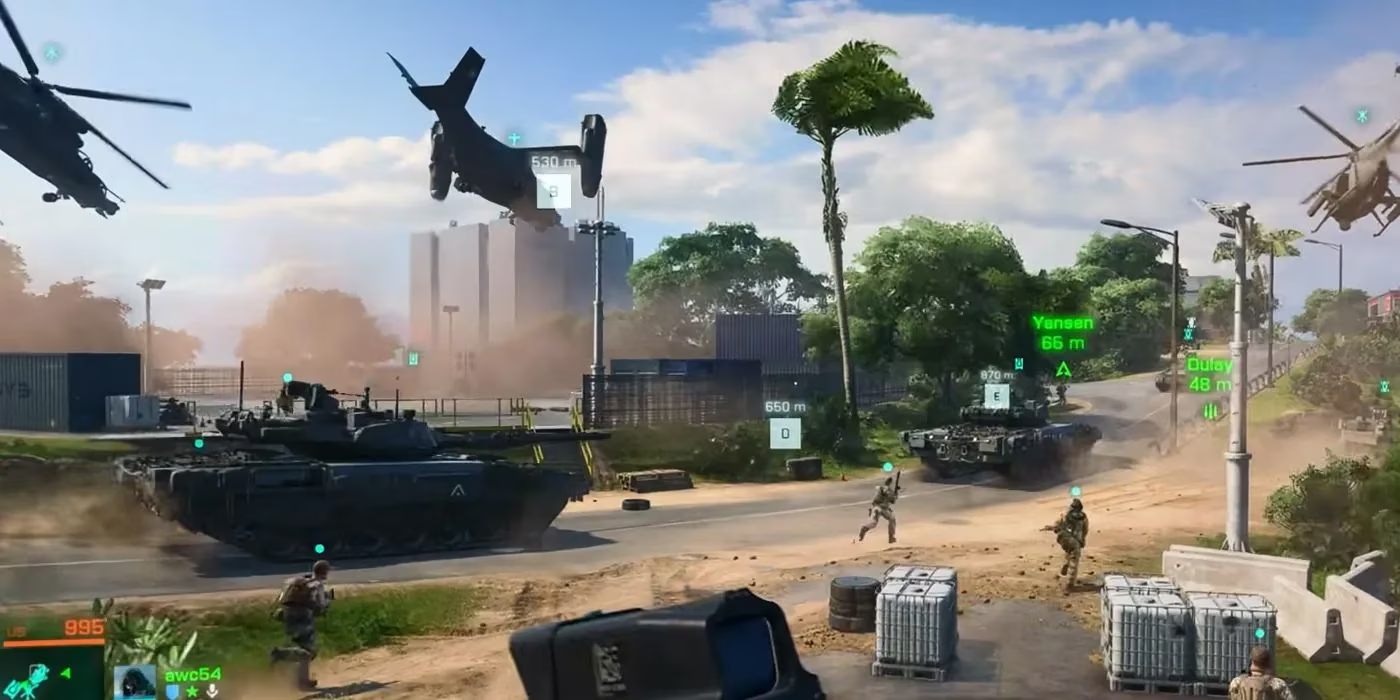
Conquest, the original heartbeat of the series, should be a tug-of-war over capture points. In 2042, Marcus found himself sprinting from flag to flag, rarely trading shots with a recognizable enemy. At distance, foes became 2D cartoons. Vehicles, meant to support infantry, turned into taxis. Enemy tanks felt like obstacles rather than threats. Breakthrough was more focused, but still a mosh pit of bodies and armor rather than a frontline. Doubling the player count from 64 to 128 sounded like a power move. Instead, it was too much of a good thing. The maps ballooned to compensate, and focus evaporated.
| Classic Battlefield | Battlefield 2042 |
|---|---|
| 64 players, tight objectives | 128 players, scattered skirmishes |
| Vehicles as force multipliers | Vehicles as taxis or speed bumps |
| Constant frontline | Sporadic chaos |
| Teamwork rewarded | Running simulator with guns |
Marcus laughed bitterly. 'It's not a battlefield,' he muttered. 'It's a commute.'
The Missing Boom
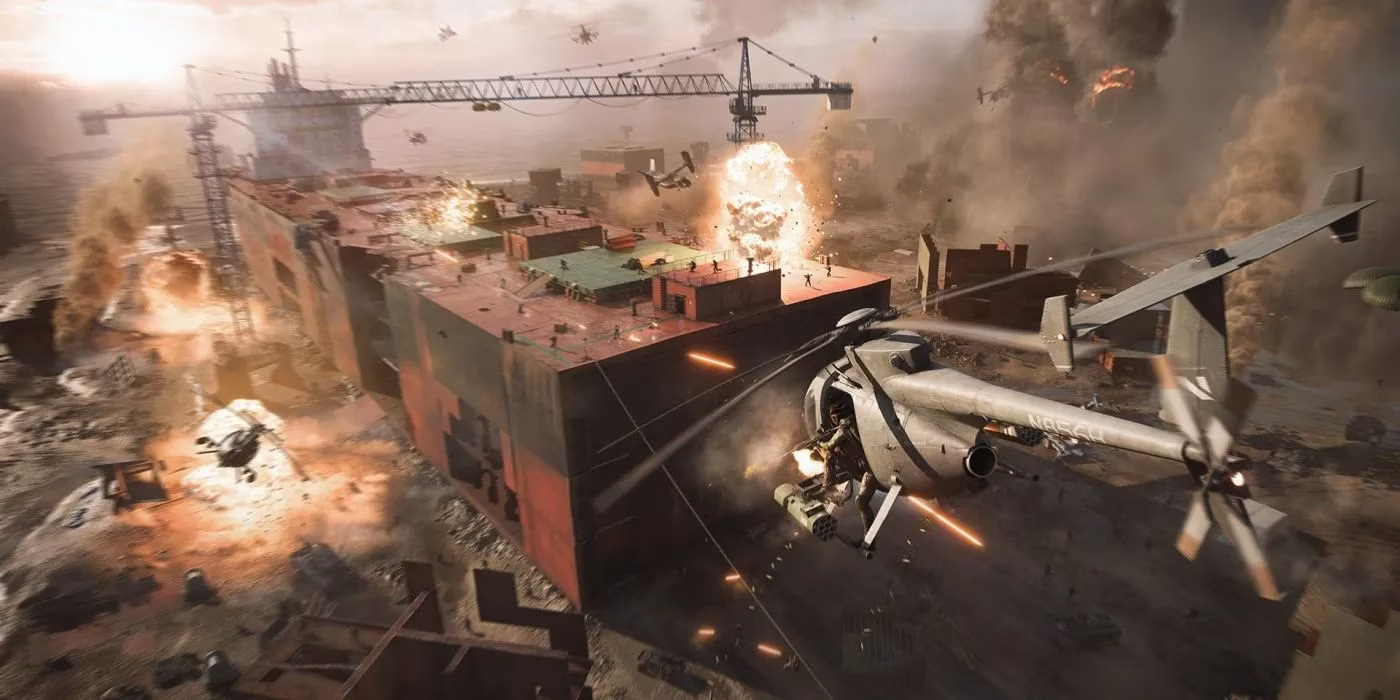
Battlefield's secret sauce was destruction. Bad Company's Frostbite engine let players blow holes in walls, collapse buildings, and reshape the map. Destruction was tactical: rather than kick a door and risk a shotgun, you could remove the building. 2042 has destruction, but it's a pale imitation. Most structures stay intact. The level-changing moments—dams, skyscrapers—are rare. Extreme weather like tornadoes and sandstorms is flashy but fleeting, and it doesn't reshape the fight. At launch, bugs made it worse. By 2026, patches helped, but the core disappointment remains.
-
❌ Buildings that collapse and change routes
-
❌ Destruction as a tactical choice
-
✅ Rare tornado that mostly just throws you around
-
✅ Sandstorm that looks cool but doesn't change strategy
Without destruction, 2042 loses the immersive chaos that made Battlefield feel alive.
Specialists Without a Cause
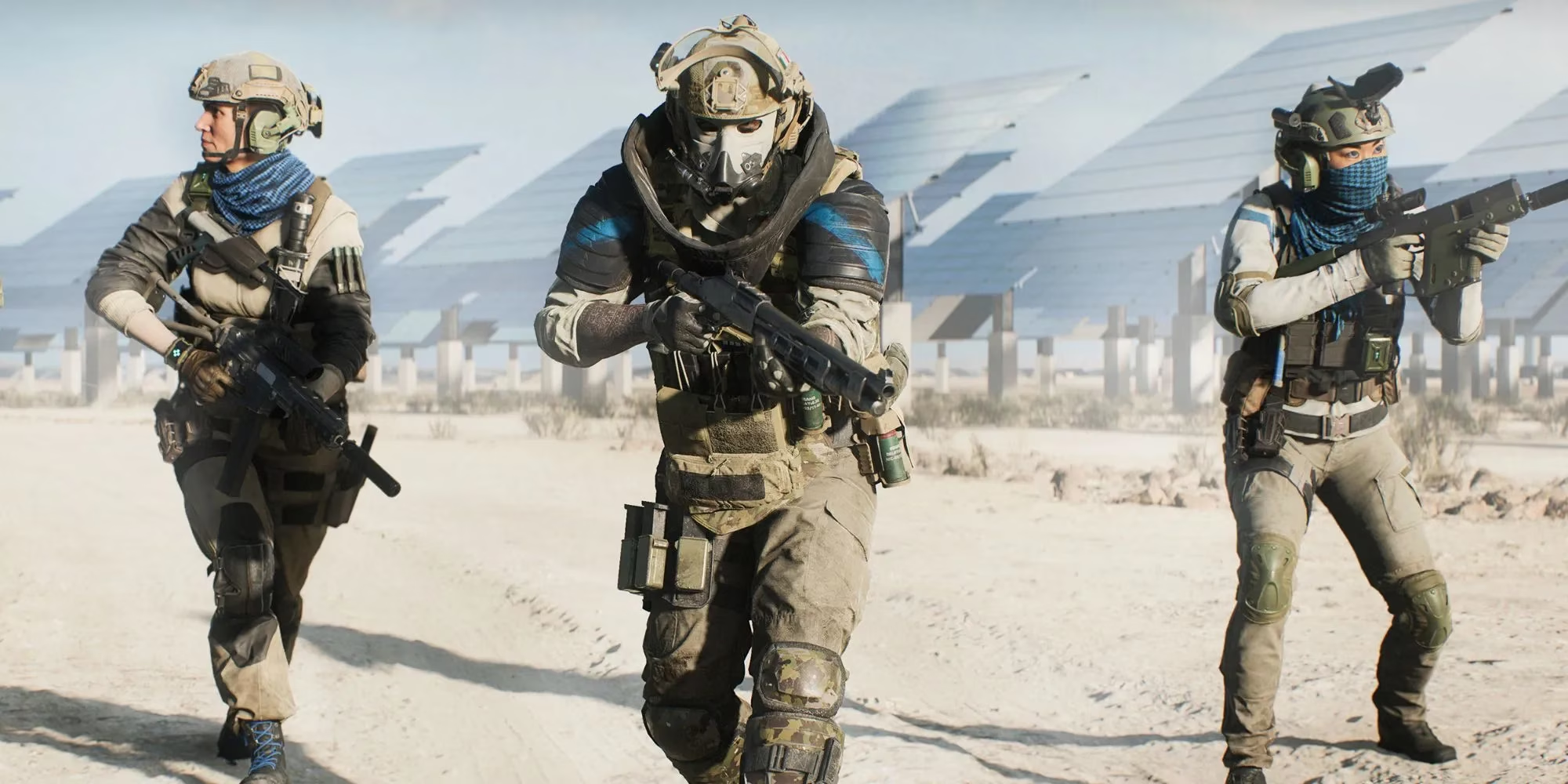
Classes used to matter. Assault, medic, engineer, support—each had a job. You repaired tanks, revived teammates, resupplied ammo. The class system made teamwork satisfying and gave every player a role. 2042 replaced classes with specialists, more Overwatch than Battlefield. Each specialist has a unique ability, but the roles blur. Maria Falck, the medic, can be played like an assault. Holiday-themed skins made the tone feel like a hero shooter, not a gritty war game. The result? Chaos supersedes structure. Squad play becomes a suggestion, not a foundation.
| Classic Class | Specialist Equivalent | Problem |
|---|---|---|
| Assault | Mackay, Sundance | No clear frontline role |
| Medic | Falck | Can play aggressively, not support |
| Engineer | Boris, Irish | Repairs less central |
| Support | Angel, Paik | Ammo/revive less structured |
Specialists aren't inherently bad, but they don't belong at the heart of Battlefield. They remove the glue that held squads together.
Quantity Over Quality
2042's biggest sin is that it prioritized scale over soul. The game added features that looked good on a marketing sheet: 128 players, huge maps, weather events, specialists. But it forgot the foundation: focused ground battles, destructible environments, and classes that made teamwork meaningful. Previous Battlefield games did more with less. Battlefield 3 and 4 had 64 players and felt enormous. Bad Company 2 had destruction that made every match unique. 2042 has quantity, but not quality.
In 2026, the franchise is at a crossroads. EA and DICE have been testing the next Battlefield through Battlefield Labs, and the community is watching like hawks. The fear that EA might kill Battlefield like Medal of Honor is real. But Marcus, like many veterans, still holds a candle. He wants the next game to go back to the drawing board, to remember that Battlefield is not just a shooter—it's an immersive military sandbox with a contemporary twist.
Battlefield 2042 does a lot right in scale and spectacle, but it sacrifices what made the franchise great. The lesson for 2026 and beyond is simple: bigger isn't better if you lose the boom, the roles, and the focus. Battlefield's soul lives in the chaos of a squad working together, a wall coming down, and a hard-fought capture point. Until DICE brings that back, veterans like Marcus will keep waiting—and keep playing the old games.