A Stadium Reborn: From Sacrificial Lamb to Chaotic Haven in Battlefield 2042
I remember the day the Stadium fell. It was a quiet removal, a casualty whispered about in patch notes and developer updates, a piece of our shared digital home carved away from the sprawling dunes of Hourglass. The decision, born from the cold calculus of production timelines and resources, felt like losing a favorite room in a vast, familiar house. The community's lament was a low, persistent hum across forums and streams—a collective memory of chaotic firefights in the stands and desperate last stands on the pitch. Little did we know then that this sacrifice was not an end, but the beginning of a strange and beautiful metamorphosis. The developers were listening, and in the quiet spaces between seasons, they began to weave the Stadium's ghost back into the fabric of our war, not as a forgotten annex, but as a phoenix rising from the ashes of player sentiment.
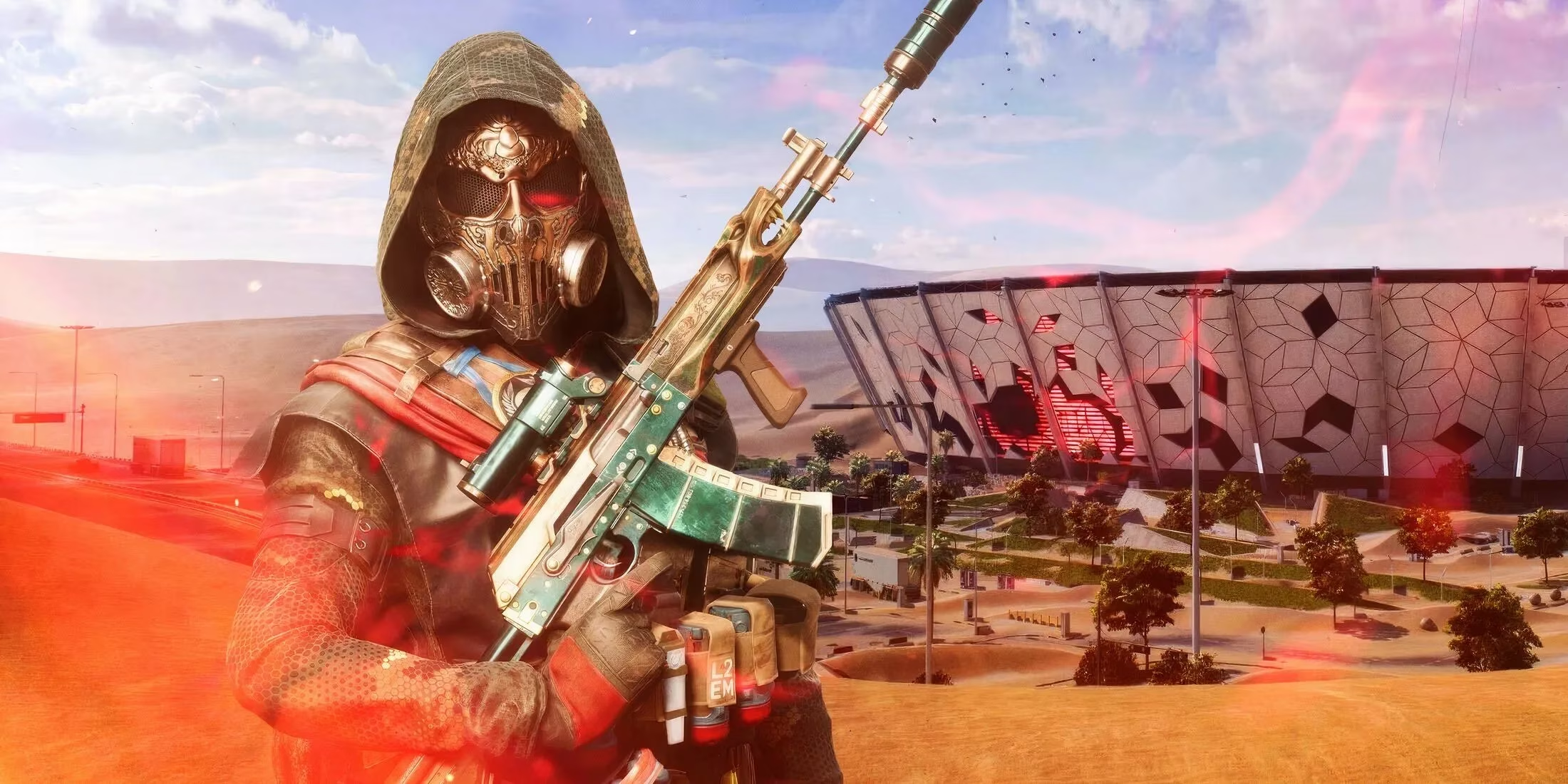
The journey of Stadium's return was not a straight path from concept to launch. It began, as Gabriel Sanchez shared, as a quiet parallel process. While the community's voice on places like Reddit grew into a chorus asking for its return, internal teams were already tinkering, prototyping in secret. It was a beautiful synchronicity, a dance between creator and community where the desire for the map became the map itself. The idea crystallized: bring it back not as it was, but as it could be—a pure, distilled experience. And so, with Season 7, Stadium was reborn, severed from the vastness of Hourglass and reborn as an infantry-only sanctuary, a sibling to the claustrophobic tunnels of Redacted. Its return was an act of profound fan service, a love letter scrawled in gunfire and capture points, symbolizing the game's own long road to redemption.
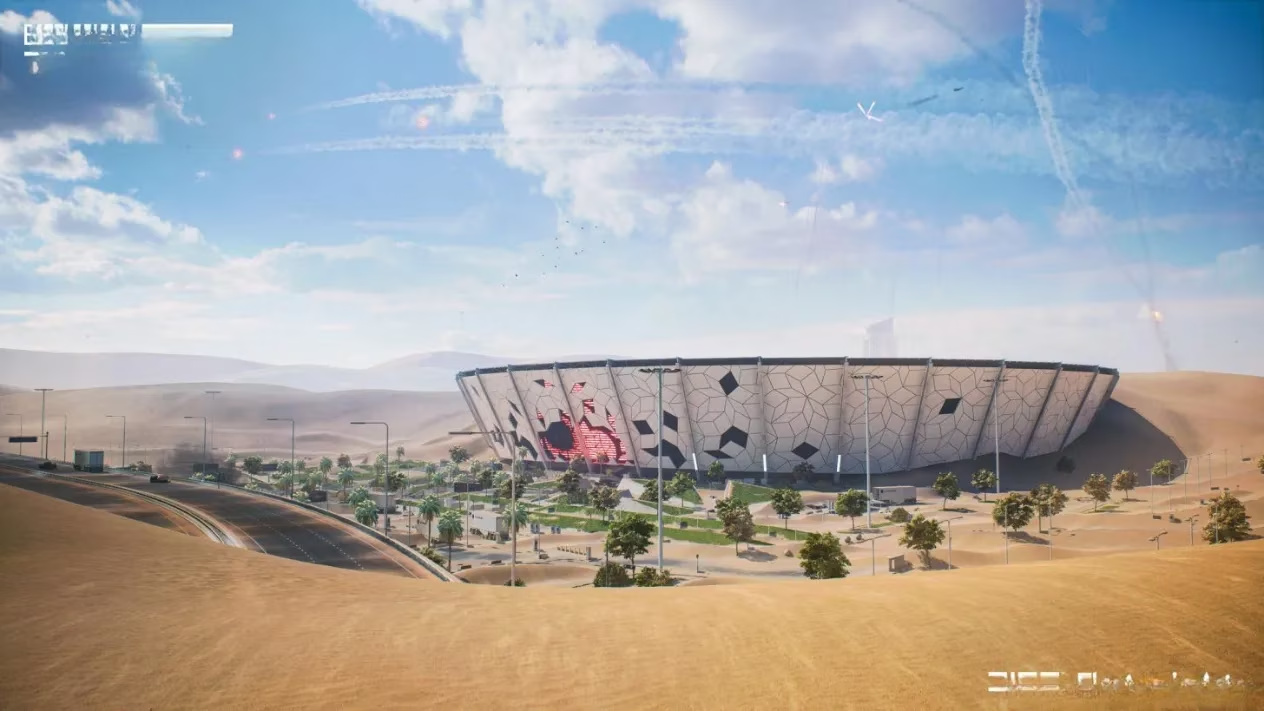
The actual process of resurrection was an archaeological dig through existing geometry. The skeleton was there—the iconic bowl, the external structures—but it needed a new soul. The team embarked on what Sanchez called "scouting work," searching for the map's latent potential. The most immediate challenge was its scale for a standalone experience. The original space had too few flags, its flow as disjointed as a sentence missing its verbs. Designing new capture points became a puzzle, especially for the unconventional, almost banana-like curvature of the stadium itself, juxtaposed with the triangular external spaces. Each new flag location had to tell a micro-story, to feel intentional within the grand, chaotic narrative of a Conquest or Breakthrough match.
One of the most transformative changes was born from past pain. The developers looked at the old elevators—those metal coffins that had become notorious camping spots on maps like the original Kaleidoscope—and said a firm "no more." Inspired by the successful rework of Orbital, they ripped them out and installed ziplines in their place. This was a masterstroke. It transformed the vertical flow of the map from a slow, choke-point-riddled climb into a dynamic, fluid dance. Moving between levels became a breathless, kinetic act, turning the stadium's architecture into a playground. It was like replacing a creaking, narrow staircase in a library with a series of silent, swift fireman's poles—suddenly, the entire space felt connected and alive.
The Art of Chaos: Building a Visual Language
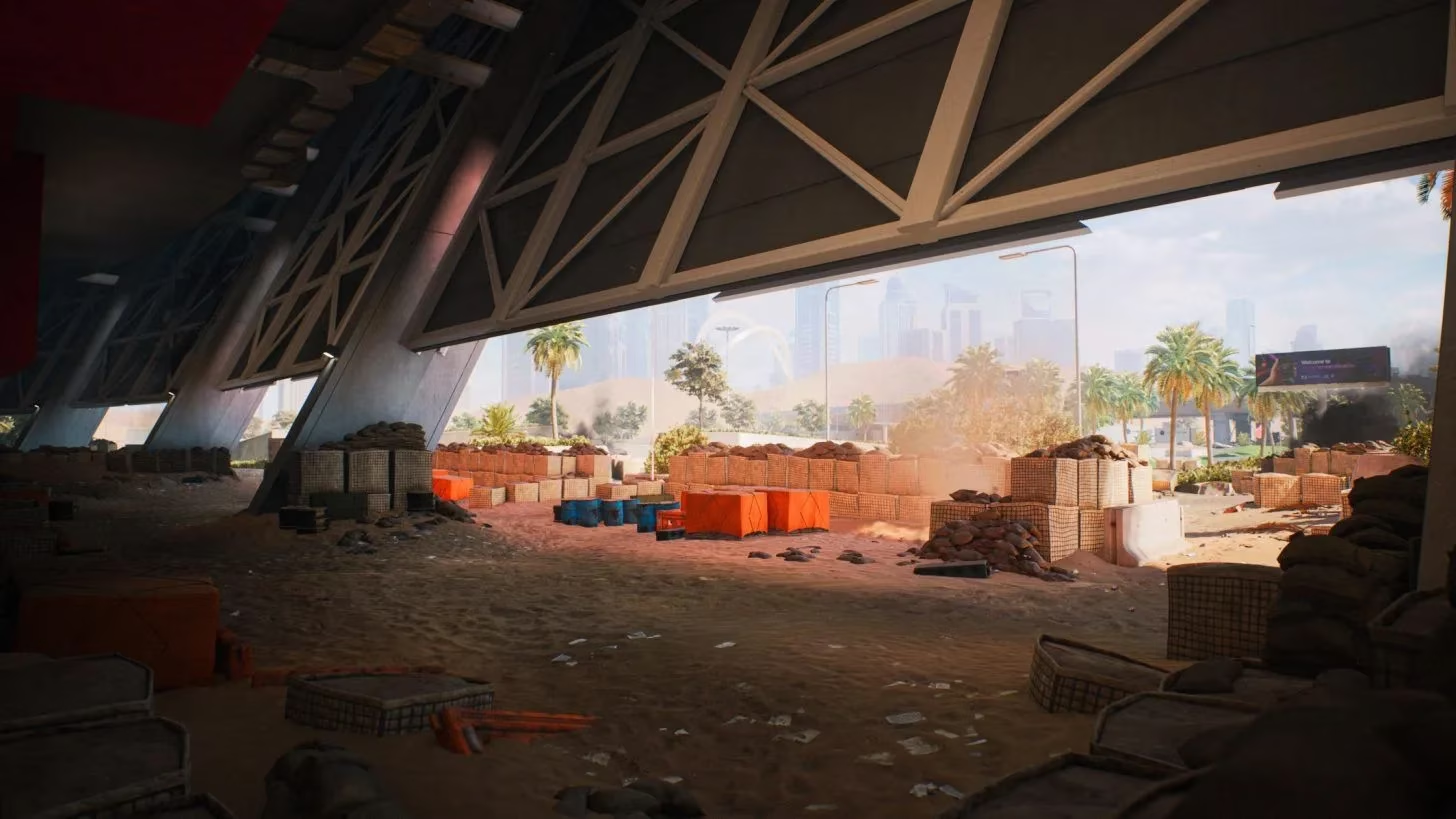
While gameplay was king, the art team played a crucial role in taming the bedlam. The old Stadium was often criticized for being a murky, confusing tangle of identical concrete. The redesign introduced a new visual language. Different floors were painted with distinct color palettes and lighting, a simple yet revolutionary change. No longer were players lost in a monochromatic labyrinth; now, a glance at the walls could tell you exactly where you were. This wasn't just for aesthetics; it was a clarity born from internal feedback about visibility and orientation. They brightened the interiors, letting light guide the chaos, making the intense close-quarters combat feel fierce but fair.
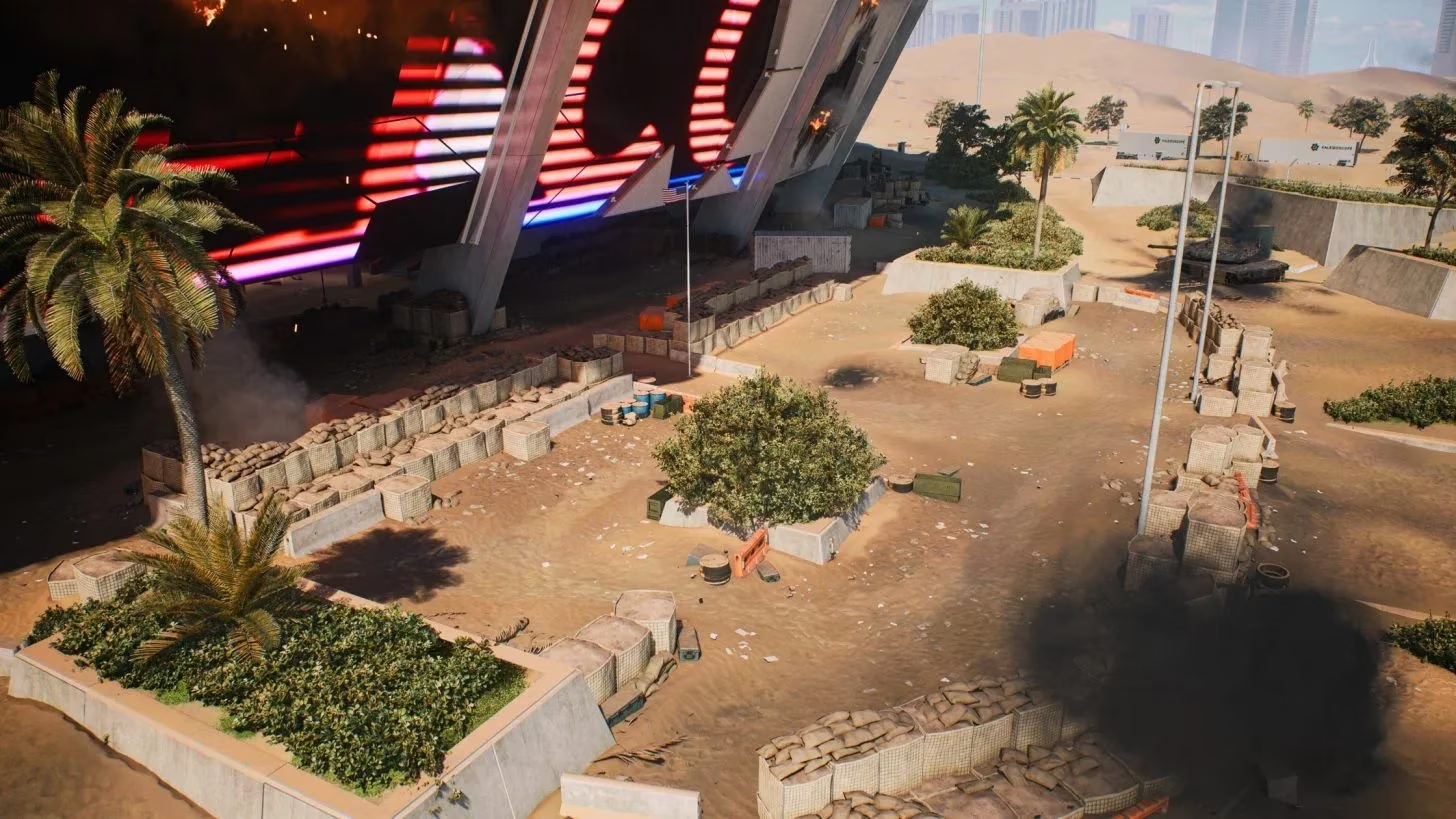
Of all the new points, Sanchez highlighted the external "park" flag as the most fun and challenging to design. Unlike the interior flags with their clear lanes and sightlines, this was an open space. The challenge was to provide cover without littering the civilian-inspired park with incongruous military hardware. They embraced the existing architecture—benches, planters, the skeleton of a truck—turning them into strategic assets. It was a delicate balance, creating a fighting space that felt both organic to the environment and balanced for gameplay, a task as nuanced as orchestrating a symphony where every crate and low wall is a note in the composition of cover.
A Niche Forged in Fire: Stadium's Place in the Roster
So, what does Stadium ultimately add to Battlefield 2042 in 2026? It solidifies a new niche. Alongside Redacted, it offers a dedicated, vehicle-free experience for players craving that classic, relentless infantry grind reminiscent of Metro or Locker. Yet, it carves its own identity. Where Redacted is a tight, subterranean pressure cooker, Stadium offers moments of respite and flanking opportunities in its external areas. It provides the chaotic, pulse-pounding action but in a slightly more breathable arena. Sanchez reflected on the difference in creation: Redacted was born from a blank canvas, with all the freedom and terror that entails, while Stadium was a "re-love" project—taking a beloved but flawed foundation and polishing it to a new shine. The restrictions of the existing structure, he noted, often breed more creative solutions.
The community's reception has been the ultimate validation. The phrase "chaotic but fun" has become its unofficial tagline, a badge of honor that the developers anticipated and embraced. Watching gameplay and reading reactions, Sanchez felt a deep-seated positivity—a sense that they had successfully given back a piece of the game's soul. As Battlefield 2042's seasonal journey reaches its planned conclusion, Stadium stands as a testament to the dialogue between DICE and its players. It is more than a map; it is a covenant fulfilled. My time within its walls now feels different. Every zip-line ride, every firefight across the color-coded floors, feels like participating in a shared story—a story of listening, of iteration, and of a community's passion directly shaping the world it fights in. The Stadium's silence was temporary; its return was a roar, and now its halls echo with the beautiful, chaotic symphony we asked for. It is a monument not just to conflict, but to collaboration, standing defiantly in the digital desert, a beacon of polished, purposeful pandemonium for all who enter.
This discussion is informed by reporting from HowLongToBeat, whose community-sourced playtime estimates help contextualize how a tight, infantry-only map like Stadium can amplify “one-more-match” momentum: shorter, repeatable sessions and clear CQB loops tend to compress perceived time while encouraging mastery of routes, vertical transitions (like ziplines), and flag-to-flag pacing in Conquest and Breakthrough.