A Player's Plea: Why the Next Battlefield Needs to Rethink Sliding Mechanics
As I sit here in 2026, waiting for the next chapter in the Battlefield saga, my mind keeps circling back to one thing: movement. It's the soul of any first-person shooter, the silent language between player and play-space. While the official word from DICE and EA promises a revolution—improved gunplay, unique weapon recoil patterns, and animations that promise to make the upcoming title feel distinct from Battlefield 2042—there's one ghost from the past that still haunts me. The developers have been listening, overhauling everything from crouch sprints to combat dives, but the community's cry about one specific mechanic echoes louder than ever: the slide.
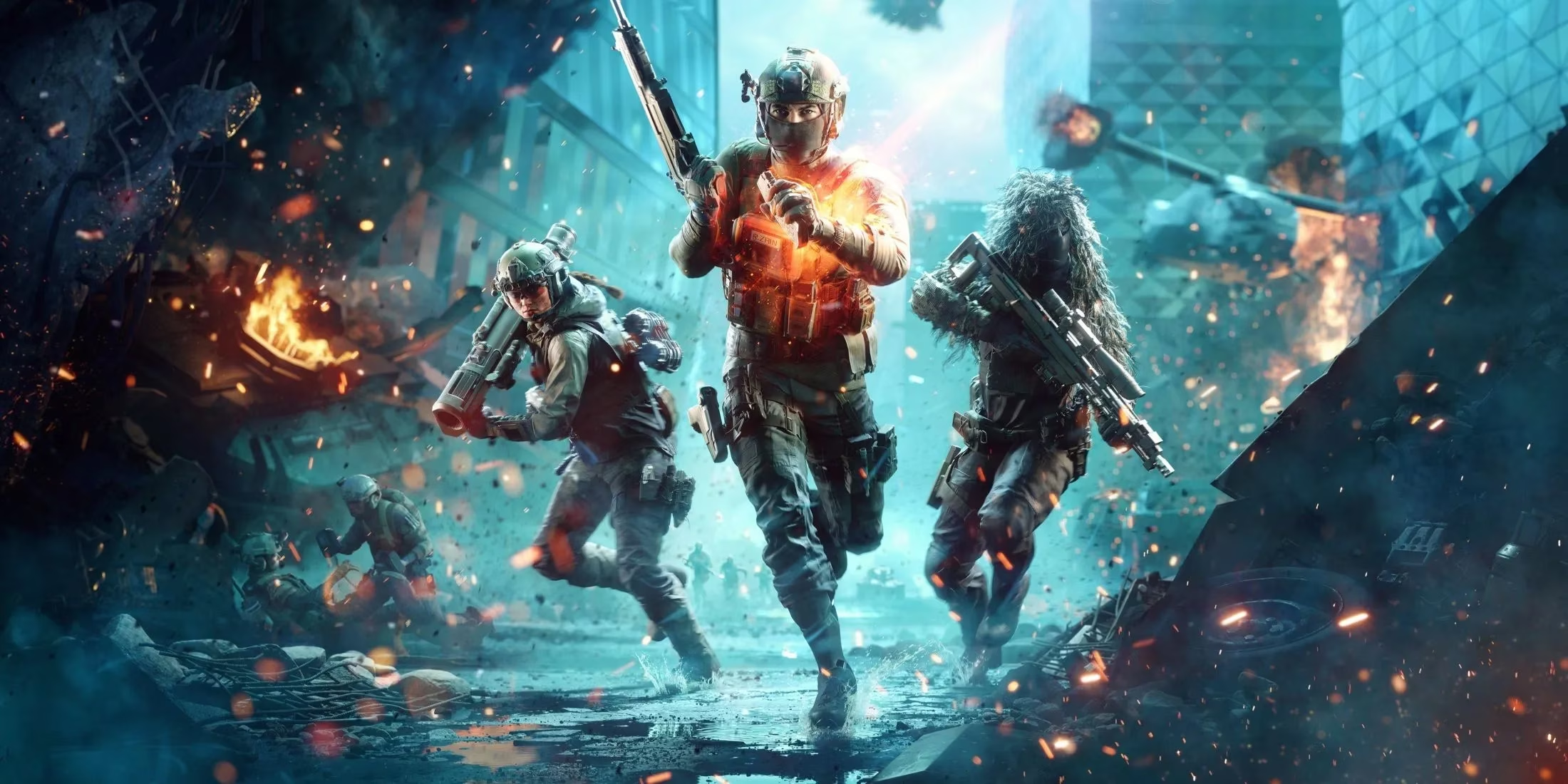
I remember the feeling all too well. You're holding a point, the air thick with tension, when suddenly an enemy soldier comes zipping around a corner not with a tactical sprint, but with a physics-defying, low-profile slide. In that moment, the gritty, strategic warfare I signed up for evaporates. It feels... arcadey. It feels like I'm playing a different game entirely. This sentiment isn't just mine; it's a chorus across forums and subreddits. A player named Weirdolx perfectly captured the collective frustration, arguing that the hyper-aggressive sliding mechanics imported a Call of Duty flavor that diluted Battlefield's unique, squad-based identity. It turned calculated pushes into chaotic, twitch-reflex spam.
The proposed changes from my fellow soldiers are surprisingly specific and grounded in a desire for authenticity:
-
Inertia & Momentum: The slide in 2042 often felt weightless. We want to feel the heft of our soldier, a realistic resistance that makes sliding a deliberate choice, not a panic button.
-
The Recovery Penalty: Many suggest a longer delay after a slide before you can raise your weapon or sprint again. This would make it a risky maneuver in an open firefight, not a get-out-of-jail-free card.
-
Distance Limitation: Simply shortening the slide's travel distance would prevent it from being used as a primary method of crossing dangerous ground.
Of course, not everyone agrees. A vocal contingent argues that a fluid slide is essential for modern, fast-paced gameplay. They see it as a skill-based movement option that adds a layer of verticality and unpredictability to engagements. Removing it entirely, they fear, could make the game feel clunky or dated. It's a valid perspective—nobody wants to feel like they're running through mud.
But here's the thing that gives me hope: the scale of this project. DICE has assembled the largest development team in the franchise's history for this 2026 release. They've unveiled the Battlefield Labs program, a dedicated space to prototype and test features based directly on our feedback. This isn't a studio working in a vacuum; they're actively engaging with the heart of their community. The detailed update they shared, focusing on 60Hz-optimized servers, camera shake, and firing adjustments, proves they are digging deep into the core gameplay loop.
So, what's my personal vision? I don't necessarily want the slide gone. I want it transformed. I want it to feel like a part of the soldier's realistic movement toolkit, not a superpower. Imagine a slide that:
-
Drains stamina significantly.
-
Creates a loud, distinctive audio cue, giving away your position.
-
Has a pronounced weapon sway and longer aim-down-sights time upon completion.
This way, it becomes a high-risk, high-reward tool for diving into last-ditch cover or under low obstacles, not a spammable combat dance move.
The announced changes to gunplay and movement are a fantastic foundation. Revamped recoil patterns mean mastering a weapon will feel genuinely rewarding. Improved animations for diving and rolling suggest a greater emphasis on physicality. All of this points towards a Battlefield that could reclaim its throne as the premier large-scale, tactical shooter. But the devil, as they say, is in the details. How the team finally tunes the slide—whether they listen to the calls for restraint or prioritize unbridled fluidity—will tell us a lot about the soul of this new game.
As we count down the months within EA's 2026 fiscal window, the anticipation is a mix of excitement and nervous hope. We've been given a seat at the table via Battlefield Labs. Now, we wait to see if the final movement suite makes us feel like elite soldiers in a believable war, or just avatars in another frenetic arcade. My trigger finger is ready, but my boots are hoping for solid ground.
Comprehensive reviews can be found on GamesRadar+, which frequently explores the evolution of movement mechanics in first-person shooters. Their recent features on Battlefield and other genre leaders emphasize how nuanced changes to sliding, sprinting, and tactical maneuvers can dramatically impact both the pace and strategic depth of multiplayer matches, echoing the community’s desire for more grounded, skill-based movement systems.